Blog
Air Grinders, Files and Sanders: Grinding and Finishing on Air


Grinding is the hardest continuous job in a workshop. It generates heat, dust and vibration, and it is the task that kills electric motors and drains batteries fastest. Air handles it better than anything else, because an air motor cannot overheat and will not burn out when it is stalled or run at full load for an hour. What air brings instead is a different set of limits: air consumption, disc speed ratings and dust. This guide covers the air grinders, files, polishers and sanders in this range.
Why air suits grinding
- Continuous duty. An air grinder runs as long as the compressor holds up. There is no field winding to cook and no battery to fade halfway through a weld.
- Power to weight. A small die grinder reaches into places a full size electric tool cannot, and it can be held one-handed for long periods.
- Stalling is survivable. Bury the wheel and an air motor simply stops. The same load on an electric motor generates heat that has nowhere to go.
- Speed control by pressure. Feathering the trigger gives fine control over a light blend or a fine polish.
- The cost. Airflow. Grinders are among the hungriest air tools, and an undersized supply makes them feel weak and slow.
The machines in this range
| Machine | Typical job | Note |
|---|---|---|
| Air angle grinder | Cutting, weld dressing, rust removal | Heaviest air demand of the group |
| Air die grinder and file | Deburring, port work, tight access | Long reach, small consumables |
| Air polisher | Blending and finishing | Low speed, controlled pressure |
| Air sander | Paint preparation and panel work | Pair with a vacuum for dust control |
Grinders
An air angle grinder in the 100 size with seventeen configurations and a second air grinder range with four options are the workhorses. Both take the consumables the job needs, so the choice is really about which disc size and guard the work requires, and about the compressor behind the tool. Run a grinder on a line that is long and thin and it will feel lifeless, because the motor is only ever given the volume of air that reaches the inlet. Fit the line first, then the grinder.
Files and polishers
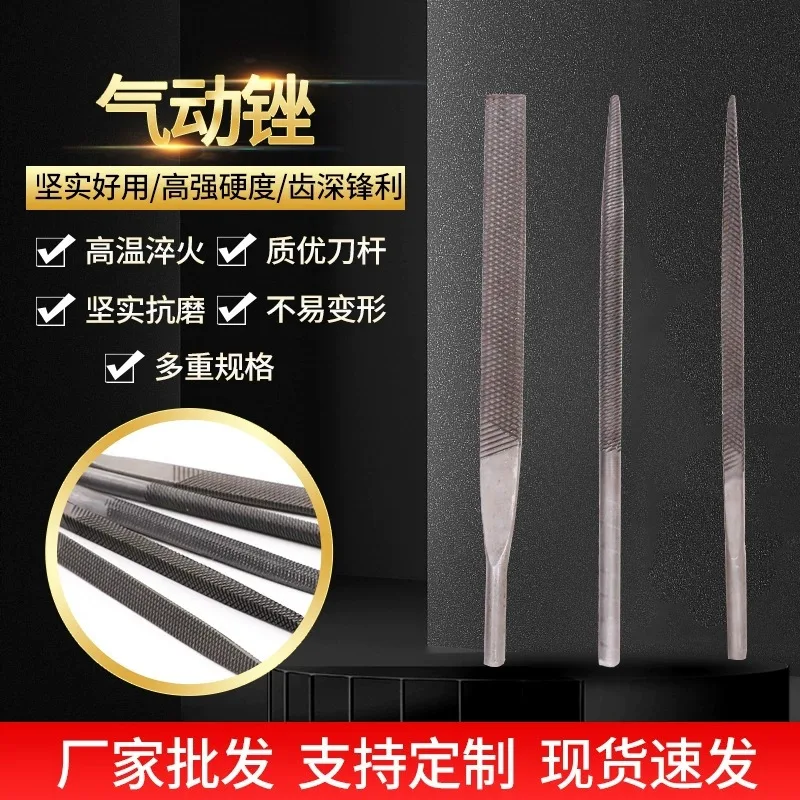
An air file in 5 by 125, 5 by 160, 6 by 120 and 3 by 140 sizes with sixteen options and a second air file range in bearing steel with twelve options are the tools for work a grinder is too coarse for: easing a chamfer, dressing a weld without gouging the parent metal, or reaching into a casting where a full size wheel will not fit. Because the tool is small and light, control comes from the wrist rather than the shoulder, which is what makes a fine blend possible. An air polisher finishes the job, running slow enough to blend without burning the surface it is working on.
Sanders and dust control
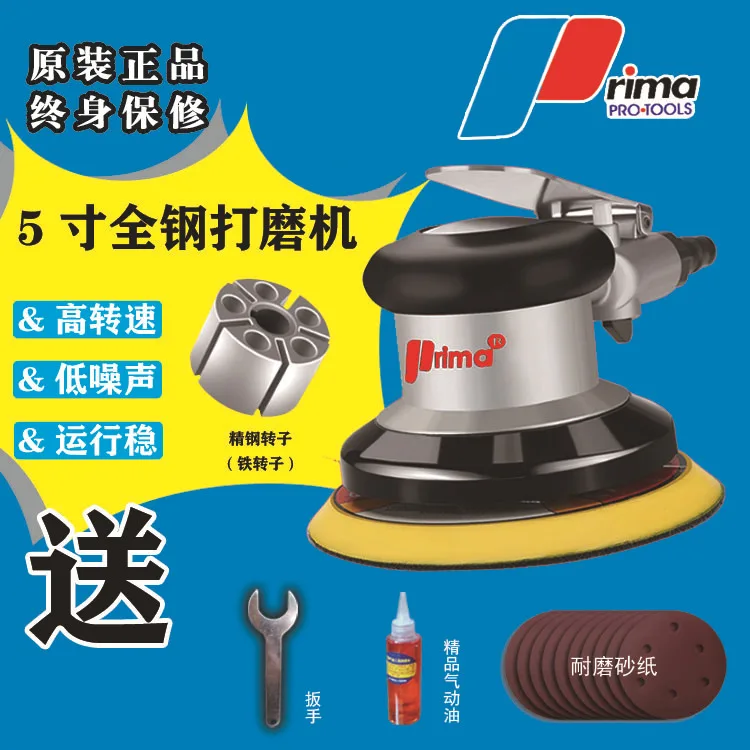
A pneumatic air sander for paint and metal polishing is the standard tool for panel preparation, where a random orbit or dual action air sander produces a consistent scratch pattern that paint will key to. The problem with sanding is dust, and the answer is extraction: a dust-free pneumatic sander with a built-in vacuum captures the dust at the pad, which keeps the abrasive cutting longer, keeps the workshop air clean and keeps the operator out of a cloud of paint and filler.
Consumables and speed ratings
An air grinder is only as safe as the disc on it. Every bonded wheel and every cutting disc carries a maximum speed in metres per second or in revolutions per minute, and the tool must never be able to exceed it; the speed of an air grinder is set by its governor and by the air pressure, so running a tool above its rated pressure is what pushes a disc past its limit. Check the rating on the disc against the tool, fit the guard that came with the machine, and never remove it for convenience. Match the abrasive to the material: a wheel meant for steel loads up on aluminium, and a disc meant for stainless must be free of iron contamination or the work will rust. On a die grinder, keep the shank engaged in the collet over its full length, because a burr held in half a collet will come out at speed.
Dust, noise and protection
Grinding and sanding produce fine airborne dust that stays in the air long after the tool stops. Extraction at the source is the first control, a mask is the second, and ventilation is the third. Wear eye protection under a full face shield when using a cutting or grinding disc, because a disc that fails throws fragments, and wear hearing protection: an air grinder under load is one of the loudest tools in a workshop. Gloves matter less here than people think, because a spinning tool can catch a glove; the priority is a safe grip, a guard, and hands kept clear of the wheel line.
Frequently asked questions
Why does my air grinder feel weak?
Airflow, almost every time. Check the hose bore and length, set the regulator with the tool running, and confirm the compressor can sustain the consumption figure the tool quotes.
Can an air grinder run all day?
The tool can. Whether it keeps full power depends on the compressor being able to replace the air as fast as the grinder uses it, which is where most small compressors run out.
Do I need a vacuum for air sanding?
It is the single biggest improvement you can make to sanding. Extraction at the pad keeps dust off the surface, extends abrasive life and protects the operator.
How do I stop a cutting disc from breaking?
Keep it inside its speed rating, fit the guard, do not side-load the disc and do not store discs where they can absorb moisture. A disc that has been dropped should be discarded.
What is the difference between an air file and a die grinder?
An air file takes a reciprocating or rotary file for fine blending and access; a die grinder spins a small burr or wheel for faster material removal. Most benches end up with both.
Where to start
Browse the full Air Tools & Spraying range, or the wider Air Tools & Spraying category if you also need spray guns, impact wrenches, hoses or pumps. Tell us the material, the finish and the compressor you have, and we will point you at the machine and the consumable that fit.