Blog
Sledge Hammer Weight and Handle Guide: Choosing 8 lb to 20 lb Heads

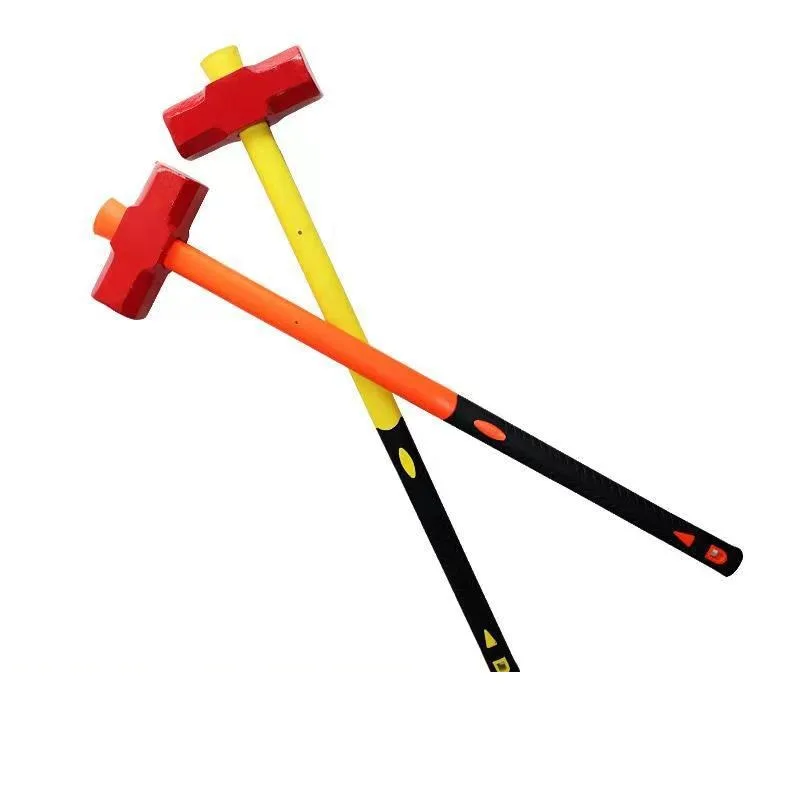
A sledge hammer is bought for one of five jobs: driving stakes and posts, breaking concrete and masonry, striking chisels and wedges, straightening steel, and shifting machinery that has seized. Those jobs ask for very different amounts of weight, and that is the whole decision. Too light and the head bounces off the work; too heavy and you cannot swing it accurately enough to hit the same spot twice. This guide covers the head weights, the two handle families and the striking technique that decides whether a sledge hammer lasts ten years or ten weeks.
What the numbers on a sledge hammer mean
- Head weight. Quoted in pounds for the export market. It sets the energy per blow, and it also sets how long you can swing before accuracy collapses.
- Handle type. A sledge is swung with both hands at speed, so the shaft decides how much shock reaches your hands and how the head behaves on a glancing blow.
- Head steel. A forged manganese steel head is soft enough not to chip and hard enough not to mushroom, which is why it is the standard for striking tools that see site work.
- Face condition. Faces must be flat, with an even chamfer. A face that has been struck with another hammer is cracked and unsafe, no matter how good the steel is.
- Fit of head to shaft. A loose head is the failure mode every other specification is measured against. A wedge and a tight eye matter more than any finish.
Head weight: what each size is actually for
Head weight is a compromise between energy and control. The table below is the practical mapping used on site, and it matches the sizes stocked in this range.
| Head weight | Main use | Why |
|---|---|---|
| 8 lb (3.6 kg) | Driving stakes, tent and scaffold pegs, light demolition, striking a chisel held by a second person | One-hand and two-hand control, accurate enough for a target you cannot miss |
| 10 lb (4.5 kg) | General site work, fence posts, formwork pins, breaking thin slabs | The usual compromise: enough energy to move material, still swingable all day |
| 12 lb (5.4 kg) | Striking cold chisels and wedges, breaking brick and block, straightening bent steel | Energy starts to dominate; two hands and a full swing are needed |
| 14 lb (6.4 kg) | Heavier demolition, breaking out floor tiles and screed, driving large ground rods | Where a 12 lb hammer stops making progress |
| 16 lb (7.3 kg) | Concrete edges, kerbs, breaking out small footings | Near the limit of a repeatable overhead swing for most users |
| 18 lb (8.2 kg) | Demolition work with a heavy chisel, breaking rock and concrete with a partner handling the tool | A two-person tool in practice: one holds, one swings |
| 20 lb (9.1 kg) | Maximum-impact work: post driving in hard ground, heavy demolition, freeing seized pins and shafts | Energy over precision; used in short bursts, not for long shifts |
The step between sizes is deliberate. A 10 lb hammer and a 12 lb hammer look almost identical on a shelf, but a 20 percent increase in head mass is a noticeable change in what you can swing twenty times in a row. If you are unsure, buy the lighter of two sizes and put the saved energy into accuracy; a light hammer swung straight does more work than a heavy one swung at an angle.
Handle choice: PVC anti-vibration or inverted fibreglass
This range stocks two handle families in every head weight, which is unusual and worth understanding before ordering. Both are fibreglass-cored shafts with a moulded grip; the difference is in the geometry and in how much of the shock is absorbed before it reaches your hands.
| Handle | Behaviour | Best for |
|---|---|---|
| PVC anti-vibration handle | Thicker moulded grip over the shaft, with an anti-shock layer under the hand positions | Repeat work, wet or gloved hands, users who feel the shock in wrist and elbow |
| Inverted fibreglass handle (seven-two type) | Slimmer shaft that flares at the head end, traditional sledge proportions | Long swings and maximum head speed, driving posts and swinging downward onto a chisel |
The anti-vibration version is the safer default if you are buying one hammer: the grip stays put in a gloved hand and the shock that reaches the knuckles is measurably lower. The inverted fibreglass version suits users who want the head travelling faster at the point of impact, which is what a downward blow onto a stake or a chisel actually rewards. Both types in this range are supplied on manganese steel heads, and both are supplied as complete hammers with the head fitted and wedged at the factory before packing.
The hammers in this range are forged manganese steel sledge hammers in fourteen head-and-handle combinations, from a 8 lb handle-light version for stakes up to a 20 lb head for heavy demolition, with prices from $24.55 to $64.20 per unit.
The sledge hammers in this guide
Every model in this range
The table lists the sizes stocked. The price step between a lighter and a heavier head is the cost of the steel and the handle, not a change in grade: every unit uses the same forged manganese steel head and the same fibreglass-cored shaft.
| Model | Head weight | Price (USD) | Availability |
|---|---|---|---|
| PVC Anti-Vibration Handle – 8 lb | 8 lb | $24.55 | In stock |
| PVC Anti-Vibration Handle – 10 lb | 10 lb | $30.84 | In stock |
| Inverted Fibreglass Handle – 8 lb | 8 lb | $31.47 | In stock |
| PVC Anti-Vibration Handle – 12 lb | 12 lb | $34.62 | In stock |
| Inverted Fibreglass Handle – 10 lb | 10 lb | $35.24 | In stock |
| PVC Anti-Vibration Handle – 14 lb | 14 lb | $37.13 | In stock |
| Inverted Fibreglass Handle – 12 lb | 12 lb | $41.54 | In stock |
| PVC Anti-Vibration Handle – 16 lb | 16 lb | $45.31 | In stock |
| PVC Anti-Vibration Handle – 18 lb | 18 lb | $46.57 | In stock |
| Inverted Fibreglass Handle – 14 lb | 14 lb | $47.83 | In stock |
| PVC Anti-Vibration Handle – 20 lb | 20 lb | $51.61 | In stock |
| Inverted Fibreglass Handle – 16 lb | 16 lb | $52.87 | In stock |
| Inverted Fibreglass Handle – 18 lb | 18 lb | $57.90 | In stock |
| Inverted Fibreglass Handle – 20 lb | 20 lb | $64.20 | In stock |
Because both handle types are offered at every weight, the cheapest way into a given head size is always the PVC anti-vibration version, and the difference stays close to $6 across the range. Ordering a mixed carton is normal for trade buyers: an 8 lb and a 12 lb cover most site work, and a 20 lb is bought for the one job that needs it.
Striking technique and safety
- Grip at the end of the shaft. Choking up shortens the swing arc and costs you head speed, which is where the energy comes from.
- Let the head do the work. A loose, fast swing transfers energy; a tight, forced swing transfers it into your shoulders.
- Look at the target, not the head. The head follows the eyes, and this is the single biggest factor in hitting the same spot twice.
- Keep the swing in plane. A sledge hammer used across the body twists the shaft and is how handles break and wrists get hurt.
- Wear eye protection and keep feet clear. Chips of concrete and steel fly low and fast, and a missed blow lands where your feet are.
- Never strike two hammers together. Hardened faces chip; a struck face can shed a fragment at speed. Use a chisel or a wedge as the intermediate tool.
- Check the wedge before each session. If the head moves when you press it, re-wedge it or retire the handle.
Where a sledge hammer earns its place
- Driving fence posts, ground rods, tent pegs and scaffold stakes in hard ground.
- Breaking out concrete, screed, tiles and kerbs where a breaker is not available or not wanted.
- Striking cold chisels, bolster chisels and steel wedges, including splitting stone and block.
- Straightening bent steel sections, gates and frames on site.
- Freeing seized pins, kingpins, hubs and machine shafts, usually with a brass or hardwood drift between the hammer and the part.
- Dismantling pallets, crates and temporary works where a claw hammer is out of its depth.
Faults, re-handling and maintenance
- Loose head. The commonest failure and the most dangerous. Re-seat the head by driving the wedge further, or fit a new shaft if the eye has opened.
- Mushroomed face. Dress a raised edge back with a grinder and a light chamfer, then keep the face flat. Never let a face become a collar of burrs.
- Cracked or chipped face. Retire the head. A chipped striking face can shed steel, and welding or re-hardening a struck head is not a repair.
- Damaged grip. A split grip is a sign the shaft has flexed beyond its limit; inspect the shaft under the grip for a white stress line before continuing.
- Shaft care. Store the hammer head-down or hanging, out of direct sun and away from solvent, and wipe the shaft dry after wet work.
- Surface rust. A wipe of light oil on the head after a wet day is enough. Do not paint or lacquer the striking faces.
Frequently Asked Questions
Which head weight should I buy first?
A 10 lb hammer covers the widest range of site work and remains controllable for long enough to be useful. Buy 8 lb if the main job is driving stakes, and step to 12 lb or above only when you are striking a chisel or a wedge rather than swinging at a target.
Is a heavier sledge hammer always more effective?
No. Energy per blow rises with head weight, but so does the effort of lifting it and the loss of accuracy. Past the size you can swing in plane, heavier heads do less work, not more, and they raise the risk of a glancing blow.
What is the difference between the PVC and the inverted fibreglass handle?
Both are fibreglass-cored shafts. The PVC version has the thicker anti-vibration grip, which reduces the shock reaching the hands and is the better choice for repeat work and gloved hands. The inverted fibreglass version is slimmer and flares at the head end, which suits longer swings where head speed at impact matters.
Can I use a sledge hammer to drive a chisel?
Yes, and it is one of its main jobs. Hold the chisel square, keep the swing in line with the chisel axis, and have a second person hold the chisel rather than trying to hold and swing at the same time, unless the chisel is a self-gripping type.
How do I know when to replace the handle?
Replace it when the grip or the shaft shows a white stress line, when the head will not stay tight after re-wedging, or when the shaft has taken a hard blow that left a visible mark. Handles are the consumable part of the tool; heads are the part you keep.
Buying the right one
Decide the head weight from the job, then choose the handle from how long you will be swinging it. The full range of manganese steel sledge hammers, 8 lb to 20 lb in both handle types, is supplied ready to work with the head fitted and wedged at the factory, packed for export and priced per unit in US dollars.