Blog
Precision Screwdrivers: S2 Steel Tips for Small Fasteners

Small fasteners fail easily. A screw 2 mm across cannot tolerate a tip that is slightly too large or a blade that twists under load, and once the head is rounded the screw is difficult to remove at all.
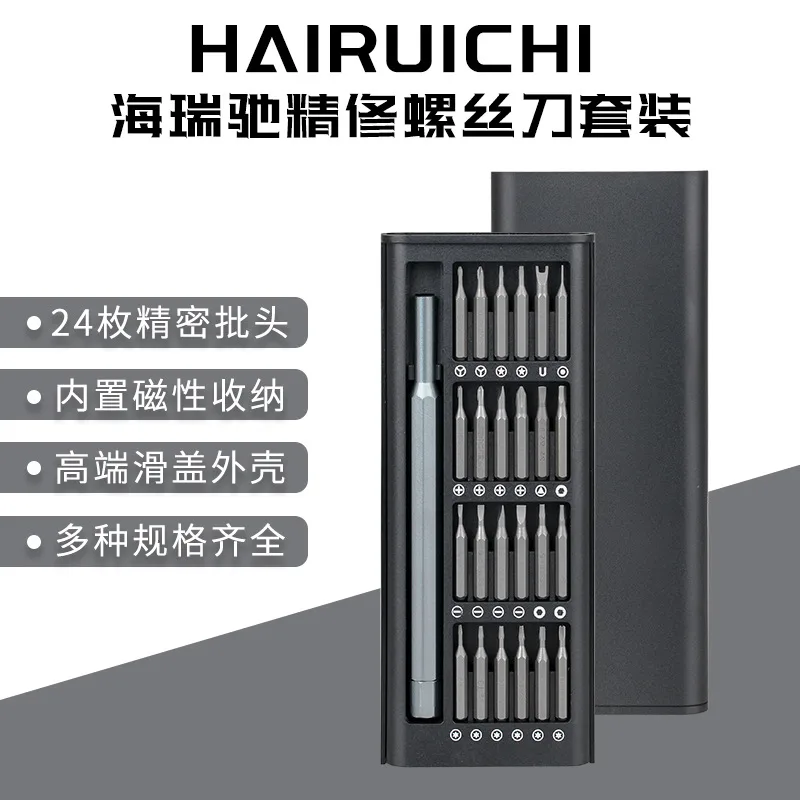
This precision screwdriver has a hardened specialist tip in S2 tool steel and costs 9.99 dollars. This guide explains why the steel and the fit matter so much at this size, how to release a tight screw, and how to look after the tip.
Why the tip material matters
Precision tips are thin, and thin steel deforms if it is not hard enough. A soft tip rounds over at the corners with the first stubborn screw and then fits badly in every subsequent one, which is how small fasteners get chewed up.
| Steel | Behaviour | Suits |
|---|---|---|
| Soft steel | Deforms on the first tight screw | Occasional loose screws |
| Chrome vanadium | Tough and shock resistant | Standard drivers |
| S2 tool steel | Hard; holds a fine tip | Precision and electronics work |
| Hardened specialist tip | Resists twisting in a small head | Repeated assembly work |
S2 tool steel is hardened enough to hold a fine point under load, which is exactly what a precision driver needs. The cost is that it is more brittle than soft steel, so it should not be used as a pry or struck with a hammer.
Fit matters more than force
At small sizes the tip has to fill the slot or the recess completely. A tip that is one size too small will contact only part of the head and will cam out as soon as any torque is applied, which is what rounds a screw.
| Fault | Result | Prevention |
|---|---|---|
| Tip too small | Cams out and rounds the head | Use the exact size |
| Tip too large | Does not seat; damages the slot edge | Use the exact size |
| Worn tip | Slippery in the head | Replace the driver |
| Excess torque on a soft screw | Head shears off | Release with a twist and pressure |
The technique for a tight screw is pressure first and rotation second. Pressing down along the axis keeps the tip seated while the screw is turned, and a screw that will not move with firm axial pressure needs heat, penetrating oil or a different approach rather than more force.
Precision screwdrivers in this range
Every option in this range
A hardened precision screwdriver with a specialist tip in S2 tool steel. Price is per driver.
| Option | Detail | Price |
|---|---|---|
| Precision driver | S2 tool steel, specialist tip | $9.99 |
One driver is a targeted purchase rather than a set, so the decision is whether the tip profile matches the fasteners being worked on. Buying the exact profile for a recurring job is more useful than a general set of soft drivers.
Looking after a precision tip
- Use the exact tip size; there is no tolerance at this scale.
- Press along the axis of the screw and turn steadily rather than jerking.
- Do not use the driver as a probe, a pry or a centre punch.
- Wipe the tip and check it against a known screw before an important job.
- Store the driver in a roll or a case so the tip is not knocked.
- Replace the driver once the tip is visibly rounded; it will damage fasteners.
Small fasteners and why they fail
Screws below about three millimetres behave differently from larger ones. There is very little material in the head, so the margin between undoing a screw and destroying it is narrow, and the tool accounts for most of that margin.
| Failure | What causes it | What prevents it |
|---|---|---|
| Rounded slot or recess | Tip too small or worn | Exact tip size, replaced when worn |
| Cam-out under load | No axial pressure | Press down while turning |
| Sheared head | Excess torque on a soft screw | Steady force, heat if tight |
| Deformed tip | Soft steel used on a tight screw | Hardened tip such as S2 |
| Thread stripped | Driving into a damaged thread | Check the thread before refitting |
Cam-out is the failure that catches people most often because it happens before the screw is obviously tight. The tip lifts out of the recess and spins, taking the corners off the head, and it happens because the tool was pushed sideways or not pushed down at all.
Deformed tips are the second cause, and they develop slowly. A driver that has been used on one stubborn screw will fit every subsequent screw slightly worse, which is why a precision driver is replaced rather than kept once its tip is visibly rounded.
Storing and carrying a precision driver
A precision tip is the most delicate part of any small tool, and most are ruined in storage rather than in use. A driver rolling loose in a drawer loses its corners against whatever else is there, and the damage is invisible until the next screw is attempted.
The practical answer is a case, a roll or a rack where the driver sits in its own slot. If the driver is used on electronics, a small pouch that also holds the fasteners being removed keeps both the tool and the screws safe, which matters when a screw is 2 mm across and easily lost on a floor.
Keeping the tip clean is the second habit. Adhesive, thread lock and fine swarf all collect in the flutes of a small tip, and a tip that is packed with debris does not seat properly in the screw head. A wipe at the end of the job takes seconds and prevents the problem entirely.
Frequently Asked Questions
What is S2 tool steel?
A shock-resisting tool steel that hardens to a high level, which is why it is used for tips that have to hold a fine point under load.
How do I remove a screw with a damaged head?
A slightly larger tip, firm axial pressure and patience. If that fails, the head has to be cut or drilled, which is why using the correct driver from the start matters.
Is a precision driver set better than one driver?
A set covers more fasteners, but only if the tips are hard enough to last. A single driver in the right profile with S2 steel often works out better than a large cheap set.
Can it be used on electronics?
Yes, provided the fastener type matches the tip. For live electrical work an insulated driver is required instead.
How much torque can it take?
Enough for small fasteners, which is what it is designed for. Heavy torque will break a hardened tip, so use a larger driver where a larger driver fits.
Choosing a precision driver
Identify the fastener profile first, then buy a driver with a hardened tip in that profile. The precision screwdriver in this range uses S2 tool steel.
Where several profiles are needed, a set with the same steel is the sensible route. Where one profile recurs, a single well-made driver outlasts a box of soft ones and damages fewer fasteners into the bargain.