Blog
Electric Drill Kit: Chuck Size, Torque and Speed


Electric Drill Kit look simple until the moment they are needed. The specification sheet is short, but every line on it changes what the item will do, how long it lasts and how much it costs to keep running.
All 12 options are listed below with prices from $36.34 to $61.40. Comparing them line by line takes a few minutes and saves the cost of buying twice.
What decides how an electric drill kit performs
Four things decide how {art} electric drill kit performs: size, material, build and the price band it sits in. The table below shows what each one changes in practice.
| Factor | What it changes | Typical choices |
|---|---|---|
| Chuck size | Sets the largest shank the drill takes and the torque it can pass. | 10 mm / 13 mm / 16 mm |
| Power and torque | More torque drives bigger bits and bores harder material. | 500 W / 800 W / 1,500 W |
| No-load speed | Fast is for small bits in soft material, slow is for big bits and steel. | 0-450 / 0-1,500 / 0-3,000 rpm |
| Hammer action | Hammer and rotary modes are what make masonry practical. | Drill only / drill and hammer |
| Chuck type | Keyed chucks grip hardest, keyless chucks change fastest. | Keyed / keyless / SDS-Plus |
Worth knowing: the cheapest option in a range is rarely the one that costs least over time, because consumables and replacement parts follow the purchase.
Drill types
There is no single best type, only the type that matches the work. This is where the choice is usually won or lost.
| Type | Best for | Limit |
|---|---|---|
| Corded drill | Steel, timber, long runs | Needs mains power |
| Cordless drill-driver | Assembly and light holes | Torque falls as the battery drains |
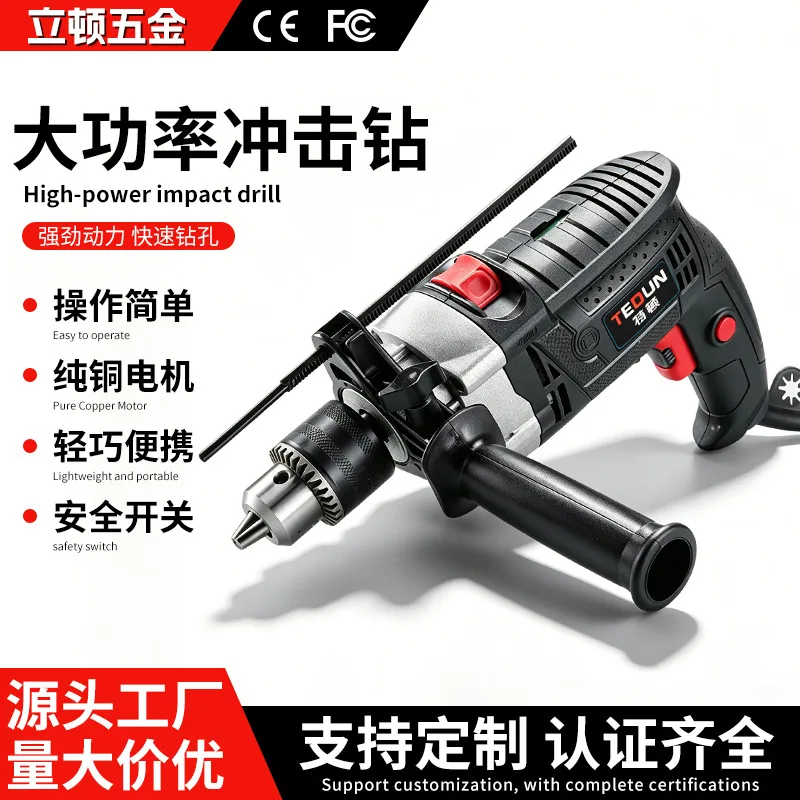
| Impact drill | Masonry up to about 13 mm | Too fast for large cores |
| Rotary hammer | Concrete and SDS bits | Heavy for small screws |
Drilling a clean hole
Good results come from a repeatable method rather than from force or guesswork. Work through the table in order and the outcome is predictable.
| Step | What to do | Why |
|---|---|---|
| Mark and centre punch | A punch stops the bit walking | A wandering bit snaps small diameters |
| Pick the speed | Slow for steel, fast for timber | Heat is what kills a bit edge |
| Use the right mode | Hammer only for masonry | Hammering steel work-hardens it |
| Clear the flutes | Lift the bit to clear swarf | Packed swarf is the main cause of burnt edges |
Electric Drill Kit in this range
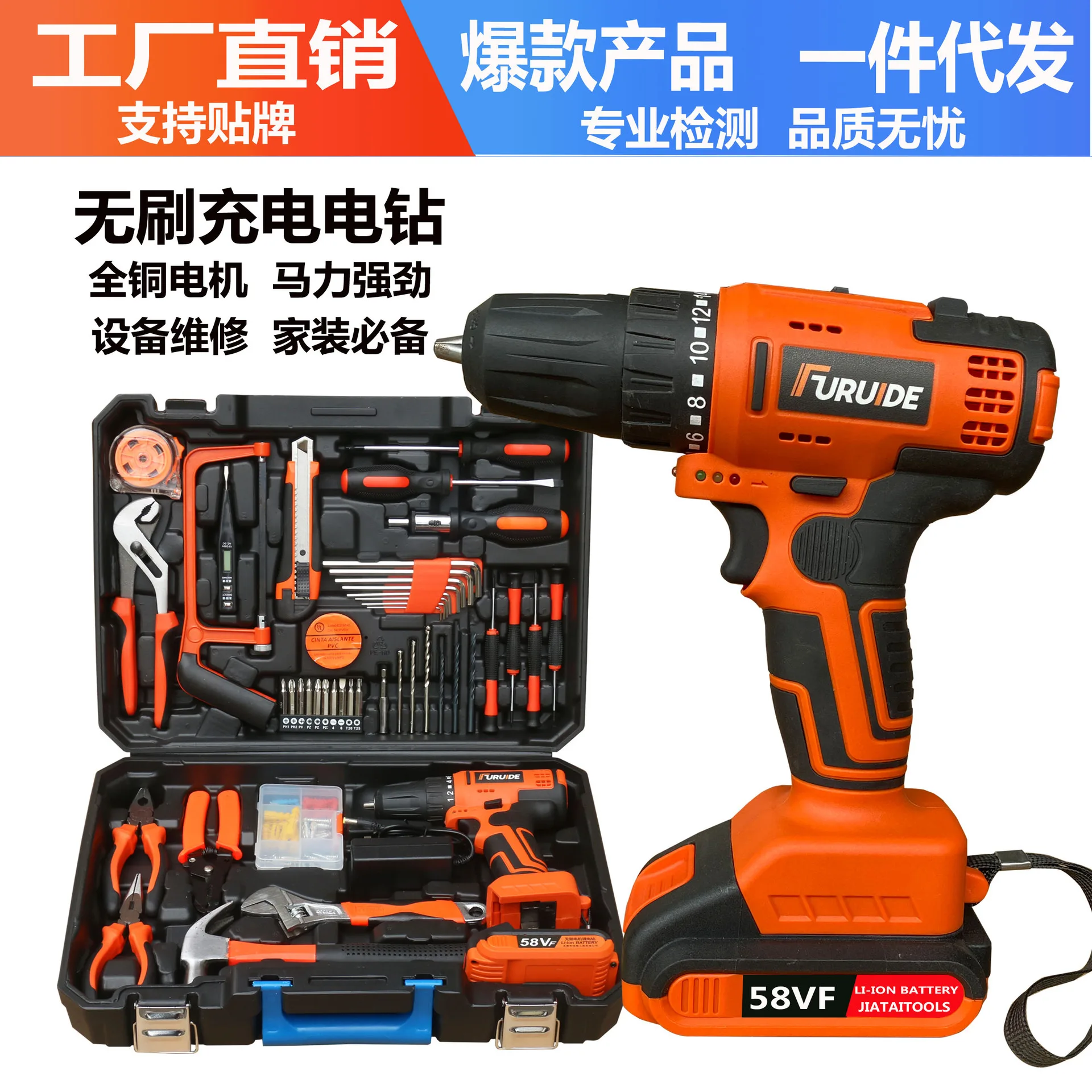
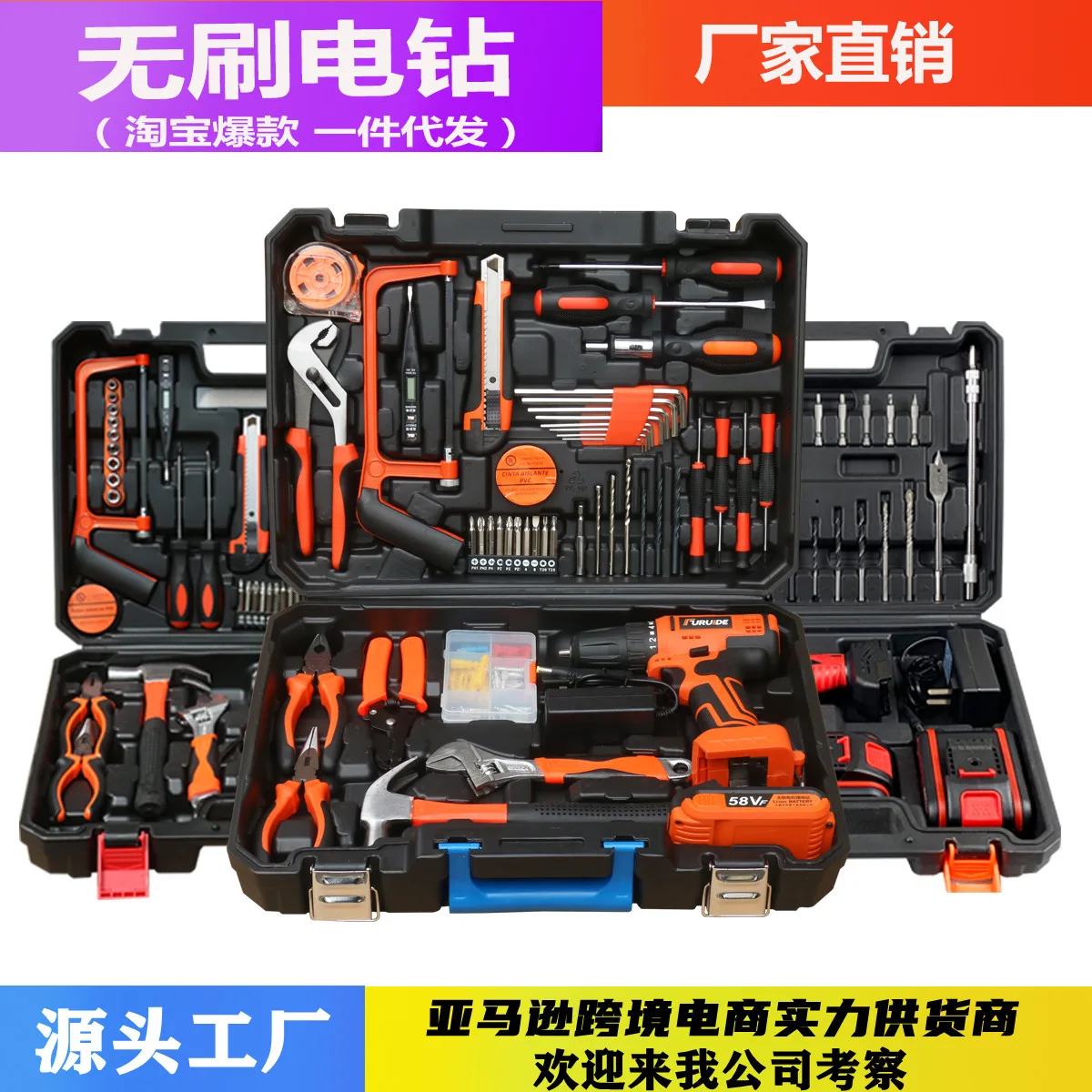
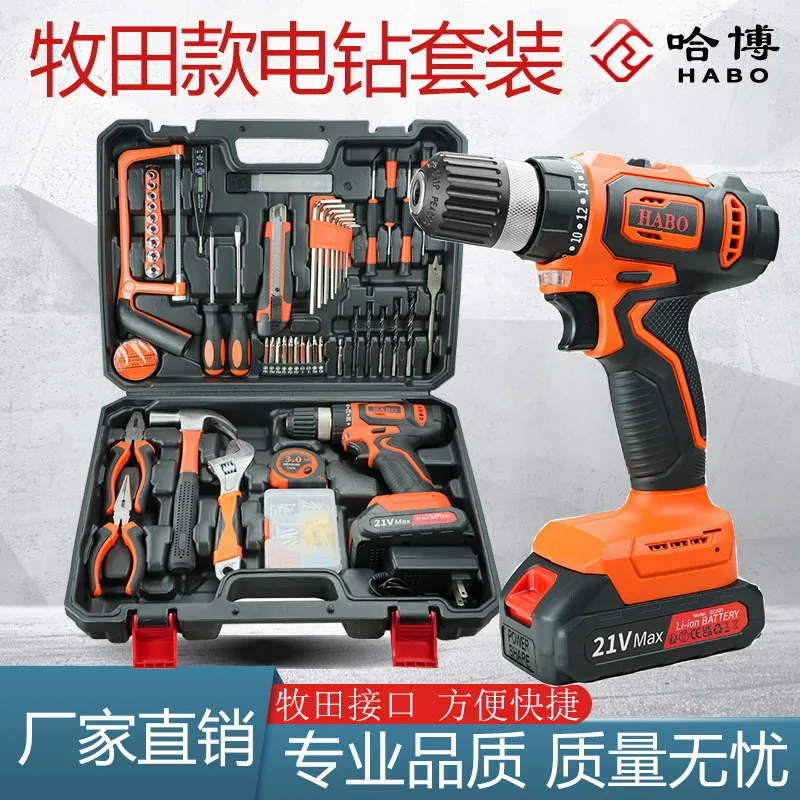
The listing below is the option this guide is built around. It shows the current price and the full specification.
Every option in this range
Every option in this range is listed below with its price, so the whole ladder can be read at once.
| Part of the range | Price | Options | Notes |
|---|---|---|---|
| Lower third of the range | $36.34 to $48.51 | 4 options | The sizes most buyers start with |
| Middle third of the range | $48.51 to $55.52 | 4 options | Where most of the value sits |
| Upper third of the range | $55.52 to $61.40 | 4 options | For heavy or continuous work |
Reading the ladder, the real jump in capability comes once rather than at every step, so it pays to find that step and buy there.
Prices and what the money buys
Two costs matter more than the purchase price: what has to be replaced, and how often. An option that costs a little more and lasts twice as long is the cheaper one over a year of work.
Looking after electric drill kit
Nothing in this range needs much looking after, but the small routines below are what separate an item that lasts a decade from one that lasts a season.
- Blow dust out of the motor vents after working in masonry.
- Check the chuck for runout; a bent chuck ruins bits.
- Keep the bit shanks clean so they seat square.
- Let the tool cool before storing it after a hard run.
- Check the cord and the plug for damage before each session.
- Grease an SDS chuck lightly, and never lubricate a keyed jaw.
Buying in quantity
Ordering more than one changes the calculation. Unit prices for larger quantities are quoted separately, and the saving usually appears once the order goes past a small multiple rather than on the second item.
For trade buyers the practical question is how many will be consumed in a year. Buying a year’s worth at once removes the cost of repeat shipping and the risk of a size going out of stock mid job.
Fitting and first use
Check the item against the listing as soon as the parcel is opened. Size, option and finish are the three things that are wrong when something is wrong, and all three are obvious in the first minute.
Read the maker’s clearance and torque figures before the first use rather than after. Nearly every early failure in a range like this is an installation problem rather than a manufacturing one.
Common mistakes
The commonest mistake is buying for the worst job rather than the usual one. A specification chosen for a task that happens twice a year is carried through every day of the other three hundred and sixty.
The second commonest is ignoring the consumables. What has to be replaced, and how often, decides the real running cost far more than the purchase price does.
Frequently Asked Questions
These are the questions that come up most often about Electric Drill Kit.
What is the difference between an impact drill and a rotary hammer?
An impact drill rattles the chuck while it spins, which suits brick. A rotary hammer drives a piston into an SDS bit, which is what cuts concrete.
Can I use a cordless drill for masonry?
Only small holes, and only with the hammer setting. Beyond about 8 mm, the clutch and the battery give up.
Why does my drill bit glow and stop cutting?
Overheating dulls the cutting edge. Lower the speed, ease the feed pressure and let the bit cut rather than rub.
Is there a warranty?
Faults in manufacture are covered under the standard warranty. Keep the order details, because the warranty is handled against the original purchase.
Can I collect instead of paying for delivery?
Collection is not offered for this range. All orders are despatched by the carrier selected at checkout.
Choosing the right one
Choosing well comes down to matching the specification to the work rather than to a budget. Work out the size, then the material, then the build, and the price follows.
The Electric Drill Kit range here covers every option listed above, with live stock and pricing.
If two options look equally suitable, take the larger one only if the work is likely to grow. Otherwise take the smaller and keep the difference for consumables.