Blog
Power Tool Accessories: Chucks, Bars, Chains and Adapters


Power tool accessories are where a tool either becomes useful or becomes expensive, because a drill without the right chuck, or a mini saw without the right chain, is not a working tool. This guide covers the accessories we stock, what each one fits, and how to avoid the two classic mistakes: buying a consumable that does not match the machine, and buying a cheap accessory that damages an expensive tool.
Accessories have to match three things
- Fit. Chuck taper or thread, bar length and chain pitch, and spindle diameter are all specific. A chain that is close but not correct will wear the bar and the sprocket.
- Rated speed. Any accessory that spins carries a maximum rpm. An accessory run above its rating can fail, whether it is a disc, a wire brush or a cutting head.
- Consumable versus durable. Chains, blades and discs wear out by design. Chucks and adapters last, and they are the parts worth buying properly.
Chucks, adapters and rotary tools
| Accessory | Fits | Common mistake |
|---|---|---|
| Keyless drill chuck | Drills with a B10 to B22 taper or threaded spindle | Buying a chuck with the wrong mount |
| Rotary tool kit | Cutting, grinding, polishing and drilling small parts | Running it too fast for a polishing bit |
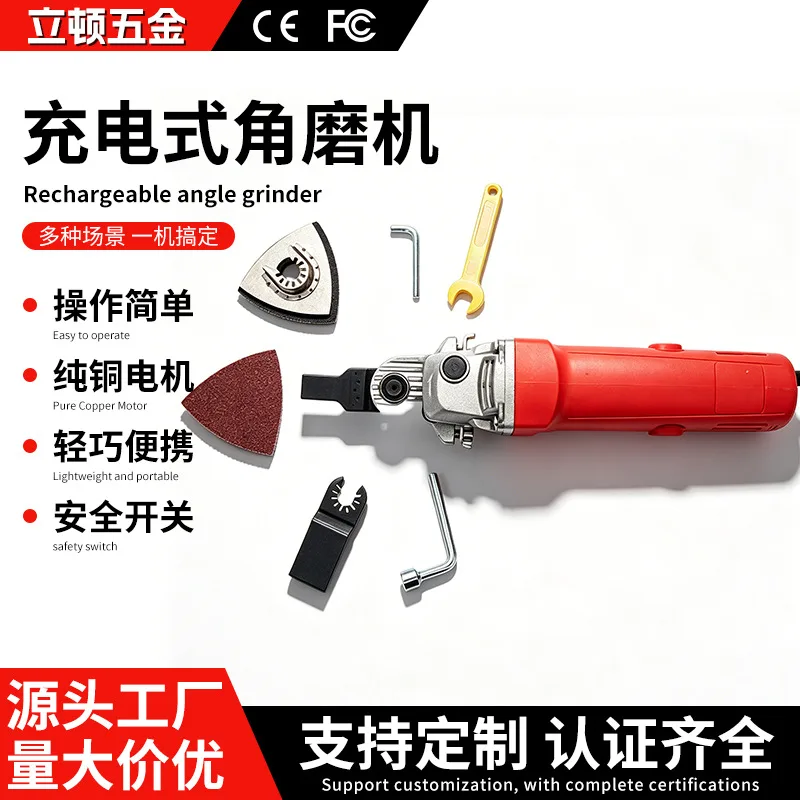
| Grinder to multi-tool adapter | Converting a grinder spindle to an oscillating tool | Assuming every grinder has the same thread |
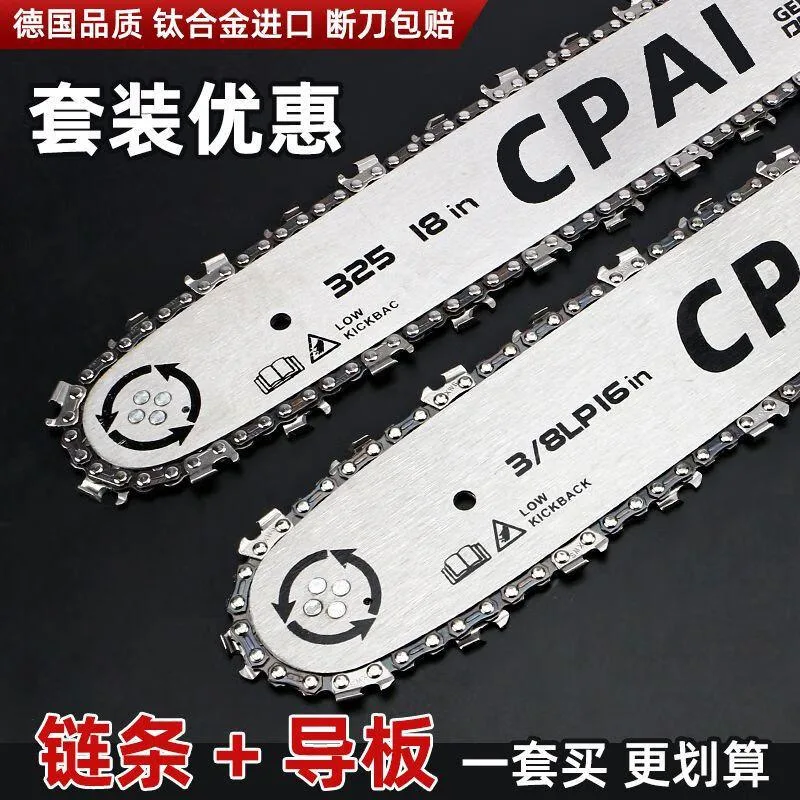
| Guide bar and chain | Mini and full-size chainsaws | Mismatching pitch, gauge or link count |
Chucks and adapters
Keyless drill chucks from 0.6-6.5 mm up to 5-20 mm, on B10 to B22 taper or threaded mounts are the accessory that turns a bare spindle into a usable drill, and the mount is the number to check first. An adapter is the other half of the story: an angle grinder to oscillating multi-tool adapter lets one machine drive two very different tool heads, which saves buying a second tool for occasional use. Both are durable parts, so buy the version that matches your machine exactly rather than a kit that nearly fits.
Rotary tools and small-scale work
A 12 V mini rotary tool kit at 12,500 rpm covers cutting, grinding and polishing small parts, and a cordless USB rotary tool kit with 18 to 180 pieces is the version that travels. Mains-powered rotary tool kits with EU, UK or US plugs suit bench work where battery life would be a nuisance. The mistake with rotary tools is speed: polishing and brushing need low rpm, and running a polishing bit at full speed burns the material instead of polishing it.
Bars, chains and cutting accessories
Chainsaw consumables are specified by pitch, gauge and link count, and all three have to match. Guide bars and chains for mini chainsaws in 4, 6, 8, 10 and 12 in, at 1/4 and 3/8 pitch cover the small one-hand saws, and mini guide bars for one-hand cordless saws are the replacement part when the bar wears faster than the chain. For full-size saws, chainsaw chains from 4 to 20 in and chains from 12 to 20 in in 45 to 76 link counts, in eight types let you match the chain to the saw rather than the saw to the chain. A chain and guide bar set in manganese steel is usually the better buy, because a worn bar will destroy a new chain in a few cuts.
Powered accessories for specialist work
A cordless hydraulic crimping tool from 10 to 300 mm2 at 70 kN is the accessory category where the tool and the job are inseparable: matching the die to the lug matters as much as the force, and a crimp made with the wrong die is a joint that fails inspection. A corded torque screwdriver covers repetitive assembly where a consistent, repeatable torque matters more than speed. In both cases the accessory is really a specialised tool, and it is worth buying for the specification rather than the price.
Keeping accessories alive
Consumables fail early for predictable reasons. Chains go blunt when they hit grit or a nail, and a blunt chain wears the bar and the sprocket, so sharpen or replace it before it damages the saw. Cutting discs and burrs are damaged by heat and by side loading, so let the tool do the work and do not lean on it. Chucks and adapters fail when they are run out of balance or with a bent bit, which is why a bent bit should be replaced rather than straightened. Store everything dry, and keep chains oiled and discs flat, so the accessory is ready when the job arrives.
Frequently asked questions
How do I know which drill chuck fits my drill?
Check the spindle: either a taper size such as B10 to B22, or a thread size. The chuck mount has to match exactly, and the capacity range then decides which bits it will hold.
What do the numbers on a chainsaw chain mean?
Pitch is the distance between drive links, gauge is the thickness of the drive link, and the link count must match the bar. All three have to be right or the chain will not run correctly.
Can I use one rotary tool for cutting and polishing?
Yes, with the right bit and the right speed. Polishing needs a low rpm and a soft wheel, while cutting needs a higher speed and a hard burr.
Should I replace a chainsaw bar or just the chain?
If the bar is worn, grooved or has a damaged nose sprocket, replace it. A worn bar will ruin a new chain within a few cuts.
Are cheap accessories a false economy?
Often, yes. A cheap chain or disc wears faster and can damage the tool, so the cost shows up in the machine rather than at the till.
Where to start
Browse the full Power Tools range, or the wider Power Tools category if you also need the machines themselves. Tell us which tool you are fitting out, its spindle or bar specification, and what you cut, and we will point you at the accessories that match.