Blog
Drill Types Explained: Corded, Cordless, Impact Drills and Rotary Hammers

Most drill problems are the wrong drill for the material, not the wrong brand. A cordless drill driver that stalls on brick, an SDS rotary hammer used to drive screws, a 500 W drill asked to bore 100 mm holes in concrete: each of these is a type mismatch, and no amount of technique fixes it. This guide sets out the drill types we stock, what each one is genuinely good at, and how to choose between them when you only want to buy one.
The four drill types, and the job each one wins
| Type | Action | Best material | Wrong tool for |
|---|---|---|---|
| Electric drill / drill driver | Rotates only | Timber, sheet metal, plastic, screwdriving | Concrete, masonry |
| Impact drill | Rotates plus hammer action | Brick, blockwork, light concrete | Steel precision work, large cores |
| Rotary hammer (SDS Plus) | Piston hammer plus rotation | Concrete, masonry, chiselling | Screwdriving, fine timber work |
| Cordless drill driver | Rotates, battery powered | Anywhere without power, assembly work | Heavy masonry, long continuous use |
Electric drills and drill drivers
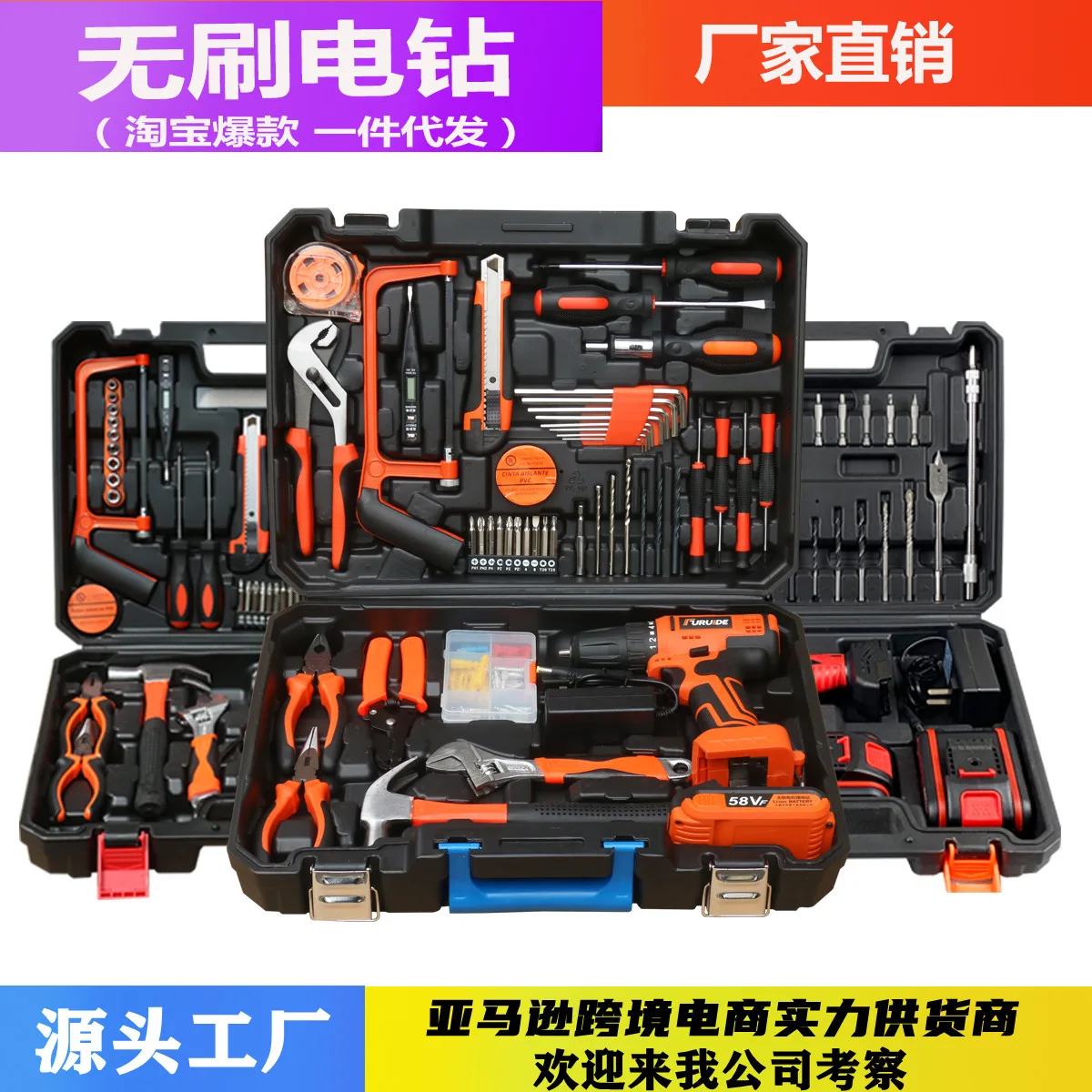
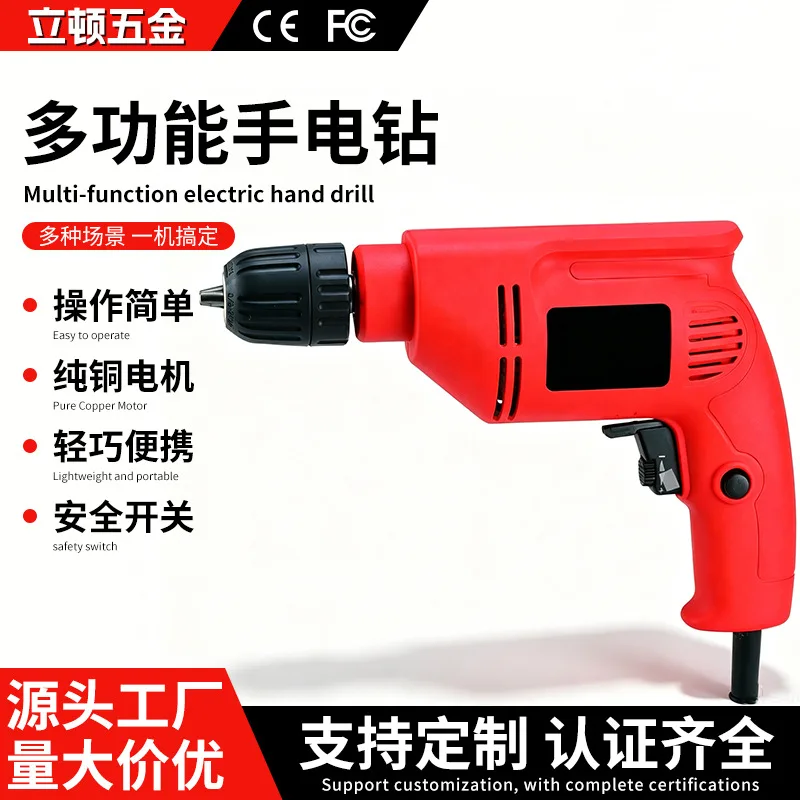
A plain electric drill only rotates, and that is exactly why it is the best tool for timber, sheet metal and screwdriving. Two specifications decide what it can do: chuck size and power. A 13 mm chuck takes the common twist, brad-point and masonry bits; smaller chucks limit you to light work. Our 13 mm chuck electric drill in four series is the straightforward bench and site drill, and the electric drill kit with accessories adds the bit set and case that most people end up buying separately.
Variable speed matters more than headline wattage for most work. Being able to start slowly is what stops a bit wandering across a marked centre punch, and it is what makes a drill usable as a screwdriver without stripping heads.
Impact drills
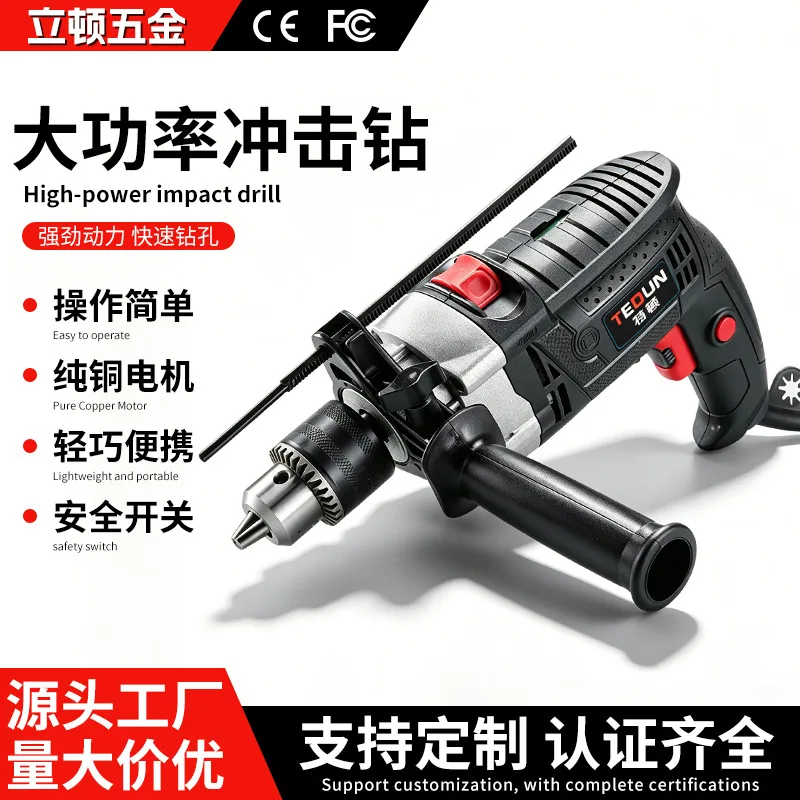
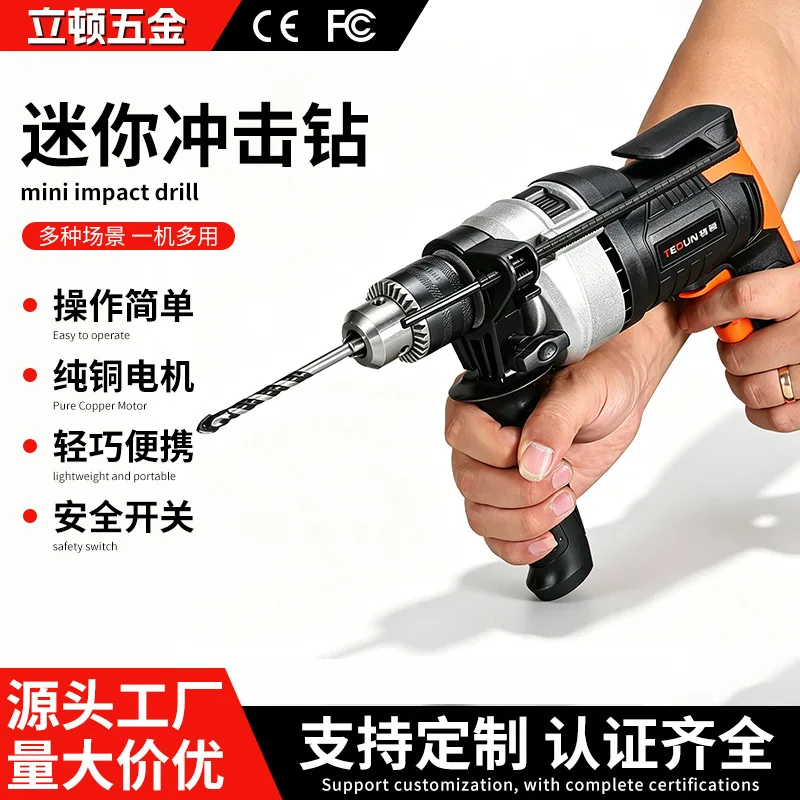
An impact drill adds a ratcheting hammer action behind the rotation. It is the right compromise for a workshop that occasionally has to fix into brick and blockwork: lighter than a rotary hammer, cheaper than a rotary hammer, and perfectly capable of a 6 mm or 8 mm wall plug hole. The variable-speed impact drill with chuck and side handle is the general-purpose version, the 500 W 13 mm impact drill with 20 Nm is the value option available bare or with 28 and 68 piece sets, and the corded impact drill with speed switch is the brushed-motor workhorse for stone and wood.
The limitation to understand is that a ratcheting impact mechanism is not a piston hammer. Press too hard and the teeth simply stop engaging; the drill then rotates without hammering, which is why impact drills struggle in hard concrete no matter how new the bit is.
Rotary hammers and SDS Plus
A rotary hammer uses a pneumatic piston to strike the bit while the bit turns, and the SDS Plus shank lets the bit slide in the holder so the hammer blow reaches the tip instead of the chuck. That is why a rotary hammer at similar wattage drills concrete several times faster than an impact drill. Our three-function SDS Plus rotary hammer gives rotation only, hammer only for light chiselling, and rotation with hammer for drilling. If your work includes concrete, brick or stone on a regular basis, this is the drill to buy and the impact drill is the one to borrow.
Cordless drill drivers
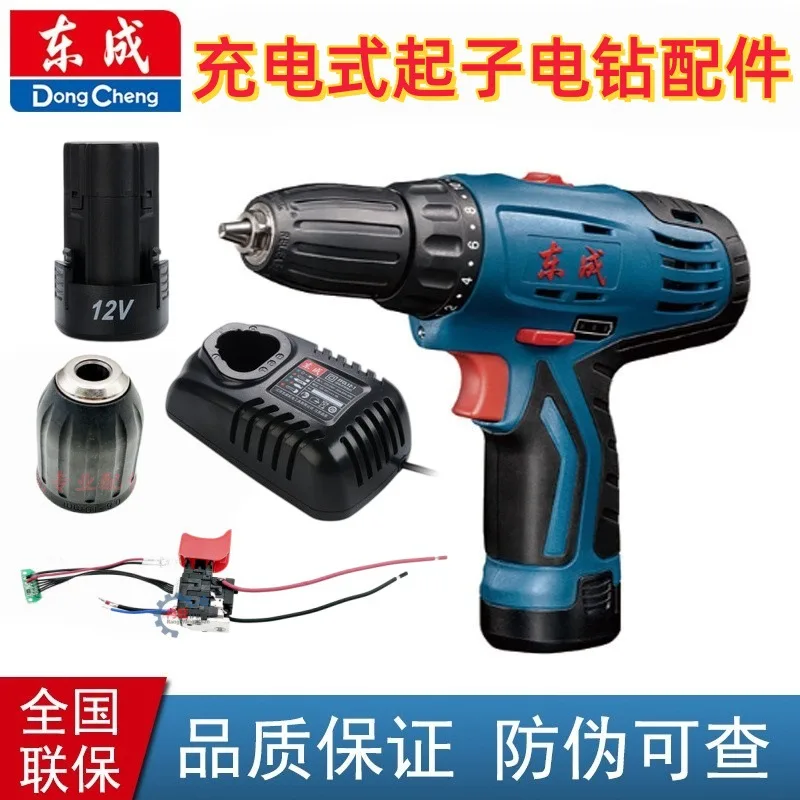
Cordless tools trade power for freedom, and modern battery platforms have closed most of that gap. The specifications worth comparing are voltage, torque and battery capacity:
- Voltage sets the ceiling on power. 12 V suits assembly and small holes, 18 to 21 V covers most trade work.
- Torque in Nm decides what the clutch can drive before it slips. Compare torque, not just voltage.
- Battery capacity in Ah sets runtime. Two smaller batteries usually beat one large one because you can charge one while using the other.
- Brushless motors run cooler and longer per charge, and they are the reason a modern 21 V drill can match an older 18 V corded tool in short bursts.
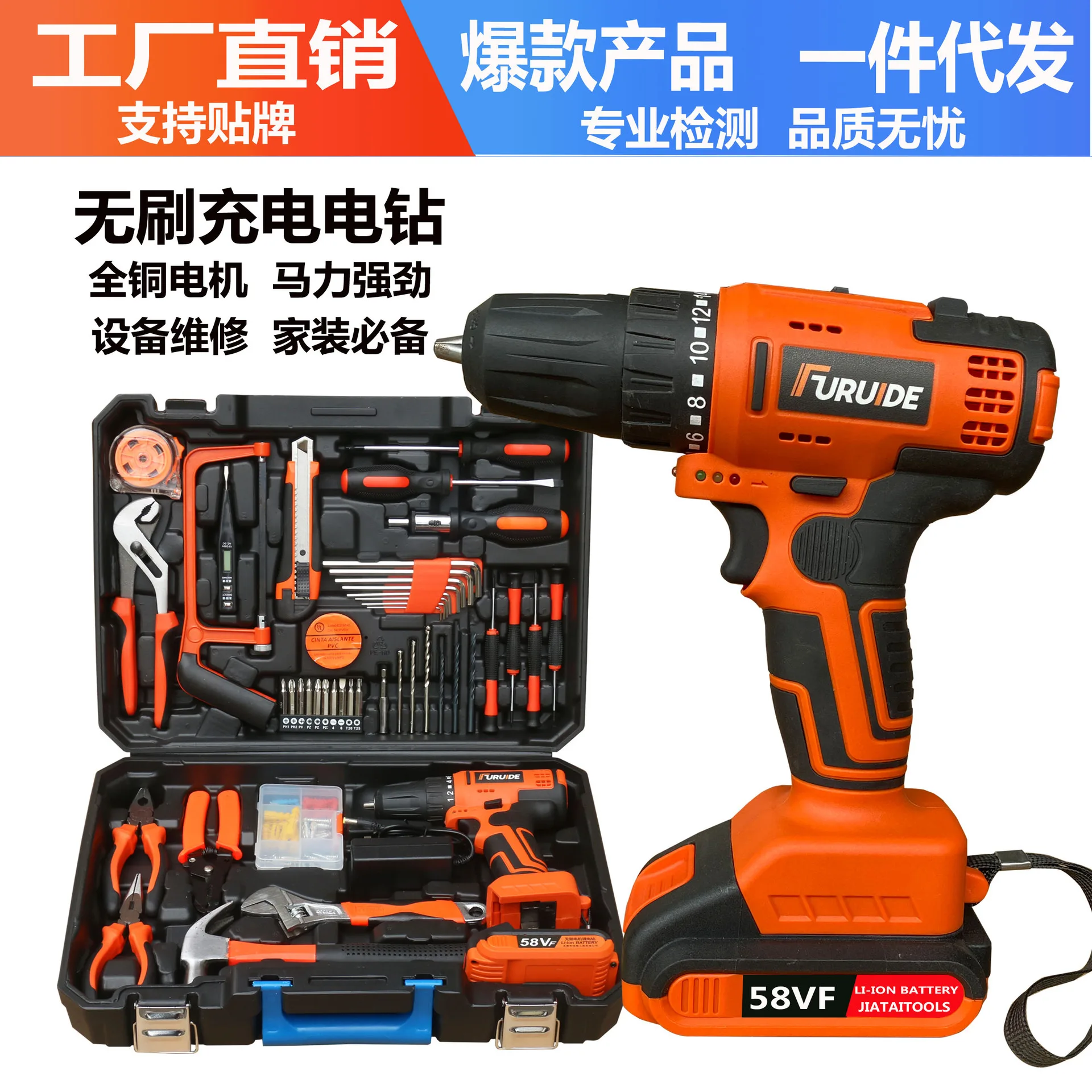
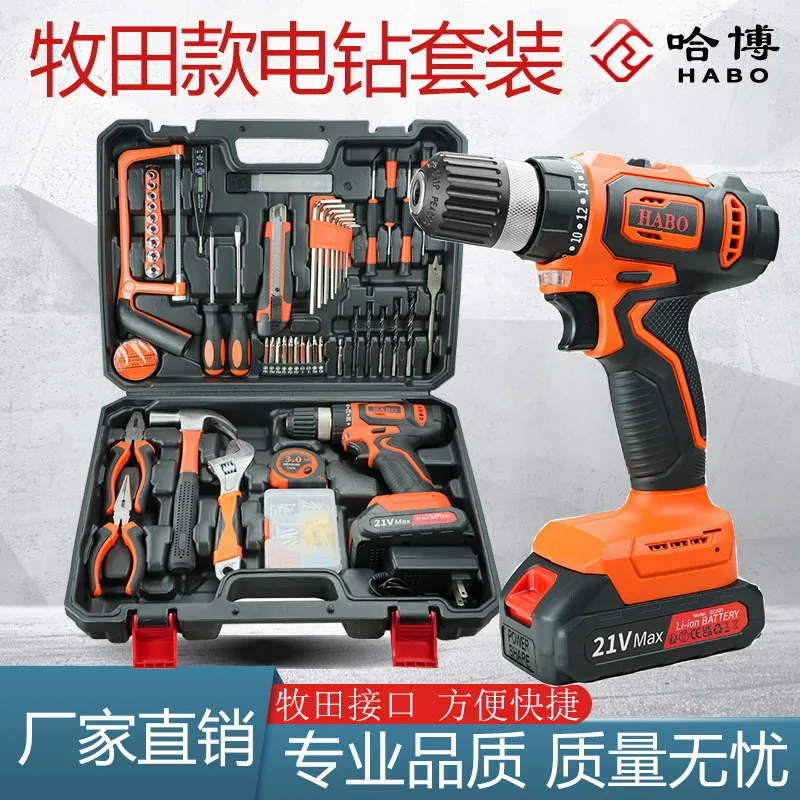
In our range, the 21 V 30 Nm brushless cordless drill is the standard trade choice in standard or impact form and several kit options, the rear-handle multi-speed brushless drill suits heavier and more controlled work, the brushless cordless impact drill with keyed chuck covers renovation and engineering use, and the keyed-chuck cordless drill driver is the household and light industrial option.
Kit choice is a real decision rather than a marketing one. The cordless drill and screwdriver with eight kit options on a Makita-style battery and the DC 48-110 V drill driver kit both let you buy bare, one battery or two; buy two if the drill earns money, one if it does not.
Chucks, and why keyed still exists
Keyless chucks are faster and fine for most work. Keyed chucks hold harder and grip round-shank bits better, which is why they still appear on impact and engineering drills. If a bit slips under load, the problem is usually the chuck, the bit shank, or both, rather than the drill.
Frequently asked questions
Can one drill do everything?
A cordless drill driver with two batteries plus a rotary hammer covers about 90% of jobs. If you only buy one tool and never touch concrete, a brushless cordless drill driver is the best single choice.
Why does my drill smoke or smell hot?
Usually an overloaded brushed motor working outside its duty cycle, or a blunt bit being pushed too hard. Stop, let it cool, and check the bit before continuing.
Do I need brushless?
If the drill runs for long periods or you are buying for the long term, yes. Brushless motors run cooler, last longer and give noticeably more runtime per charge, at a price premium.
What does 20 Nm or 30 Nm mean on a drill?
It is the maximum turning force at the chuck, used mainly to compare tools. Higher torque drives larger bits and resists stalling, but it also means the clutch has to be set carefully to avoid stripping screws.
Is a hammer drill the same as a rotary hammer?
No. A hammer drill, or impact drill, uses a ratcheting action in the chuck. A rotary hammer uses a pneumatic piston and an SDS shank. They look similar and perform very differently in concrete.
Where to start
Browse the full drills range, or the wider Power Tools category for grinders, saws and accessories. Tell us what you drill most and whether you work on site or at a bench, and we will match the type and the kit to it.