Blog
Grease Guns Explained: Hand, Pneumatic and Cordless Grease Guns Compared

Greasing is the cheapest maintenance there is and the one most often skipped, because the tool is either awkward to use or empty when you need it. A grease gun that fits the nipple, holds enough grease for a full service and delivers it at the pressure the joint needs turns a two-hour job into twenty minutes. This guide covers the grease guns we stock, how the pressure ratings translate into real work, and how to choose between hand, pneumatic and cordless.
What a grease gun has to do
Four things decide whether a grease gun is useful:
- Pressure at the coupler. A dry or blocked joint needs high pressure to break through; ratings of 10,000 psi and 12,000 psi exist precisely because 6,000 psi often is not enough.
- Cartridge capacity. 400 cc and 600 cc are the common sizes. A larger barrel means fewer refills on a long service round.
- Delivery method. One hand or two, lever or pistol grip, manual or powered. Matching this to how you actually reach the nipple matters more than the spec sheet.
- Type of grease it takes. Bulk fill, cartridge, or both. Bulk is cheaper per kilogram; cartridges are cleaner in the field.
The three drive types
Hand grease guns
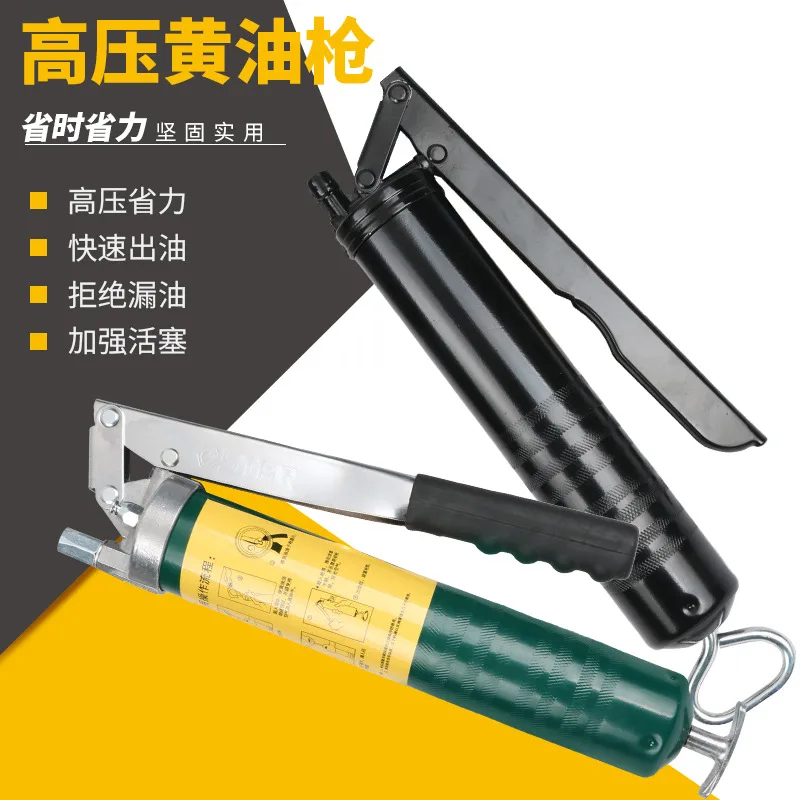
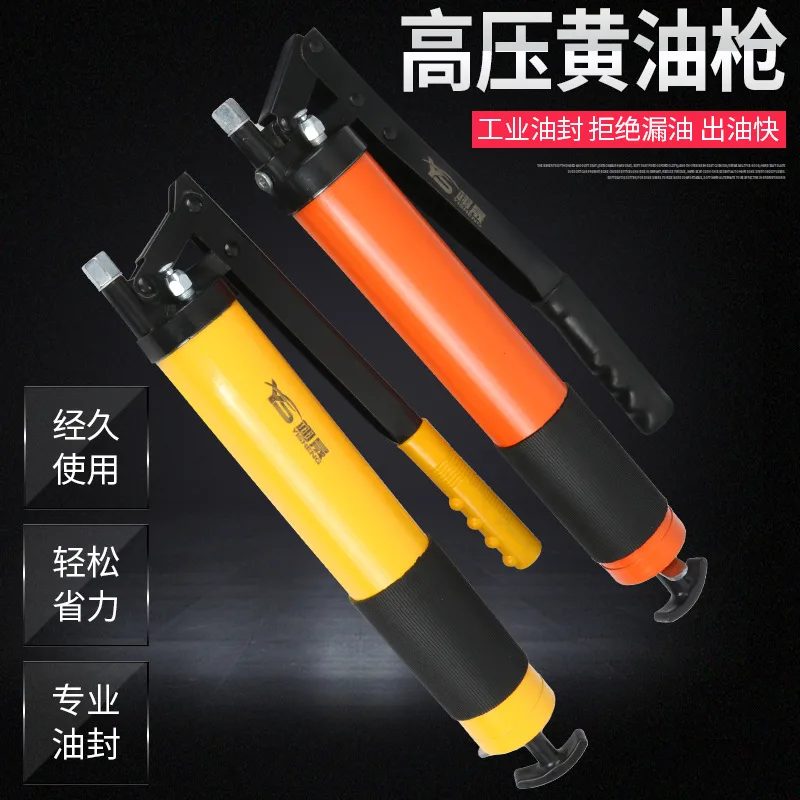
Manual guns are the default for a reason: they never run out of power, they are light, and they give the operator direct feel for whether a joint is taking grease. Our lever-action range covers the common configurations:
- Lever-action hand grease gun, single or double rod, 600 cc steel barrel
- Double-rod hand grease gun, 600 cc, 12,000 psi
- Aluminium-head hand grease gun, 400 cc
- Transparent-barrel grease gun, 600 cc, single or double piston
A transparent barrel is a small feature that saves a lot of time: you can see how much grease is left and whether the follower is pulling air.
High-pressure and high-capacity hand guns
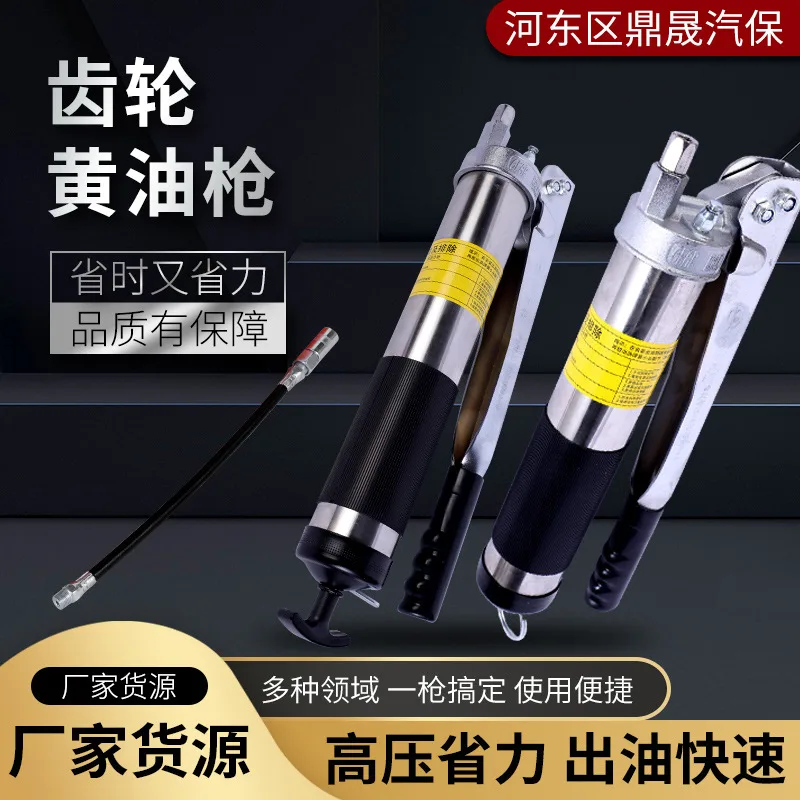
When a joint is stubborn, or the grease is a stiff lithium complex, a geared gun multiplies the force you apply. The double-gear grease gun with an 800 cc stainless barrel and 12,000 psi and the high-capacity gear-drive gun are the answers for plant, excavators and machinery that sits outdoors. The dual-pump lever gun reaches the same pressure with a two-stage pump rather than a gear train, which is lighter in the hand.
For heavy construction maintenance, the German-style lever grease gun in alloy and the professional heavy-duty hand grease gun are built around repeated daily use rather than occasional servicing.
Pneumatic grease guns and pumps
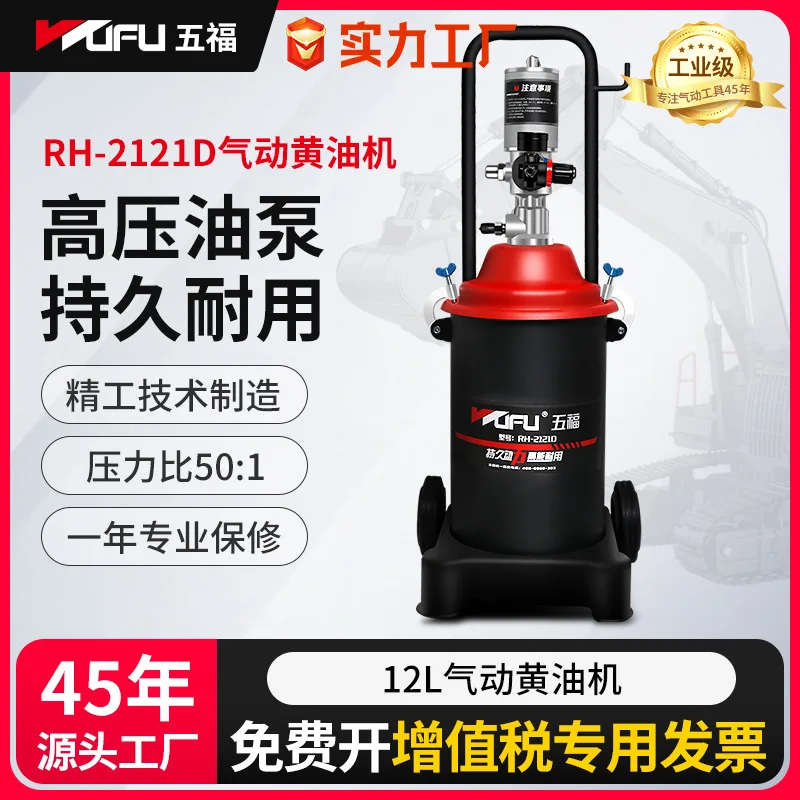
If you already run compressed air, a pneumatic gun removes the hand effort entirely. The high-pressure pneumatic grease injector covers workshop use, while the 12 litre air-operated grease pump with hose and gun is the answer for a workshop greasing bay or a fleet operation where several machines are serviced in a row. A drum or pail pump is the point at which greasing stops being a chore and becomes a two-minute stop on the service round.
Cordless electric grease guns
Battery guns are the best of both worlds for field work: no air line to drag and no hand pumping. The cordless electric grease gun, 600 cc and 10,000 psi is available in rod or dual-use type, and the brushless or brushed cordless gun gives the choice between longer runtime and lower price. Both take standard cartridges, so refilling does not need special parts.
Pressure: what 10,000 psi actually buys you
| Drive type | Typical pressure | Where it is the right answer |
|---|---|---|
| Basic hand gun | 6,000-8,000 psi | New or well-maintained joints, light plant |
| Geared or dual-pump hand gun | 12,000 psi | Blocked or neglected nipples, stiff grease |
| Pneumatic injector | High, air-driven | Workshop use with an existing air supply |
| Cordless electric | 10,000 psi | Field servicing without air or long manual effort |
| Drum or pail pump | High, continuous | Fleet and workshop greasing bays |
Pressure only helps if the coupler seals. A worn coupler, or one that does not match the nipple type, leaks instead of building pressure, which is why the cheapest fix for “the gun will not push grease” is usually a new coupler rather than a bigger gun.
Couplers, hoses and extensions
Access decides the job as much as pressure does. Recessed nipples and nipples behind a guard need either a flexible hose or a rigid extension. Our grease gun hose and extension tube in nine lengths from 15 cm to 1 m covers most situations; a 30 cm flexible hose reaches almost everything that a rigid tube cannot.
Filling: cartridge, bulk or suction
Cartridges are clean and fast, and they are the right choice when the gun travels between sites. Bulk filling from a drum or pail is far cheaper per kilogram and the right choice if you grease the same machines every week. If you bulk fill, use a proper filler pump rather than a spatula: air pockets are the main cause of a gun that pumps nothing.
Frequently asked questions
How much pressure do I need in a grease gun?
6,000 to 8,000 psi handles most routine servicing. Buy a 12,000 psi gun if you service older or neglected equipment, where joints can be partially blocked and stiff grease needs more force to move.
Why does my grease gun pump air instead of grease?
Almost always air trapped in the barrel or a follower that is not seated. Release the plunger, bleed the gun through the bleed valve if it has one, and re-seat the follower. A second cause is a worn coupler that leaks faster than the gun can build pressure.
Hand, pneumatic or cordless grease gun?
Hand for occasional servicing and one or two machines. Pneumatic if you have air and service several machines at a bench. Cordless if you service machines in the field and want neither an air line nor manual effort.
Can I use any grease in a cordless grease gun?
Match the grease grade to the machine, not the gun. Cordless guns deliver more consistent pressure than a hand gun, so a stiff NLGI 2 grease that was difficult by hand becomes straightforward.
How often should a grease gun be serviced?
Keep the coupler clean, wipe the barrel threads before refilling, and store the gun with the plunger released. Most grease gun failures are dirt in the barrel or a worn coupler, both preventable.
Where to start
Browse the full grease guns range, or the wider Air Tools & Spraying category for spray guns, blow guns and air line equipment. Tell us how many machines you service and whether you have air on site, and we will match the drive type to the round.