Blog
Foot Pumps Explained: Single, Twin and Triple Cylinder Air Pumps


A foot pump is the tool you do not think about until a tyre is soft and the nearest compressor is a mile away. It is also the one pump that works when the battery is flat, the van is loaded, or the car is in a field. This guide covers the foot pumps we stock, how single, twin and triple cylinder designs differ in practice, what the psi and pressure gauges actually tell you, and how to keep one working for years.
Why a foot pump still earns its place
Three reasons, and none of them are nostalgia:
- It has no power dependency. No 12 V socket, no battery, no air line. That matters for trailers, caravans, ride-on mowers and anything parked away from power.
- It is a two-hand tool. Both hands stay free to hold the valve and check the gauge, which is faster than fighting a hand pump against a stiff valve stem.
- It is accurate enough for most vehicles. A good gauge on a foot pump is accurate to a couple of psi, which is inside the tolerance most car and bike tyres need.
Single, twin and triple cylinder: what changes
Cylinder count changes how much air each stroke moves, and therefore how long the job takes:
- Single cylinder. The lightest and the cheapest. Ideal for bicycles, small trailers, wheelbarrows and top-ups.
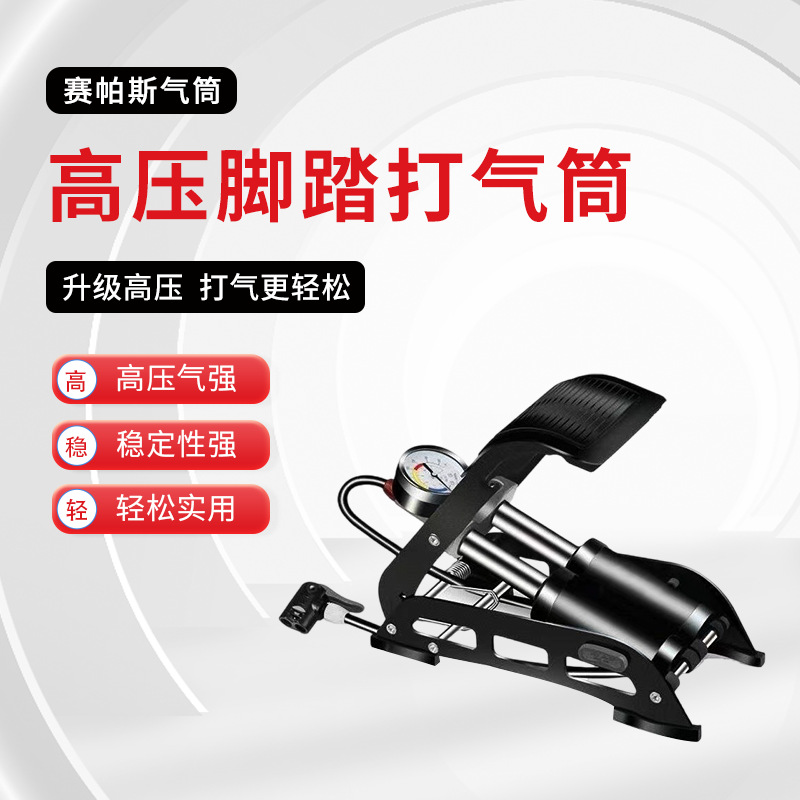
- Twin cylinder. Roughly half the strokes for the same pressure rise, and the standard choice for car tyres.
- Triple cylinder. Fewer strokes again, with more resistance under foot. Worth it if you inflate car and van tyres often.
The trade-off is effort per stroke against number of strokes. Twin cylinder is the sweet spot for most people, which is why it dominates our range.
If you are buying one pump for a car, the twin cylinder high pressure foot pump with gauge is the sensible default: it halves the strokes compared with a single cylinder without making the pump heavy enough to be awkward in a boot.
The foot pumps we stock
| Model family | Best for |
|---|---|
| Single cylinder, high pressure, with gauge | Cars and bikes, light and compact |
| Twin cylinder, high pressure, with gauge | The general-purpose choice for car tyres |
| Twin cylinder, 160 psi | Everyday car and bike inflation |
| Single, twin or triple cylinder, 160 psi | Choosing cylinder count for your workload |
| Foot-operated, single or twin cylinder, 160 psi | General domestic use |
| Twin cylinder with pressure gauge | Retail and colour-matched kits |
| Aluminium foot-operated, 160 psi | Lighter body, easier to store in a car |
| Mini portable, 180 psi | Bike bags, small boots, high-pressure tyres |
| Horizontal, large gauge, iron barrel | Stable under foot, easy-to-read gauge |
| Six-model range, single and twin | Matching a pump to a specific vehicle |
| Nine-model range, 160 psi | Trade and workshop supply |
| Twin cylinder, iron, 1.5 kg | Bicycle tyres needing higher pressure |
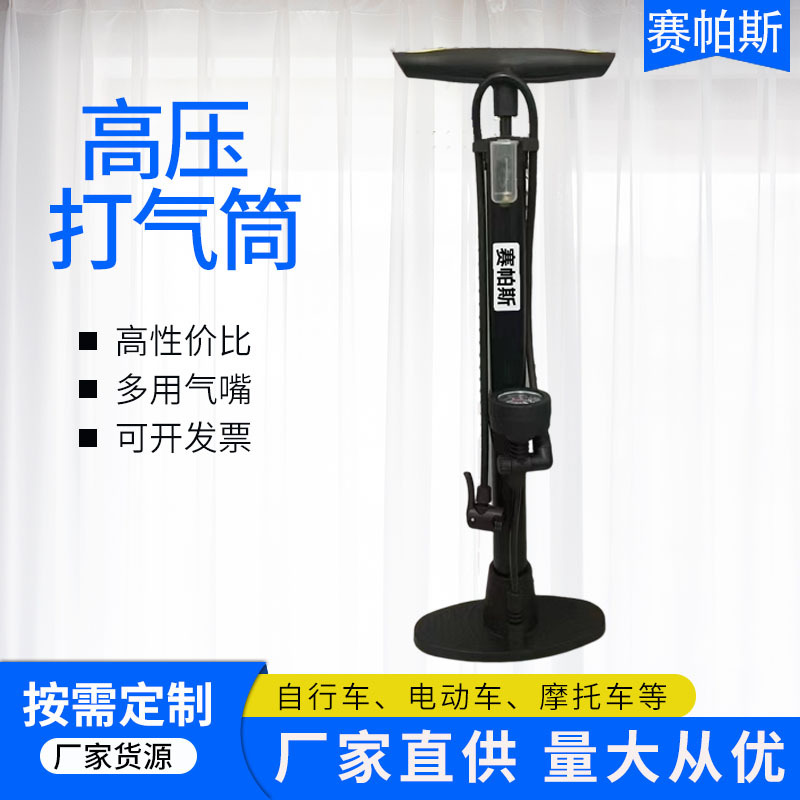
| Floor standing, iron, 160 psi | Workshop corner, bicycle and car use |
Reading the pressure gauge
Two things decide whether a gauge is useful: its range and its position.
A 160 psi gauge is the right range for car and bike tyres, because most car tyres sit between 30 and 40 psi. On a 160 psi scale that is in the lower quarter, where graduations are closest together and easiest to read accurately. A gauge reading to 300 psi puts the same pressure into the bottom eighth of the dial, which is harder to read and no more useful.
Position matters just as much. A gauge mounted on the pump body is read while you stand over it; a gauge on the hose end is read at the valve. Larger dials with a horizontal pump body are easier to read from a standing position, which is why they are popular for workshop use.
Barrel, body and foot plate
Foot pumps fail in predictable places. The barrel corrodes if the pump is stored damp, the hose perishes at the crimp, and the foot plate cracks if the pump is used on gravel or stood on sideways. Iron and stainless barrels resist corrosion much better than painted steel, and a pump with a broad, flat foot plate is more stable on a driveway.
Light weight is not always a virtue here: a heavy pump stays where you put it, which matters when you are pushing down with one foot and holding a valve with the other hand.
If storage space is the constraint rather than weight, the mini portable foot pump rated to 180 psi covers car and bike tyres from a body small enough to live permanently in the car.
Adapters and valve types
Two practical checks before you buy: confirm the floor standing 160 psi pump gauge range suits the pressures you actually use, and confirm the connector matches your valves rather than buying an adapter that goes missing.
Most foot pumps ship with a flexible hose and a thumb-lock connector. Check that the connector works with the valves you actually own: a Schrader car valve, a Presta bike valve, and the small valves on ride-on mowers and wheelbarrows are not the same fitting. If you inflate a mix of vehicles, buy a pump with a reversible or twin-head connector rather than adding a separate adapter that gets lost.
Frequently asked questions
Is a foot pump better than an electric inflator?
For occasional use, yes: it never has a flat battery and it works anywhere. An electric inflator wins on speed and on very high pressures, but most people inflate tyres a few times a year, and a foot pump covers that easily.
How many cylinders do I need?
Twin cylinder for car tyres. Single is enough for bikes and small tyres. Triple only if you inflate car or van tyres regularly and want fewer strokes.
Why does my foot pump take so long?
Usually a leaking connector or a damaged hose, not the pump. Check the hose crimp and the valve connection, and make sure the piston seal has not dried out.
What pressure should I inflate a car tyre to?
Use the vehicle manufacturer’s figure, normally on a sticker inside the driver’s door pillar or in the handbook. It is usually 30 to 40 psi for a passenger car and higher for a loaded van.
Do foot pumps work for caravans and trailers?
Yes, and they are one of the few pumps that suit them, because caravan tyres often run at higher pressures and the pump has to work without power. Check the gauge range against the pressure the tyre actually needs.
Where to start
Browse the full air pumps range, or the wider Hand Tools category for wrenches, pliers, chisels and vices. Tell us what you inflate and how often, and we will match the cylinder count and gauge to it.