Blog
Laser Cutting Equipment: Tubes, Machines and Material Choice


Laser cutting covers two quite different purchases: the cutting machine itself, and the consumable parts that keep it running. The two have completely different buying logic. A machine is chosen on the material it must cut, the thickness, the working area and the throughput; a tube or a focus lens is chosen on compatibility, power and life. Getting the order wrong – buying a machine whose tube you cannot replace, or a tube that does not match the machine – is the most expensive error in this category.
What the machine is actually cutting
The material decides the process before any specification does. Fabrics, leather and non-woven textiles are usually cut with a mechanical blade or a roller-driven machine rather than a laser, because a blade seals the edge on some synthetics, avoids burnt edges on others, and handles rolls of material far faster than a beam can. Sheet materials such as acrylic, plywood, MDF and some plastics are the natural territory of a CO2 laser, which cuts by vaporising along the beam path. Metals need a different wavelength entirely and are outside this discussion.
| Purchase | Chosen on | Typical application |
|---|---|---|
| Automatic fabric and non-woven cutting machine | Material width, throughput, cutting method, automation | Leather, fabric and non-woven production cutting |
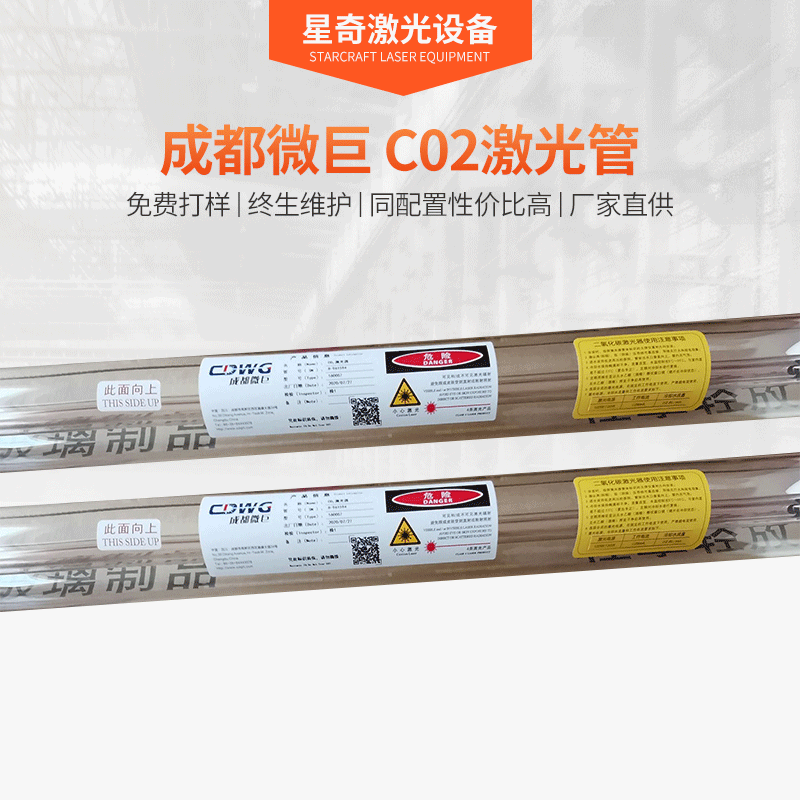
| Glass laser tube for cutting machines | Power rating, tube length, machine compatibility, cooling | Replacement or upgrade of a CO2 laser cutter beam source |
Choosing the cutting machine
The automatic fabric and non-woven cutting machine is aimed at production work: single or multi-layer cutting of leather, fabric and non-woven material, with the automation handling the repeatability that hand cutting cannot. The questions to settle before buying are the maximum material width, the number of layers it must cut at once, the accuracy the finished part needs, and how the material is loaded and advanced. Throughput in this class of machine is governed by acceleration as much as by headline speed, and by how quickly a job can be changed over.
Choosing a replacement tube
A CO2 laser tube is a consumable with a working life measured in hours, and its power decays gradually before it fails, which is why jobs start needing more than one pass long before the tube dies. The glass laser tube is the standard replacement form for this class of machine. Match the power rating to the machine power supply and optics rather than simply buying the highest number available: an oversized tube on an undersized supply will underperform, and one that is too long may not fit the housing. Tube length and diameter determine fit, the power rating determines the supply, and the cooling arrangement determines how hard you can run it.
Consumables, cooling and maintenance
- Tube life depends on cooling. Water temperature and flow matter more than cutting hours; a warm tube loses power and dies early.
- Optics are consumable too. Lenses and mirrors degrade, and a dirty lens absorbs heat and cracks.
- Alignment decides everything. A beam that is not centred through the nozzle cuts at an angle and produces inconsistent kerfs.
- Air assist. Compressed air at the nozzle keeps the cut clean and stops flare-ups, which matter most in plywood and MDF.
- Extraction. Plastic fumes are harmful and residues coat the optics; extraction protects both the operator and the machine.
Matching process to material
Acrylic cuts and polishes on a laser with little post-processing, which is why signage and display work uses it. Plywood and MDF cut well but leave a browned edge and produce smoke that must be extracted. Fabrics are better cut mechanically unless sealed edges are specifically wanted. Leather is usually cut mechanically to avoid the hardened edge a laser leaves, and non-woven material behaves similarly. Where production volume is the priority, mechanical cutting with an automated machine wins on speed; where the parts are sheet stock with internal detail, the laser wins on complexity.
Buying second-hand and what to check
Used laser cutters are common and often good value, provided you inspect the right things. Ask when the tube was last replaced and how many hours it has run, because a tube at the end of its life is the single largest cost waiting for you. Check the optics for clouding rather than trusting a cleaning, look for scorch marks around the nozzle that suggest poor alignment or blocked air assist, and run a test cut in a material you know well so you can judge the real power available. On mechanical cutting machines, check the blade holder, the roller surfaces and the control for backlash, and verify that spare blades are still available for the model. A machine that cannot be serviced is a machine with a short remaining life regardless of its price.
Frequently asked questions
How long does a CO2 laser tube last?
Working life is typically measured in a few thousand hours, and it decays rather than failing cleanly. If your usual settings no longer cut the same material in one pass, the tube is a candidate for replacement.
Can the same machine cut fabric and plywood?
A CO2 laser can cut both, but the comparison is not fair to either. Production fabric cutting is faster and cleaner with a mechanical machine, and sheet stock with internal detail is a laser strength.
What power tube do I need?
Enough to cut your thickest material in one pass at a sensible speed, and no more. The machine power supply and tube housing set a ceiling on what can be fitted.
Why does my cut have a dark, sticky edge?
Usually air assist or extraction. Without airflow at the nozzle the vapour recondenses on the cut edge, and without extraction the same residue coats the optics.
What machine is best for leather?
For production, an automated mechanical cutting machine suits leather better than a laser, because it avoids the hardened edge and cuts stacks consistently.
Where to start
See the Laser Cutters range, or the wider Welding & Cutting category for consumables and safety equipment. Tell us the material, the thickness and the volume you need, and we will match the process and the machine to it.