Blog
Files, Scrapers and Marking Tools: Cut, Shape and Layout

Files and marking tools are the two halves of the same job: deciding where a cut goes, and then making the edge behave. Get the marking wrong and the work is scrap before the file touches it; get the file wrong and you spend an hour removing material that a coarser cut would have taken in a minute. This guide covers the files, scrapers and marking tools we stock, and the numbers that decide which one you need.
Reading a file: shape, cut and size
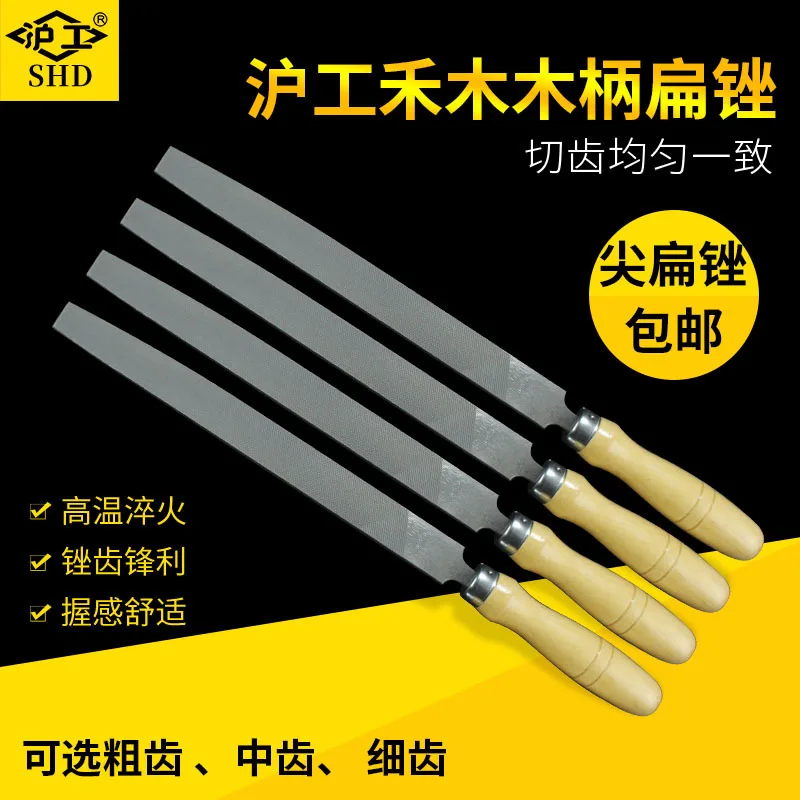
- Shape. Flat for surfaces, half-round for curves and holes, triangular for internal corners and saw teeth, round for enlarging a hole, square for a slot.
- Cut. Single cut removes material slowly and leaves a smooth finish. Double cut removes faster and leaves a coarser surface.
- Size. A longer file removes more per stroke and stays flatter. A short file is easier to control on a small part.
What to use where
| Job | Tool | Why |
|---|---|---|
| Flattening and squaring a face | Flat file, double cut | Fast removal while staying flat |
| Internal corners and slots | Triangular or square file | Reaches where a flat file cannot |
| Enlarging a round hole | Round file | Removes evenly around the circumference |
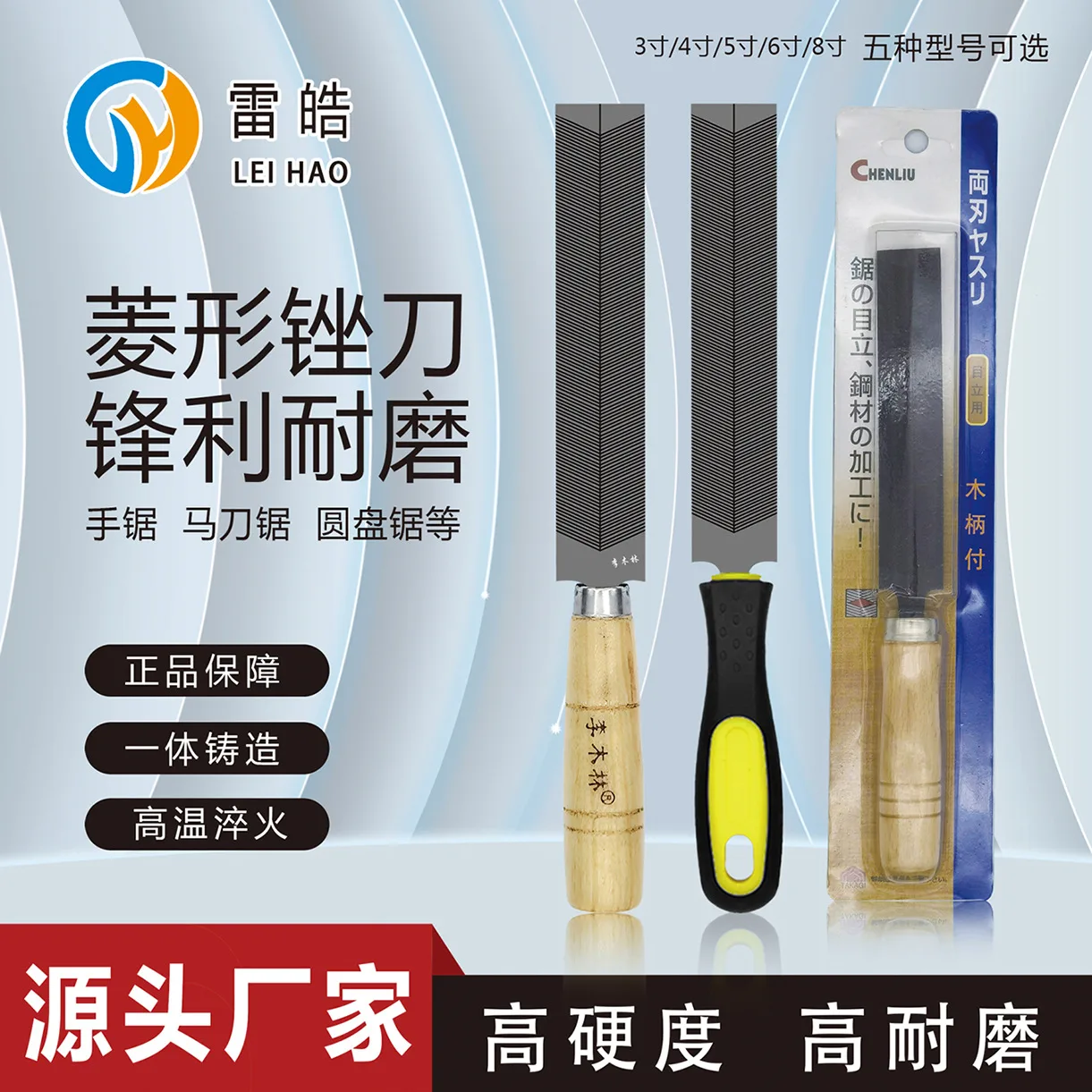
| Sharpening a saw tooth | Diamond-shaped or triangular file | Fits the gullet between teeth |
| Removing paint or rust | Scraper | Cuts a flat surface without clogging |
Files for metal and for saw teeth
A fitter’s metal file in standard steel with single, double and smooth cuts is the bench standard for flattening and finishing metal. The cut number is the decision: start coarse to remove material, then move to a smooth cut for the finish, because trying to finish with a coarse file leaves scratches you then have to remove. For saw maintenance, a diamond-shaped steel file for saw sharpening fits into the tooth gullet and restores the cutting edge without changing the tooth geometry.
Scrapers for paint, rust and flat surfaces
Scrapers remove material without the clogging that stops a file, which makes them the right tool for paint, rust and gasket residue. A second pattern of scraper covers narrower or heavier work. Keep a scraper’s edge square and burr-free: the burr is what cuts, and a rounded edge will skate over the surface instead of lifting it.
Marking tools: accuracy before cutting
Marking is where accuracy is either created or lost, and it is worth more than any cutting tool in the box.
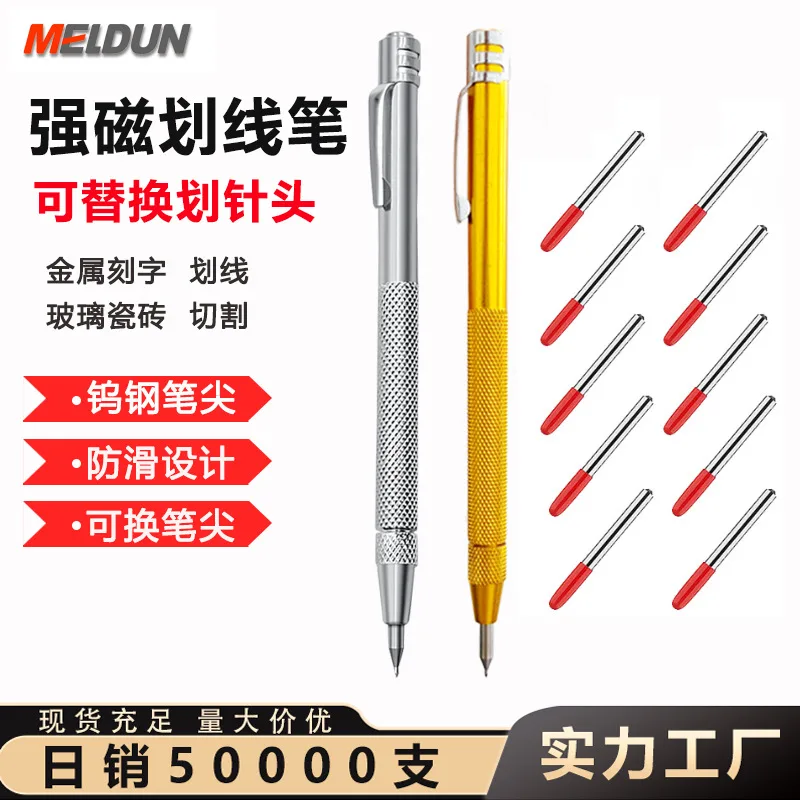
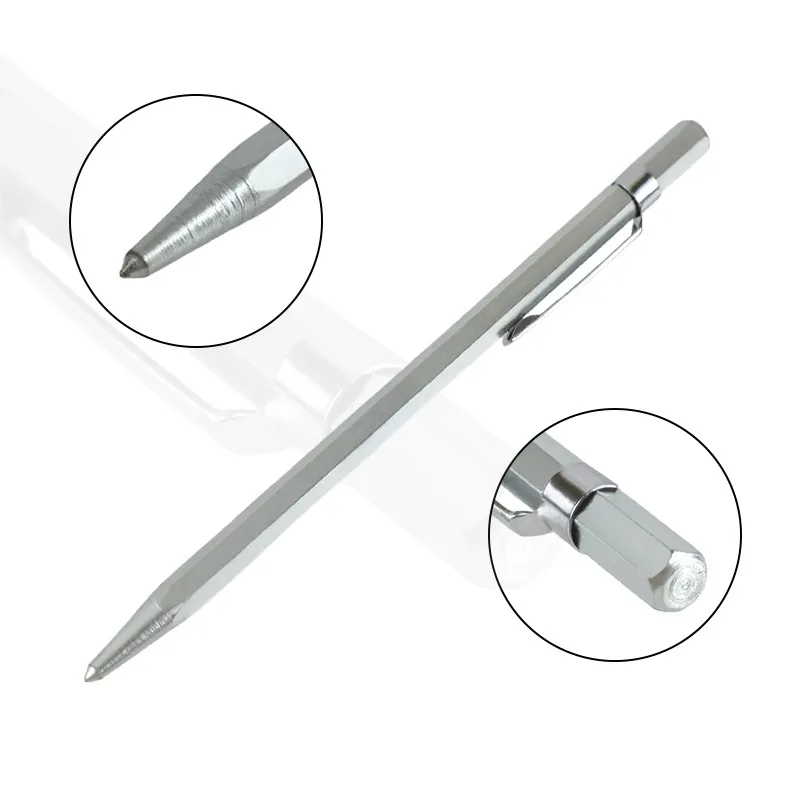
- Scribe, do not pencil. A pencil line is around half a millimetre wide and the tip wears. A scribe leaves a fine, permanent line that a punch can follow.
- Work from datums. Measure from one reference face every time. Measuring from a sawn edge means every later mark inherits the error of the first.
- Mark both faces. A line carried around the workpiece shows you whether the cut is drifting before it is too late to correct.
Marking tools, gauges and awls
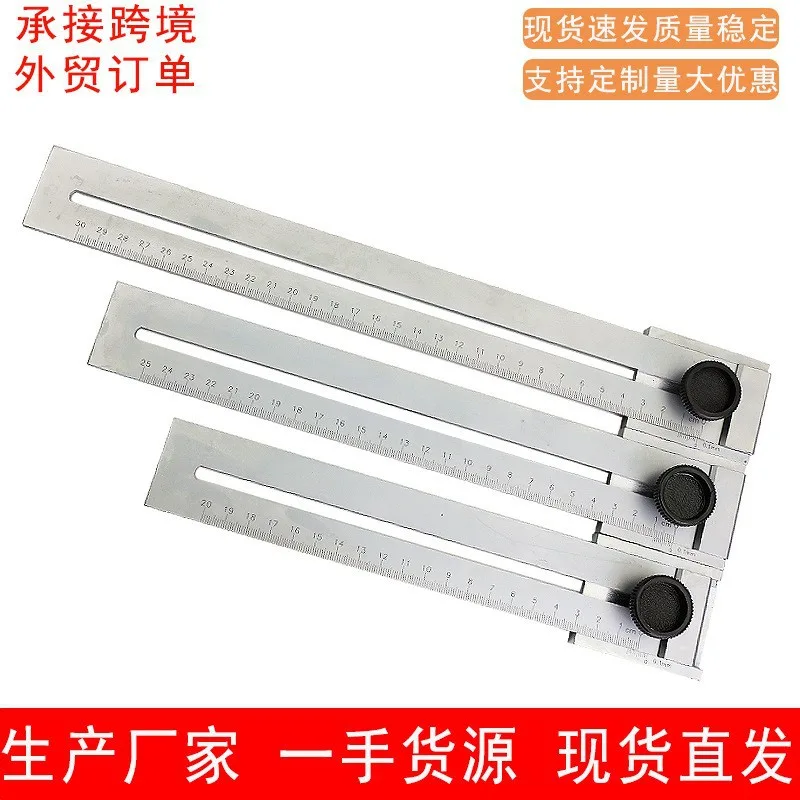
Marking tools cover scribing and layout, and a wider range of marking tool sizes suits heavier or larger work where a fine line is not the priority. For parallel lines at a fixed distance from an edge, marking gauges in 200, 250 and 300 mm lengths are far faster and more consistent than measuring twice, and a simpler marking gauge does the same job for occasional use. Where you need to mark a point for a drill or a screw, marking awls indent the surface so the bit cannot wander, and a plain awl is enough for soft material. For lifting a ring, a seal or a wire out of a recess, hook picks reach where fingers cannot, and stainless steel hook picks resist the corrosion that comes with repeated contact with oils and coolant.
Making files and scribes last
Files cut in one direction, on the push stroke, and dragging them back across the workpiece dulls the teeth without removing material. Keep a file clean with a card file or a wire brush, because packed swarf stops the teeth cutting and causes skidding. Never use a file on hardened steel, and never use one as a pry bar, since both actions break teeth. Scribes should be kept sharp on a stone and stored point-protected, and a centre punch should be struck once, cleanly, rather than repeatedly in slightly different places, because a scattered set of marks is worse than none.
Choosing between a file and a scraper
The decision is about the surface, not the tool. A file cuts a shape and leaves a scratched finish, so it is the right choice for removing material to a line, adjusting a slot or breaking an edge. A scraper lifts a layer from a flat surface – paint, rust, gasket or a high spot – and it does not clog the way a file does. Where the job is both, start with the file to get the shape and finish with the scraper to flatten the surface, and keep the two separate so that a scraper edge is never used to cut metal.
Frequently asked questions
What is the difference between single and double cut files?
Single cut has one set of teeth and removes material slowly with a smoother finish. Double cut has two intersecting sets, removes faster and leaves a coarser surface.
Which file do I use for sharpening a saw?
A triangular or diamond-shaped file sized to the tooth pitch. The shape is what reaches into the gullet without touching the adjacent teeth.
How do I stop a file clogging?
Use a card file or wire brush to clear the teeth often, and choose a cut suited to the material. Packed swarf is why a file stops cutting.
Why use a scribe instead of a pencil?
A scribe leaves a fine, permanent line that does not wear off and has almost no width, so the cut lands where you marked.
What is a marking gauge for?
Scoring a line parallel to an edge at a set distance. It is faster and more consistent than measuring and marking each time.
Where to start
Browse the full Hand Tools range, or the wider Hand Tools category if you also need saws, knives or measuring equipment. Tell us what you are shaping and how accurate the finish must be, and we will point you at the file and marking tools that fit.