Blog
Glass Cutter Sets: Thickness Bands, Alloy Bodies and Wheels


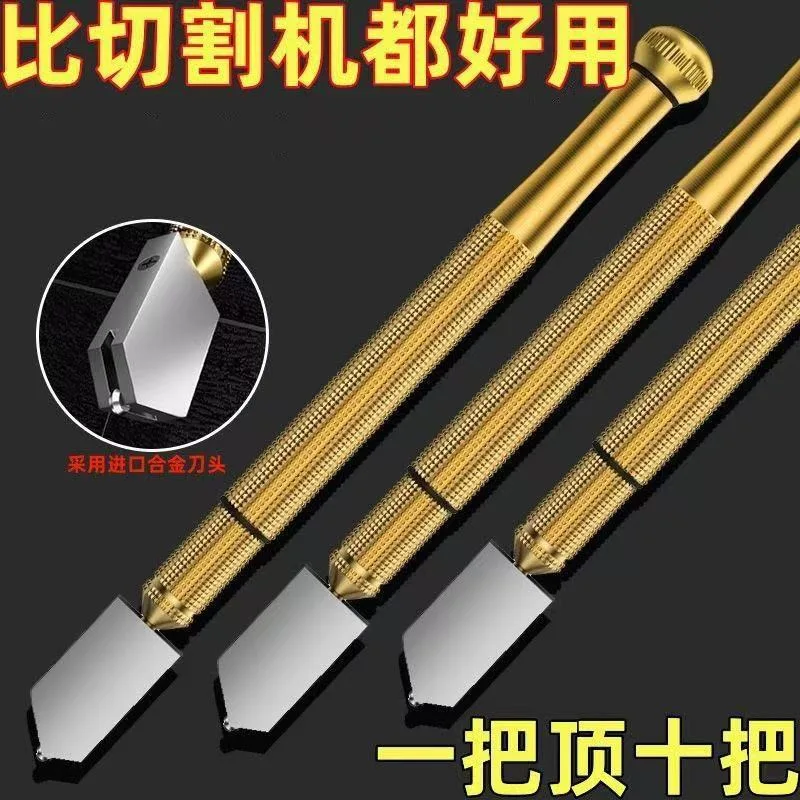
Glass cutter sets are organised by thickness range, not by size of cutter, and that is the right way to think about them. A head set for 3 to 12 mm glass will not start a clean score in 15 mm sheet, and a head set for 5 to 15 mm chips thin glass and mirror. The range here covers four thickness bands, in single cutters and in sets, in both standard and alloy bodies. This guide explains what each band covers, what the alloy body changes, and how to decide between one good cutter and a set.
Match the cutter to the glass thickness
- The band is the wheel and the head angle. The wheel profile and how the head is ground decide how much surface damage the score creates, and that has to suit the thickness.
- Thin glass needs a fine wheel. Mirror and 3 mm sheet need a light score from a fine wheel, or the edge chips and the silvering lifts at the cut.
- Thick glass needs more purchase. Above about 10 mm the score has to be deep enough and wide enough to start a break, which is a job for a different head.
- Overlap costs less than a failed sheet. Bands overlap by a couple of millimetres for a reason: the middle of a band is always more forgiving than its edges.
- A set covers the range; a single cutter covers a job. If you cut the same thickness every time, one cutter is enough. If the work moves between mirror, sheet and thick glass, a set is cheaper than buying cutters one at a time.
Thickness ranges and what they cover
| Band | Covers | Typical use | Watch for |
|---|---|---|---|
| 3 to 8 mm | Picture glass, mirror, thin sheet | Framing, craft and glazing repairs | Chips if used on thick glass |
| 3 to 12 mm | General window glass through to heavy sheet | The all-round band for most work | Less precise on mirror at the thin end |
| 3 to 15 mm | Wide band from thin sheet to thick | Workshops handling mixed stock | A compromise at both extremes |
| 5 to 15 mm | Heavier sheet and thick glass | Structural and heavy glazing work | Will chip thin sheet and mirror |
If only one band is ever needed, choose the narrowest one that covers it. A 3 to 8 mm head cuts mirror better than a 3 to 15 mm head, because the wider the band, the more the head has to compromise on wheel profile.
The glass cutter sets in this guide
Every option in this range
Seventeen options sit in this range, grouped into four price bands rather than seventeen separate decisions. Prices shown are the range within each band.
| Band | What it is | Thickness | Price |
|---|---|---|---|
| Entry | Single standard cutter | 3 to 12 mm | $8.99 |
| Entry single | Single cutter, larger head | 3 to 15 mm | $9.99 |
| Mid set | Cutter with accessories, standard body | 3 to 8 mm, 3 to 12 mm, 5 to 15 mm | $11.99 to $18.98 |
| Upper set | Alloy-bodied cutter and set | 3 to 15 mm and 5 to 15 mm | $23.97 to $26.97 |
The upper band costs more than double the entry band, and the difference is in the body and the accessories rather than the wheel. If the cutter is used a few times a year on the same thickness, the entry band does everything. If it is used weekly across mixed stock, the alloy body is the one that survives being carried, dropped and re-oiled.
Alloy or standard body
An alloy body adds stiffness and mass, and both matter when the score has to be continuous over a long sheet. A heavier head tracks a straight line with less effort and resists the small twists that interrupt a score. A standard body is lighter and easier to control on short cuts and on thin glass, where pressure has to be judged finely. The accessories in the sets matter for the same reason: a break tool, a spare wheel and a small reservoir of cutting oil are the three things that decide whether a cutter is still usable after a year in a toolbox.
Getting a set to last
- Keep one wheel per band. Swapping heads between thicknesses is the point of a set, and a wheel that has been used on thick glass will not give its best on mirror.
- Oil before storage, not after. A dry wheel rusts into its housing. One drop in the reservoir after use keeps the head free.
- Store the cutter head-up. A cutter rattling loose in a box is a chipped wheel waiting to happen. Keep the plastic cap or the case.
- Keep the break tool with the cutter. The slots in the cutter head are the safest way to break narrow strips; losing the accessory means improvising with pliers and crushing edges.
- Replace the wheel, not the cutter. Wheels are the consumable. A cutter with a stiff body and a fresh wheel cuts like new.
Frequently Asked Questions
Which thickness band covers most work?
Three to twelve millimetres. It covers framing glass, mirror and standard window sheet through to heavier stock, and it is the band most workshops settle on.
Is an alloy body worth the extra cost?
If the cutter is used regularly and carried, yes. Stiffness keeps a long score straight, and the mass makes steady light pressure easier to hold on thick glass.
Can one cutter cover every thickness?
Up to a point. A wide band covers more glass but compromises at the extremes, and mirror and 15 mm sheet are exactly the extremes where the compromise shows.
What comes in the sets?
Typically the cutter plus the accessories to break narrow strips and keep the head oiled, and in some bands a spare wheel. The exact contents vary by band, which is why the band matters more than the count.
How do I know the wheel needs replacing?
When it skips, leaves a dotted line, or the score stops starting a break. A wheel that has to be pressed hard to work is worn, and pressing harder only chips the glass.
Buying the right one
Choose the narrowest thickness band that covers your stock, buy one cutter for a single thickness and a set where the work moves between mirror, sheet and heavy glass. The glass cutter sets in this range cover all four bands in standard and alloy bodies.