Blog
Glass Cutter Guide: Scoring, Breaking and Wheel Choice

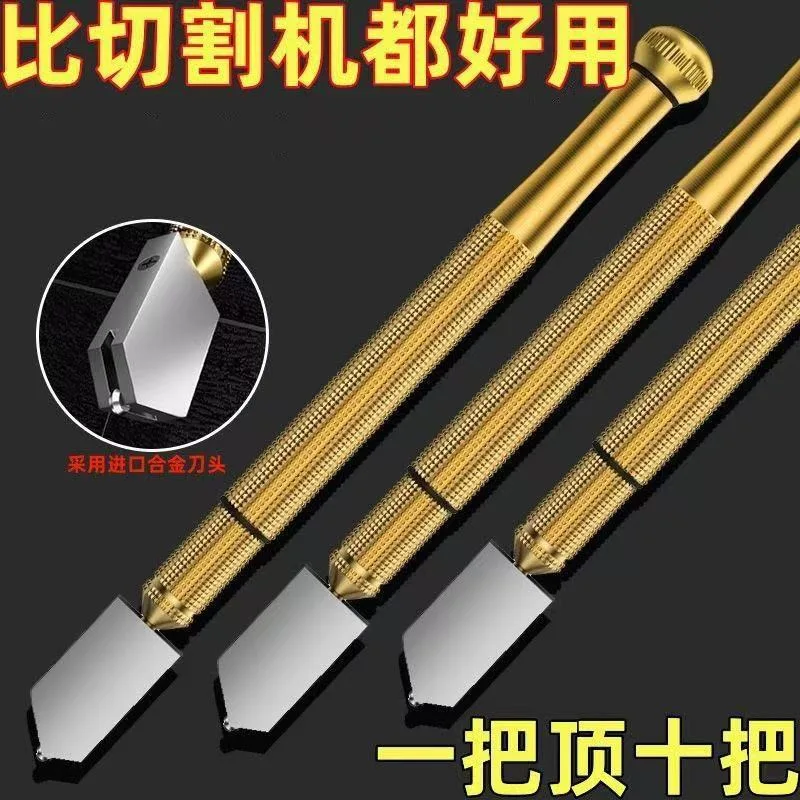
Cutting glass is not cutting at all. A glass cutter scores a line of damage into the surface, and the glass then breaks along that line. That single fact explains almost every mistake people make with one: pressing hard, going over the same line twice, and trying to cut thick glass like a sheet of board. A good score is light, single and continuous, and the cutter itself matters far less than the technique. This guide covers what makes a score break cleanly, how the two cutters in this range differ, and how to avoid the faults that ruin a sheet.
What makes a clean score
- One pass, no repeats. A second pass runs the wheel in a groove that has already been damaged and produces chips, not a clean break.
- Light pressure. Enough to hear the glass hiss, no more. Heavy pressure crushes the surface and leaves a ragged edge.
- A steady, continuous stroke. Starting and stopping leaves an incomplete score, and the break follows the weak points rather than the line.
- Clean, lubricated wheel. A drop of cutting oil keeps the wheel turning and stops fines from welding to the edge.
- Support under the whole sheet. Glass scored on an uneven surface breaks along whatever the sheet is resting on, not along the score.
- Correct wheel for the thickness. A wheel ground for thin glass will not damage thick glass enough to start a break, and one for thick glass chips thin glass.
Wheel and body types
| Type | What it suits | Notes |
|---|---|---|
| Small wheel, fine | Thin glass, mirrors, decorative work | Produces the cleanest edge on light material |
| Standard wheel | General window glass and sheet | The usual all-round wheel |
| Wide wheel, heavy body | Thicker glass and repeated use | Resists the load of daily cutting |
| Alloy body with reservoir | Volume work where the wheel must stay oiled | Keeps cutting longer between refills |
| Set with more than one cutter | Working across several thicknesses | Cheaper than buying cutters one at a time |
The rule behind the table is that the wheel does the work and the body only holds it. Most of the money in a cutter goes into the body and the reservoir, which is why a heavier cutter with a small wheel can cost several times a light one and still cut the same glass.
The glass cutters in this guide
Every option in this range
Two options: a light cutter for general sheet work and a heavier pattern for regular use. Prices are per unit.
| Option | Body | Best for | Price |
|---|---|---|---|
| Light cutter | Compact, single wheel | Occasional cutting, thin sheet and mirrors | $8.99 |
| Heavy cutter | Sturdier body, larger head | Regular cutting and thicker glass | $17.08 |
The heavier cutter costs roughly double, and what it buys is not a sharper wheel but a stiffer head. On thin glass the light cutter is easier to control, because the whole point of the technique is light pressure and a stiff, heavy head makes that harder to judge.
Scoring and breaking in five steps
- Clean the glass. Grit on the surface is what makes a wheel skip. Wipe the line with a dry cloth before touching it with the cutter.
- Mark the line and lay the sheet on a flat surface. For anything under about 5 mm, a padded bench is enough; thicker glass wants a proper support or a rubber-topped table.
- Score once, from the far edge toward you. Hold the cutter upright, apply even light pressure, and keep moving. Listen for a steady hiss; a crunch means too much pressure.
- Lift the wheel before the end. Running the head off the edge of the sheet chips the wheel and is the most common way a cutter is destroyed.
- Break along the score. For narrow cuts, use the cutter’s break slots. For wider strips, place a matchstick or a thin rod under the score and press down evenly either side. Run the score first if the break resists.
Faults and what causes them
| What you see | Usual cause | Fix |
|---|---|---|
| The break runs off the line | Score incomplete at one end, or double-scored | One continuous pass from edge to edge |
| Chipped edge along the cut | Too much pressure | Lighten the pressure until the glass only hisses |
| Wheel skips and leaves a dotted line | Wheel dry, dirty or worn | Add cutting oil, wipe the wheel, replace if worn |
| Glass will not break at all | Score too shallow, or the wheel is wrong for the thickness | Re-score alongside the first line with a suitable wheel |
| Clean score, ragged break | Sheet not fully supported | Support the sheet with a flat, padded surface before breaking |
Two habits keep glass work safe. Wear eye protection whenever glass is scored or broken, because the break releases small flakes from the underside of the score. And carry sheets on edge rather than flat, since a sheet flexed flat across its width is far more likely to crack than one carried vertically.
Frequently Asked Questions
Can I score the same line twice?
No. A second pass damages the groove and produces chips. If the score is too shallow, score a new line a millimetre alongside it rather than repeating the first.
How hard should I press a glass cutter?
Lightly. The pressure should be just enough to hear a steady hiss. If you are leaning on the cutter, the edge will be chipped even when the break is straight.
Do I need cutting oil?
It helps. A drop of oil keeps the wheel turning freely and stops glass dust from packing around it, which is what makes a wheel skip and leave a dotted line.
Can these cutters cut toughened glass?
No. Toughened glass cannot be cut after tempering and will shatter. It has to be ordered cut to size from the supplier.
How long does a wheel last?
Hundreds of metres of sheet glass if it is kept clean and never run off the edge. Chipping the wheel on the end of a sheet is what ends its life early.
Buying the right one
For occasional cuts in thin sheet and mirror, the light cutter is easier to use because the technique depends on light pressure. For regular work and thicker glass, the heavier body holds its line better over long cuts. The two glass cutters in this range cover both.