Blog
Tin Snips Size Guide: 8 in to 14 in and What Each Cuts

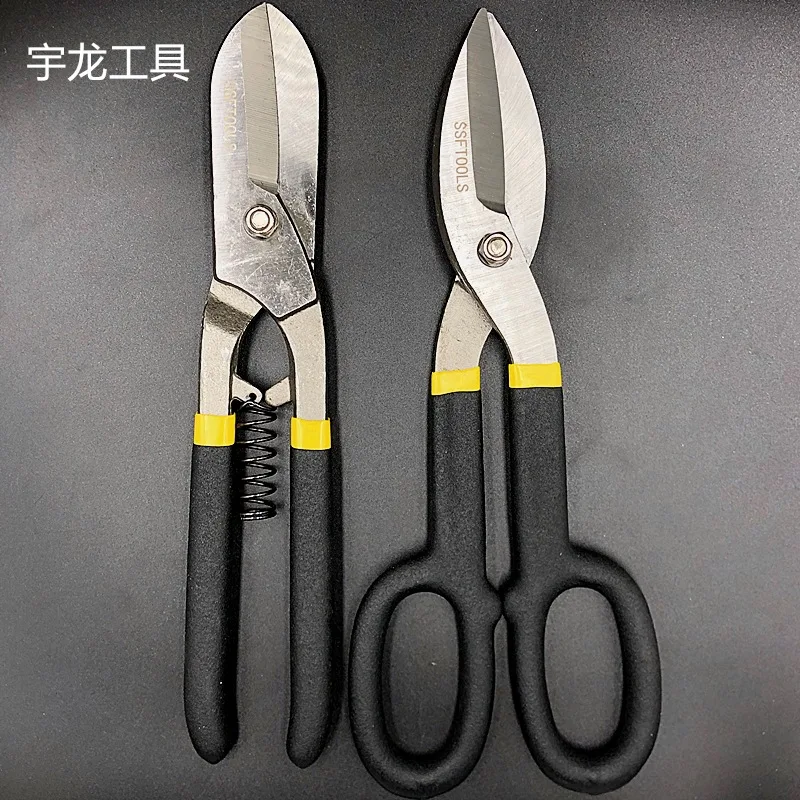
Tin snips are sold by length, and the length is what decides how much leverage you have on the sheet. Short snips turn tightly and get into a corner; long snips cut a long straight line in one pass and let you work in thicker material with the same hand strength. The range here runs from 8 inches to 14 inches, in four lengths, and the price roughly doubles across it. This guide covers what each length is for, how lengths relate to sheet thickness, and how to keep a pair of snips cutting instead of chewing.
What the length changes
- Leverage. A longer handle multiplies hand force at the blades, which is what lets you cut thicker sheet without leaning on the tool.
- Turning radius. Long blades cannot follow a tight curve. Where a cut has to turn inside a radius of about 50 mm, short snips win.
- Cut length per stroke. A longer blade takes a longer bite, so a straight line of a metre needs fewer strokes and stays straighter.
- Weight and fatigue. Long snips are heavier and their leverage works both ways: the same length that magnifies your force magnifies the load on your wrist over a long run.
- Access. Long blades do not fit between a panel and a batten. Short snips are the only ones that reach into a closed profile.
- Blade thickness follows size. The larger patterns carry heavier blades, which is why they hold an edge in thicker sheet where a small pair would deform.
Length against the job
| Length | Best at | Limit |
|---|---|---|
| 8 in | Short cuts, tight curves and detail trimming | Thin sheet only; slow on long straight runs |
| 10 in | The general-purpose length for sheet metal work | Compromise on both curves and long straight cuts |
| 12 in | Long straight cuts and thicker sheet | Turning radius opens up; harder in tight corners |
| 14 in | Heavy sheet and long runs, trade use | Heavy, and awkward anywhere space is tight |
A pair of 10 inch snips covers the majority of sheet metal work in a workshop, and the other sizes exist for the two ends of the job: detail work and heavy straight cutting. Where both are needed, an 8 inch pair plus a 12 or 14 inch pair does more than one 10 inch pair ever will.
The tin snips in this guide
Every option in this range
Eight options covering four lengths, each listed twice in the range. Prices are per unit.
| Length | Pattern | Best for | Price |
|---|---|---|---|
| 8 in | Standard snips | Detail trimming and tight curves | $9.89 |
| 10 in | Standard snips | General sheet metal cutting | $12.46 |
| 12 in | Standard snips | Long straight cuts and thicker sheet | $14.64 |
| 14 in | Standard snips | Heavy sheet and volume work | $20.55 |
The price steps are steeper than the length steps: the 14 inch pair costs more than twice the 8 inch pair for a 75 per cent increase in length. That is because the larger patterns carry heavier blades and longer handles, so the money goes into leverage and edge strength rather than the extra inches.
Cutting sheet without distorting it
- Open the blades fully and take a full bite. Short strokes with the tips of the blades twist the sheet and leave a curled edge.
- Keep the sheet clear of the lower blade. The offcut curls down and away; if it rides up over the blade the snips jam and the sheet kinks.
- Cut straight lines with long snips, curves with short ones. Trying to turn a 14 inch pair through a tight radius distorts both the sheet and the blades.
- Relieve long cuts. On a long run, cut a series of short relieving cuts to the line first, then join them. The sheet has somewhere to move.
- Keep the pivot tight. Blades that have spread apart ride over the sheet instead of shearing it. A loose pivot is the first thing to check when snips stop cutting.
- Do not cut wire, screws or hardened sheet. Snips are hardened for sheet metal. Anything harder takes a notch out of the edge that cannot be sharpened away.
Keeping snips cutting
- Oil the pivot. A drop of light oil on the pivot after every session keeps the action smooth and stops rust forming between the blades.
- Hone the bevel, not the flat. Touch up the cutting bevel on a fine stone at the existing angle. Grinding the flat face destroys the clearance angle.
- Store closed. Snips left open in a drawer get their edges knocked against other tools and lose the fine clearance that makes them shear.
- Wipe the sheet off first. Grit on the sheet is what dulls a blade fastest, and dust from masonry or filing is the worst offender.
- Check for blade spread. Hold the closed blades up to the light. A gap at the tips means the pivot needs adjusting or the blades need re-seating.
Frequently Asked Questions
What length tin snips should I buy first?
Ten inches. It covers general sheet metal work, cuts a reasonable straight line and still turns a moderate curve, which makes it the one pair most workshops reach for.
Can long snips cut curves?
Only shallow ones. Long blades need a wide radius, and forcing them through a tight curve distorts the sheet and spreads the blades.
How thick a sheet can snips cut?
It depends on the length and the material. As a guide, work to about 1 mm in mild steel and up to about 1.2 mm in aluminium with the longer patterns, and use a nibbler or a shear above that.
Why do my snips chew instead of cut?
Usually the blades have spread apart at the tips or the edge has been damaged. Check the pivot, then look for a notch in the edge from cutting wire or hardened material.
Are the longer snips worth the extra cost?
If you cut heavy sheet or long straight runs, yes: the leverage is what makes thicker material workable by hand. For general work, the 10 inch pair is the better value.
Buying the right one
Buy the length that matches the cut: short for curves and detail, long for straight runs and heavy sheet. The tin snips in this range cover 8 inches to 14 inches.