Blog
O-Ring Picks: Removing Seals Without Damaging the Bore

Removing an O-ring or a lip seal is a two-minute job when the right pick is in your hand and a ruined component when it is not. The bore, the groove and the shaft all have to come out of the job unmarked, because a scratch across a sealing surface is a leak that no new seal will cure. This guide is about the technique rather than the tool: where to place the point, which direction to pull, when to stop pulling and reach for a different shape, and how to lift a seal that has been in place for years without cutting the housing around it.
Rules that prevent damage
- Never touch a sealing surface with the point. The pick goes under the seal and lifts against the groove wall, not against the bore or the shaft.
- Use the smallest pick that will do the job. A fine point needs less force and gives more control, which is exactly what a soft seal and an aluminium housing demand.
- Lift gradually around the circumference. Working the ring up a little at a time spreads the load instead of stretching one section.
- Support soft housings. On plastic or thin aluminium, back the housing with your hand so it cannot flex while the pick is loaded.
- Change shape before changing force. A 45 degree bend reaches a spot a straight pick cannot. More pressure on the wrong shape is what causes damage.
- Protect painted and plated surfaces. A slip with a steel point marks them permanently, so slow down wherever the pick travels across a finished face.
Which shape for which access
| Shape | Reaches | Best for | Limit |
|---|---|---|---|
| Straight point | Open grooves and flat faces | Lifting a ring off a flat seat | No reach around a shoulder |
| 45 degree bend | Grooves behind a small shoulder | Most O-ring removal | Limited swing in deep recesses |
| 90 degree hook | Deep grooves and blind bores | Seals set well inside a housing | Needs room above the part |
| Full circle hook | Under a lip with no free end | Seal lips and wire clips | Only for parts that can be hooked |
| Angled fine point | Connector latches and pins | Electrical terminals | No load at all |
Most seal work is done with the 45 degree shape, because it lifts the ring while keeping the handle clear of the housing. The 90 degree hook is the one that saves a job when the seal sits at the bottom of a recess and nothing else reaches it.
The hook picks in this guide
Every option in this range
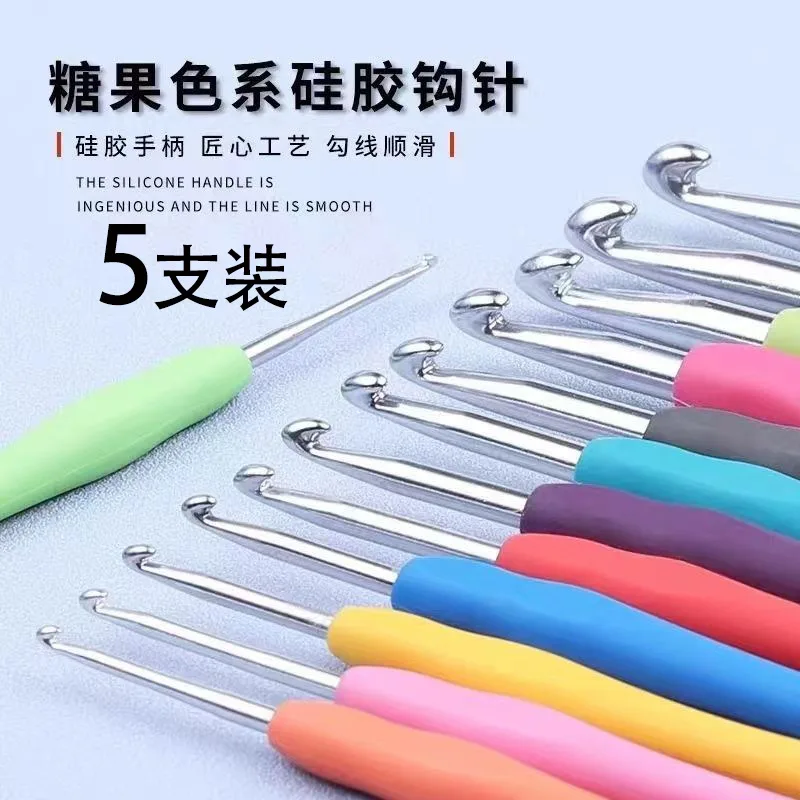
The picks are supplied in sixteen tip diameters from 0.5 mm to 6.0 mm. Prices are per pick.
| Option | Tip diameter | Material | Best for | Price |
|---|---|---|---|---|
| Needle pick | 0.5 mm | Stainless steel | Terminal latches and tiny rings | $8.99 |
| Needle pick | 0.75 mm | Stainless steel | Very small O-rings | $8.99 |
| Fine pick | 1.0 mm | Stainless steel | Seal lips and fine grooves | $8.99 |
| Fine pick | 1.25 mm | Stainless steel | Injector seals and plugs | $8.99 |
| Fine pick | 1.5 mm | Stainless steel | Narrow grooves | $8.99 |
| Fine pick | 1.75 mm | Stainless steel | Everyday seal removal | $8.99 |
| Standard pick | 2.0 mm | Stainless steel | The general-purpose size | $8.99 |
| Standard pick | 2.25 mm | Stainless steel | O-rings and trim fasteners | $8.99 |
| Standard pick | 2.75 mm | Stainless steel | Hoses and larger seals | $8.99 |
| Standard pick | 3.0 mm | Stainless steel | Trim clips and grommets | $8.99 |
| Standard pick | 3.5 mm | Stainless steel | Heavy seals and boots | $8.99 |
| Heavy pick | 4.0 mm | Stainless steel | Stubborn clips | $8.99 |
| Heavy pick | 4.5 mm | Stainless steel | Heavy seals | $8.99 |
| Heavy pick | 5.0 mm | Stainless steel | Difficult removal work | $8.99 |
| Heavy pick | 5.5 mm | Stainless steel | Wide-access jobs | $8.99 |
| Heavy pick | 6.0 mm | Stainless steel | The heaviest removal work | $8.99 |
As with most pick ranges, every size costs the same, so the practical buy is the set. Working through a real job usually takes two or three sizes: one to start the lift, one to reach a stubborn section and one to finish.
Removing a seal that will not come
Start at the point where the seal has the most free material, usually the end of an O-ring where the two ends meet, or the outer lip of a seal. Slide the pick in under the material, not into it, and lift enough to break the seal’s grip on the groove. Then move around the circumference in small steps, lifting a few millimetres at a time.
If the seal has hardened, warm it first. Heat from a hot air gun or a little hot water softens rubber enough that the pick can lift it without tearing it into pieces. A hardened seal that tears leaves fragments in the groove, and every fragment then has to be picked out with the same tool, which is slow and risks the groove.
Where the seal sits under a shoulder and a hook cannot reach it, a fine pick can be slid along the groove wall until it emerges behind the seal. That is the one technique that a straight pick cannot do, and it is the reason a 90 degree hook belongs in the set even if it is used once a month.
Never drive the point through the seal to drag it out. A punctured seal comes out in pieces, and the force needed to drag it usually puts the point against the bore at some stage of the pull.
Frequently Asked Questions
Can I remove an O-ring without a pick?
Sometimes, with a plastic scraper or a blunt screwdriver, but both are far more likely to scratch the groove. A pick exists for exactly this job.
Will a pick damage the seal groove?
Not if the point is kept on the groove wall and away from the sealing faces. Damage usually comes from using a pick that is too large or applying force at an angle.
How do I get a hardened seal out?
Warm it first to soften the rubber, then work around the circumference in small steps rather than pulling at one point.
What size pick for a small O-ring?
Around 1.0 mm to 1.5 mm. It fits the groove and is still stiff enough to lift the ring without bending.
Are these picks safe around electrical connectors?
Yes. Use the smallest sizes and keep the point on the plastic latch rather than on the terminal or the wire.
Buying the right one
Keep a set rather than a single pick, warm a hardened seal before pulling, and always lift against the groove rather than the bore. The hook pick in this range covers a stainless steel pick for general seal and O-ring work.