Blog
Wire Strippers: Blade Depth, Strip Length and Clean Cuts

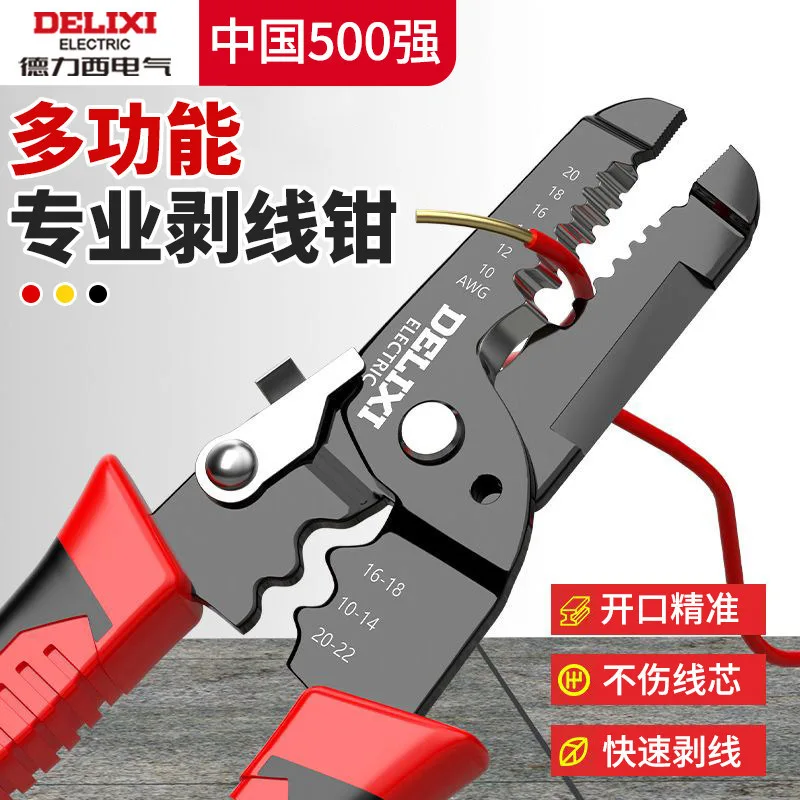
Stripping wire looks like the simplest job in electrical work and it is the one that causes the most quiet failures. A core that has been nicked by the blades looks fine when it is stripped, then snaps inside a terminal a year later when the cable is moved. A core that has been scraped instead of cleanly cut carries less current at the joint. Getting the strip right comes down to three things: the right blade setting for the insulation, a controlled strip length, and a technique that does not pull the conductor out of shape.
How the blades should meet the insulation
The blades are not meant to cut through the insulation in one bite. They are meant to close to a depth that severs the insulation and stops short of the copper. On a fixed-blade tool, that depth is set by the notch you choose; on a self-adjusting tool, the jaw geometry decides it for you. Either way, the test is the same: after stripping, the copper should be bright, round and unmarked.
| What the strip looks like | What it means | Fix |
|---|---|---|
| Copper ringed or scored | Blades closed too deep | Move to a larger notch or adjust the stop |
| Insulation stretched and torn | Blades too shallow, insulation pulled | Smaller notch, twist slightly as you pull |
| Copper scraped bright all round | Insulation cut by abrasion, not by blades | Wrong tool type for that insulation |
| Core pulled out of the terminal | Strip length too short | Increase the strip length to fill the terminal |
Two insulation types cause most of the trouble. Silicone and rubber insulation is soft enough to cut cleanly with light blade contact, while tough PVC and nylon insulation needs a firm, decisive squeeze. Using the same setting for both is how one cable ends up nicked and the other ends up torn.
Strip length and the terminal
Strip length is a fit question, not a preference. The stripped copper should fill the terminal barrel or the screw clamp without any bare conductor protruding beyond the insulated part of the terminal. Too short and the conductor does not reach the contact area; too long and exposed copper sits where it can touch a neighbouring terminal or a metal enclosure.
| Terminal type | Strip length guide | What to avoid |
|---|---|---|
| Screw clamp | Enough to wrap or seat fully under the screw | Copper extending past the clamp |
| Insulated crimp terminal | Fills the metal barrel, stops before the plastic sleeve | Insulation caught inside the barrel |
| Ferrule | Full ferrule length | Copper sticking out of the ferrule end |
| Push-in connector | Manufacturer’s stated figure | Nicked strands, which break on insertion |
Once the strip length is known for a regular job, a simple depth stop or a marked pair of blades removes the guesswork and makes the work faster as well as more consistent.
Stranded, solid and fine-stranded cable
Stranded cable is the most common cause of nicked conductors, because the blades have to close far enough to cut the insulation but the strands underneath will not tolerate much contact. Fine-stranded cable used in panels and machinery is worse still: a few strands can be severed almost invisibly, and the cable loses a proportion of its current-carrying capacity at exactly the point where the bend is tightest.
The response is to treat fine-stranded cable with a tool designed for it, strip it with a light, controlled action, and twist the strands lightly before inserting them if the terminal allows. Twisting should be gentle — the aim is to keep the strands together, not to deform them.
Solid core behaves differently again. It is stiff, so the strip is easy to control, but the same stiffness means the conductor marks permanently if the blades touch it. A score on solid core is a stress riser, and the cable will eventually break at that point if it is flexed. Where solid core is used in fixed wiring the risk is lower, but the habit of setting the depth properly is worth keeping for every cable type.
The wire strippers in this range
Every option in this range
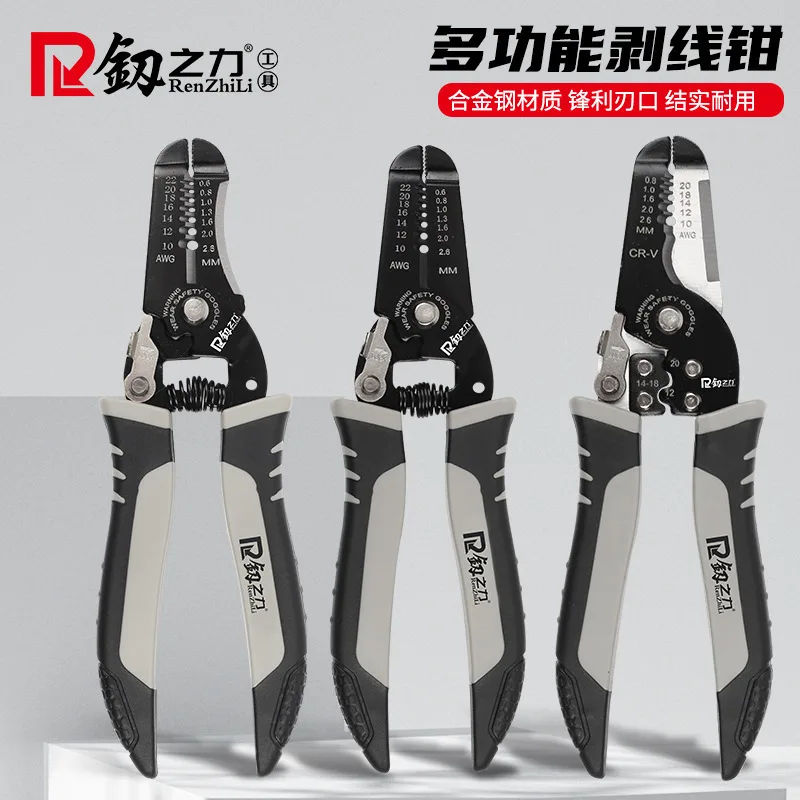
Three options covering the everyday sizes of hand stripper, from a standard 7 in pair through a heavier pattern. Prices are per tool.
| Option | Size | Pattern | Best for | Price |
|---|---|---|---|---|
| Standard stripper | 7 in | Multi-notch, straight | Everyday cable stripping and cutting | $8.99 |
| Stripper, alternate pattern | Standard | Multi-function jaw | Mixed cable sizes and occasional crimping | $9.31 |
| Stripper, heavy pattern | Standard | Reinforced jaw | Regular trade use on tougher insulation | $12.05 |
All three share the same basic technique, so the choice is about how much the tool is used. Occasional work suits the standard pair; daily work justifies the reinforced jaw, which holds its edge longer on abrasive insulation.
Keeping the blades and the action clean
- Wipe the blades after working on cable that has been in service. Grit and old compound blunt an edge quickly.
- Never strip a live conductor. Isolate and prove dead before any work on installed cable.
- Do not use the tool as a general cutter. Cutting screws, tie wraps and hard wire destroys the blade geometry.
- Keep the return spring free of insulation offcuts, which is what usually jams the action.
- Check the notches for burrs periodically; a burr will score the copper even when the depth is correct.
- Replace a tool whose notches have worn oval. Worn notches strip poorly whatever you do with your wrist.
Frequently Asked Questions
Why does my stripper nick the copper every time?
The blades are closing too deep. On a notched tool, move up a size; on an adjustable tool, back the stop off until the blade just severs the insulation and no more.
Can I strip cable with a knife instead?
You can, and on large cable it is sometimes the only practical way, but controlling the depth by hand takes practice. Most nicked conductors come from knife stripping rather than from a proper tool.
What strip length should I use for insulated crimp terminals?
Enough to fill the metal barrel without reaching the plastic sleeve. If the sleeve ends up inside the crimp, the joint will not hold.
Do wire strippers work on silicone cable?
Yes, and often better than on PVC. Soft insulation cuts cleanly with light blade pressure, so the risk is cutting too deeply rather than too little.
How long does a pair last?
In occasional use, years. In daily trade work, the notches wear and the edge rolls, and the tool is usually replaced when the strips stop being clean.
Stripping that holds up
Set the blade depth so the copper comes out bright and unmarked, choose a strip length that fills the terminal, and treat fine-stranded cable with a lighter hand than solid core. Do those three things and the joints will survive being moved. The wire stripper range covers a standard pair and two heavier patterns, which is enough for anything from occasional repair work to regular trade use.