Blog
Needle Nose Pliers Sizes: 6 in, 7 in, 8 in and 9 in Compared

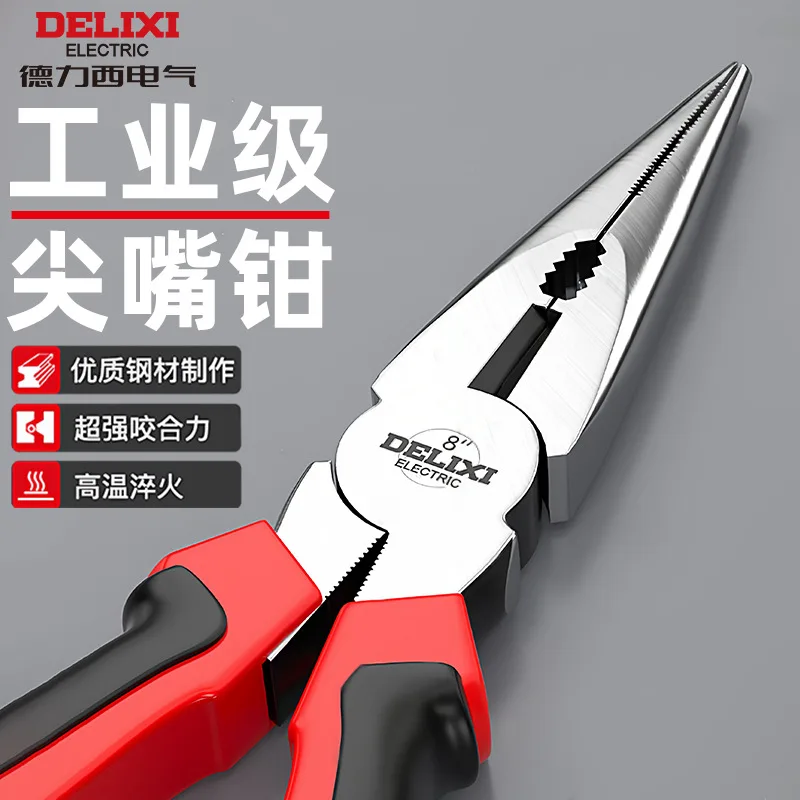
Long nose pliers are sold in four sizes that matter: 6 in, 7 in, 8 in and 9 in. The differences between them are not just about how far the tips reach. Length changes the force available at the jaws, the control you have over small parts, and whether the tool is comfortable to use for an hour or only for a minute. Buying the wrong size is the most common reason people describe long nose pliers as awkward.
What changes as the pliers get longer
As length increases, reach improves and control falls away. Long jaws magnify every small movement of the hand, so a 9 in pair is more difficult to place accurately on a tiny component than a 6 in pair, even though it can reach a part that the 6 in pair cannot touch. The tips on longer tools are also working further from the pivot, which means less force reaches them and more of the squeeze is lost to flex.
| Size | Reach | Control | Force at the tips |
|---|---|---|---|
| 6 in | Short | Highest | Adequate for small wire |
| 7 in | Moderate | Good | Comfortable for general work |
| 8 in | Long | Reduced | Best balance for trade work |
| 9 in | Longest | Lowest | Useful for deep recesses |
The practical result is that bigger is not better in this family. A 6 in pair does the electronics and small assembly work better than any larger pair, and the 8 in or 9 in pair is what you pick up when the part is out of reach rather than when it is simply small.
Choosing a size for the job
Work backwards from the access, not from the part. If the tips can reach the part comfortably and you can see what you are doing, the shorter pair is almost always the better choice. Step up a size only when the part sits deeper than the shorter pair can reach, or when the wire needs bending rather than just holding.
| Work | Size that suits | Why |
|---|---|---|
| Electronics and small components | 6 in, fine jaws | Control matters more than reach |
| Bench assembly and light wiring | 6 in or 7 in | Comfortable and precise |
| Panels, machinery and general trade work | 7 in or 8 in | Reach with usable force |
| Deep recesses and long assemblies | 8 in or 9 in | Reach is the limiting factor |
| Bending wire to shape | 7 in or 8 in | Enough jaw length to form a radius |
Where the work moves between these categories, a set is more useful than a single large pair. Two or three sizes in the drawer means the right tool is always to hand, and it removes the temptation to attack a delicate part with the longest pair available.
The long nose pliers in this range
Every option in this range
Seventeen options across four sizes, including single pairs and three-piece sets. Prices are per pair or per set.
| Option | Size | Format | Best for | Price |
|---|---|---|---|---|
| Compact pair | 6 in | Single | Electronics and small assembly | $8.99 |
| Compact pair, alternate pattern | 6 in | Single | The same work, different jaw finish | $9.55 |
| Compact pair, heavy pattern | 6 in | Single | Repetitive work needing a firmer grip | $10.87 |
| Compact set | 6 in | Set | A small kit for fine work | $18.87 |
| Mid pair | 7 in | Single | General bench and trade work | $26.97 |
| Long pair | 8 in | Single | Reach with usable force | $15.16 |
| Long pair, heavy pattern | 8 in | Single | Trade use and heavier wire | $20.30 |
| Extra-long pair | 9 in | Single | Deep recesses | $26.97 |
| Three-piece set | Mixed | Set of 3 | Covering several sizes in one pack | $26.97 |
The price pattern is worth noting: a three-piece set costs no more than a single long pair at the top of the range, which makes the set the obvious choice where the budget is fixed and the work is varied.
Getting long life from long jaws
- Use the shortest pair that reaches the part. Long jaws amplify every movement, including the ones you did not intend.
- Bend wire over the full length of the jaw rather than at the tips, so the load is spread.
- Keep the cutting edge for soft wire only, and cut close to the pivot where the leverage is.
- Check the tips for alignment periodically. A pair that is slightly out of line will twist flat parts as you grip them.
- Do not carry long nose pliers loose in a pocket. The tips are the first thing to be damaged.
- Wipe the jaws after handling sealant, tape or solder; residue turns a firm grip into a slipping one.
Handle length is not jaw length
Two pairs with the same overall length can have very different working jaws. Some makers build long handles onto short jaws to increase leverage, which makes a compact tool that grips well but does not reach. Others pair short handles with long, fine jaws, which reaches deep but has little force at the tips. Read the jaws, not the overall figure, when the listing shows both sizes.
For assembly and wiring work the balance usually favours jaws: reach and control matter more than raw gripping force, and a pair with moderate leverage is easier to use all day. For holding and bending heavier wire, the reverse is true, and the leverage built into longer handles is worth more than an extra few millimetres of jaw.
Frequently Asked Questions
Is 8 in too long for general use?
No, it is the most useful trade size. It reaches into panels and machinery while still giving enough control to hold a small part steady.
Which size is best for jewellery or model work?
A 5 in or 6 in pair with smooth, fine jaws. Long pairs are too heavy to place accurately on very small parts and tend to mark them.
Do longer pliers grip more strongly?
They give more leverage at the handles, but much of it is lost to flex in the longer jaws. For grip on a small part, a shorter pair with good jaws usually wins.
Are the sets worth buying?
Where the work covers more than one size, yes. A set usually costs about the same as one long pair and removes the need to compromise.
How do I know the tips are still true?
Close the pliers and hold them up to the light. The jaws should meet along their length with no gap and no crossing at the tips.
Choosing the right size
Start from the access, choose the shortest pair that will reach, and add a longer pair only when a real job demands it. Where the work spans several sizes, a set costs less than buying the pairs separately and keeps the right tool within reach. The long nose pliers range covers all four working sizes along with sets, so the choice comes down to reach rather than availability.