Blog
Wire Stripper Options: Notched, Self-Adjusting and Multi-Function

Two wire strippers of the same size can behave completely differently, because size is only one of three things that decide how a hand stripper works. The other two are the jaw type — notched, self-adjusting or multi-function — and the handle arrangement, which decides how much the tool hurts after an hour. This guide works through all three so the choice between nine options becomes a matter of matching the tool to the cable you actually handle.
Size: what 6 in, 7 in and 8 in give you
Length on a stripper is about leverage and access rather than capacity. A 6 in pair fits into a pocket, reaches into a junction box and is comfortable on small cable. A 7 in pair is the general-purpose size: enough handle length to cut and strip without straining, still compact enough to use in a panel. An 8 in pair adds leverage for heavier cable and for repeated cutting, at the cost of being awkward in confined spaces.
| Size | Advantage | Limitation | Suited to |
|---|---|---|---|
| 6 in | Compact, precise in small spaces | Little leverage on heavier cable | Light cable, maintenance, panels |
| 7 in | Balanced leverage and control | Bulky in very tight boxes | General electrical and trade work |
| 8 in | More force for cutting and stripping | Hard to place precisely | Heavier cable and regular cutting |
Matching the size to the cable matters more than matching it to the job title. Someone who mainly strips small control cable will get more done with a 6 in or 7 in pair than with a longer tool that cannot be positioned accurately in a crowded box.
Jaw type: notched, self-adjusting and multi-function
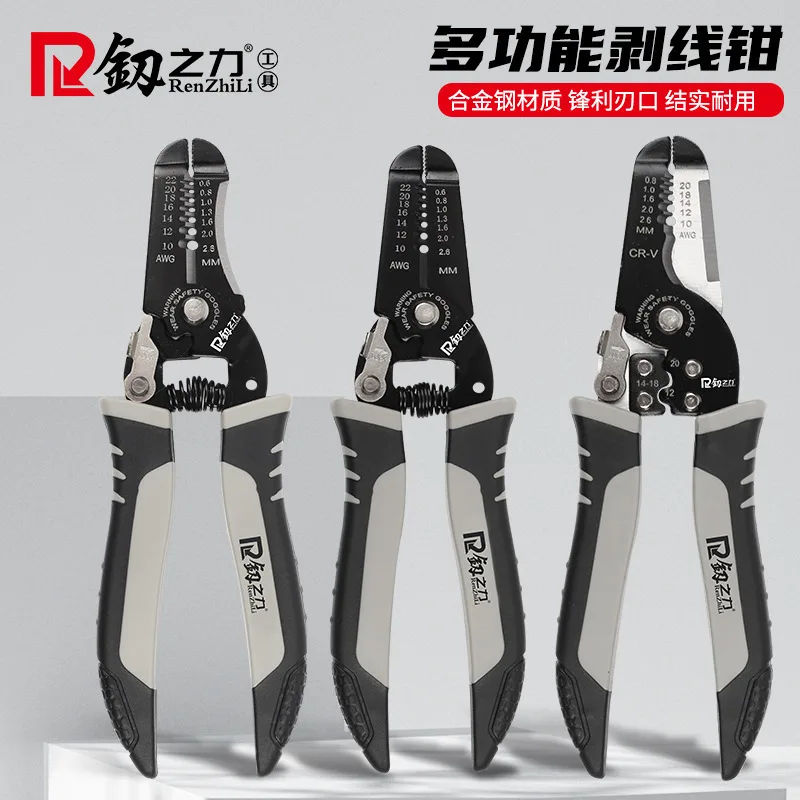
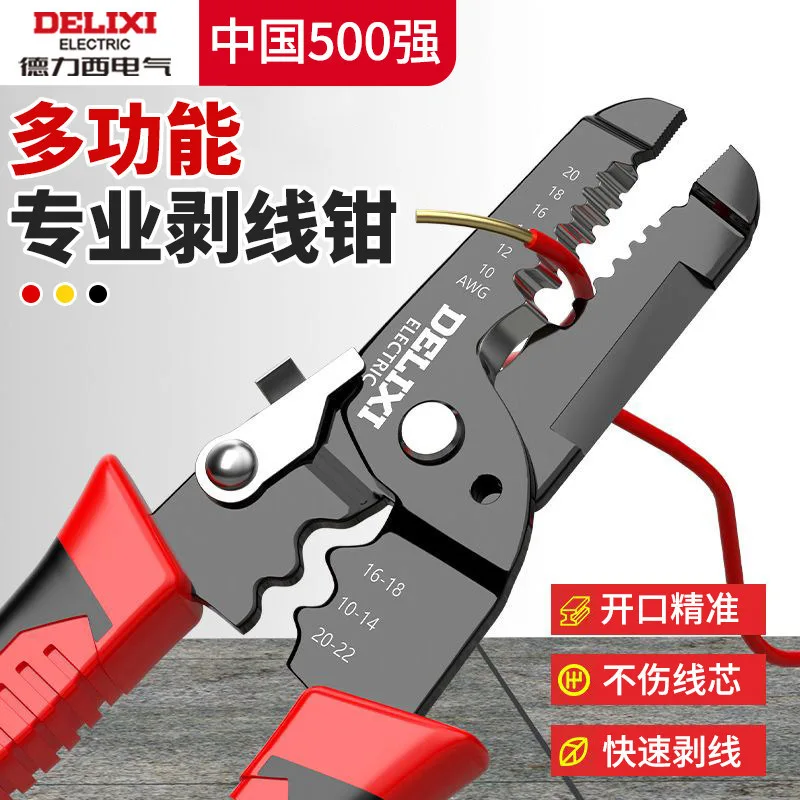
Notched jaws carry a set of fixed openings, one per conductor size. They are fast when the cable is a known size, and the depth is repeatable because the notch geometry sets it. Self-adjusting jaws close to whatever insulation is presented and stop short of the conductor, which is slower per strip but far more forgiving on mixed cable. Multi-function jaws combine stripping with cutting, crimping or bolt cropping, which is convenient — as long as the extra functions are ones you actually use.
| Jaw type | Strength | Weakness | Best match |
|---|---|---|---|
| Notched | Fast and repeatable on known sizes | Needs the right notch every time | Production and repeat work |
| Self-adjusting | Forgiving on mixed cable | Slower, bulkier jaw | Maintenance and mixed work |
| Multi-function | Replaces several tools | Extra functions can be under-used | Service bags with limited space |
Handles and springs
Handle design decides how long you can work without a break. A full-length moulded grip spreads the load across the palm; a short or bare handle concentrates it. For repetitive stripping the return spring is the other half of the story, because it reopens the jaws for you and allows one-handed operation, which matters when the other hand is holding the cable.
The trade-off with springs is that they can be lost, bent or clogged with insulation offcuts, and a stripper with a broken spring is annoying rather than unusable. On tools used every day, a replaceable or well-shielded spring is worth looking for.
What the notch markings actually mean
The figures stamped beside each notch refer to the conductor cross-section the notch is set up for, not the outside diameter of the cable. That distinction matters because the same conductor size can be insulated to different thicknesses: a thin-wall cable and a heavy-duty cable with identical copper will need different blade depths. Where the insulation is unusual, ignore the stamping and test on an offcut first.
It is also worth checking the notches against a cable you use constantly. Marking the one you use most, or filing a small witness line beside it, removes a moment of hesitation every time and stops the wrong notch being chosen when the work is rushed.
The wire strippers in this range
Every option in this range
Nine options across three sizes, in notched, self-adjusting and multi-function patterns. Prices are per tool.
| Option | Size | Jaw type | Best for | Price |
|---|---|---|---|---|
| Compact stripper | 6 in | Notched | Light cable and maintenance work | $8.99 |
| Standard stripper | 7 in | Notched | General electrical work | $17.29 |
| Standard stripper, adjustable | 7 in | Adjustable notched | Mixed cable sizes | $21.01 |
| Standard stripper, heavy pattern | 7 in | Multi-function | Trade use with cutting and crimping | $26.97 |
| Long stripper | 8 in | Notched | Heavier cable and repeated cutting | $14.29 |
| Long stripper, self-adjusting | 8 in | Self-adjusting | Mixed and unknown cable | $26.97 |
Where the cable sizes are consistent, a notched tool in the middle size is the fastest option and the cheapest. Where the work is a mixture, the self-adjusting jaw saves more time than the price difference suggests, because it removes the guesswork that causes nicked conductors.
Working habits that keep the tool sharp
- Choose the notch by the insulation, not by the conductor size printed on the cable.
- Strip with a light squeeze and a slight twist rather than a hard bite.
- Keep the return spring clear of offcuts, which is the usual cause of a sticky action.
- Do not cut steel wire or screws with a stripping jaw. The notches deform and never strip cleanly again.
- Clean the jaws after working on cable that has been in service; old compound blunts the edge.
- Isolate and prove dead before touching any installed conductor.
Frequently Asked Questions
Which size stripper is the best all-round choice?
A 7 in pair. It has enough leverage for cutting and stripping ordinary cable while remaining compact enough to use inside a panel or a junction box.
Are self-adjusting strippers better than notched ones?
Better on mixed or unknown cable, slower on repeated work of one size. The best choice depends on whether your cable sizes are consistent.
Do I need a multi-function stripper?
Only if you would otherwise carry several tools. The extra jaws are genuinely useful when space in the bag is limited and the functions match the work.
My stripper jams when it opens. What is wrong?
Almost always debris in the spring or the jaw pivot. A clean-out and a drop of light oil usually restores the action.
Can one tool strip and crimp properly?
It can crimp insulated terminals adequately, but a dedicated crimping tool gives a more consistent joint, especially on terminals where a pull test matters.
Choosing the right option
Decide the cable range first, then whether you need one notch setting or a jaw that copes with anything, and only then pick the size that fits the spaces you work in. The wire stripper range covers notched, adjustable, self-adjusting and multi-function patterns across 6 in, 7 in and 8 in, which makes it possible to match the tool to the cable rather than to a compromise.