Blog
Reading Wattage on a Powered Hand Tool: 40 W to 150 W

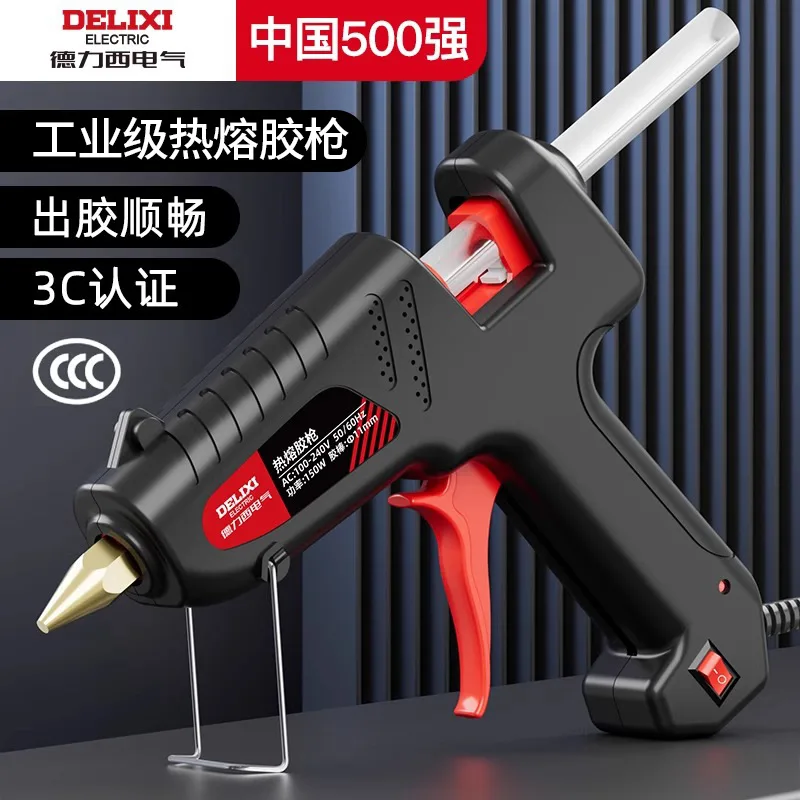
Wattage is the figure buyers look at first and understand last. It is simply how much electrical energy the tool converts each second, but what that energy does depends on the class of tool: on a heated tool it becomes heat, on a motor it becomes torque, and in both cases a large part of it is lost before it reaches the work.
A range that runs from 40 W to 150 W is therefore not a simple ladder from weak to strong. It is a set of tools chosen for different jobs, and the right figure is the one that holds its working temperature or its speed under the load the job applies. This guide explains how to read that ladder.
What the number actually controls
For any powered hand tool the useful question is not the peak figure but the recovery rate: how quickly the tool returns to working condition after the load is applied. A tool with more power recovers faster, which is why it feels stronger even when the peak reading is similar.
| What it affects | Low wattage | High wattage |
|---|---|---|
| Warm-up or spin-up time | Slower from cold | Reaches working condition quickly |
| Recovery under load | Slower; the tool sags and needs a pause | Fast, so work continues without waiting |
| Continuous working time | Shorter bursts between cooling breaks | Longer runs before the tool needs a rest |
| Weight and bulk | Lighter in the hand | Heavier, and often longer in the body |
| Running cost | Lower draw for the same time | Higher draw, but usually fewer hours to finish |
The last row is the one people miss. A tool that is underpowered does not save electricity, because it works for longer and often needs two passes at a job the larger tool finishes once.
Matching the tier to the job
The four tiers in this range divide neatly by the kind of work they can sustain rather than by the size of the workpiece. The mistake is buying the largest for occasional use and the smallest for daily work; both choices end up costing more than the middle.
| Tier | Can sustain | Suits |
|---|---|---|
| 40 W | Short, light operations with pauses between them | Occasional use, small work, a tool that lives in a kit |
| 60 W | Regular light work with short recovery | Bench work, hobby and maintenance |
| 100 W | Continuous work on medium material | Daily trade use and larger workpieces |
| 150 W | Long runs on heavy material with little waiting | Production work, heavy material, the top of the range |
Where the tier is marginal, the deciding factor is how often the tool has to pause. A pause costs more time than the difference in price between two tiers, so a workshop that uses a tool every day should buy one tier above the minimum that will do the job.
Powered hand tools in this range
Every option in this range
Fifteen configurations at 40 W, 60 W, 100 W and 150 W, each available with different quantities of the matching accessory. Prices are per set.
| Configuration | Suits | Price |
|---|---|---|
| 40 W, unit only | Occasional light work | $8.99 |
| 40 W, with accessories | A ready-to-use kit for occasional work | $10.19 |
| 40 W, full accessory set | The largest kit at the entry tier | $11.99 |
| 60 W, small kit | Bench work and hobby use | $11.62 |
| 60 W, with accessories | Regular light work | $14.61 |
| 60 W, full accessory set | The practical middle of the range | $19.48 |
| 100 W, small kit | Larger workpieces | $18.36 |
| 100 W, with accessories | Daily trade use | $21.50 |
| 100 W, full accessory set | Continuous work on medium material | $26.22 |
| 150 W, small kit | Heavy material | $26.97 |
| 150 W, with accessories | Long runs without waiting | $26.97 |
| 150 W, full accessory set | Production work | $26.97 |
Two patterns are visible in that table. The price rises with wattage at the same accessory count, and at any given wattage it also rises with the number of accessories included. That second ladder is the one to watch: at the top tier the three configurations cost the same, so there is no reason to take the smaller kit.
Getting more out of the tool you have
- Work in the middle of the tool’s range rather than at its limit; the top setting is for the first minute, not the whole job.
- Let the tool reach working condition before starting, because a cold tool works harder for the same result.
- Keep the working end clean and in contact, so the energy goes into the job instead of the air.
- Give the tool a short rest at the point where it starts to feel slower, rather than continuing until it stalls.
- Use a correctly rated extension lead; a long thin cable drops the voltage and makes a good tool behave like a weak one.
- Store the tool dry, since moisture in the body is what shortens the life of the insulated parts.
Duty cycle and why tools fail early
Every powered hand tool is rated for a duty cycle, which is the proportion of time it can run within a given period. A tool worked past its duty cycle does not fail immediately; it runs hotter, its insulation ages faster and its performance drops gradually, so the failure appears months later and looks like a manufacturing fault.
The practical rule is to match the tool to the length of the runs it will make. Short, repeated operations with pauses between them suit a light tool; work that keeps the tool running for minutes at a time needs the next tier up, whatever the peak figure on the label says. Buying on the peak figure alone is how a workshop ends up replacing the same tool twice a year.
Frequently Asked Questions
Does more wattage always mean a better tool?
No. It means a faster recovery and a longer duty cycle. If the job is light and intermittent, the extra power adds weight and cost without changing the result.
Is a 100 W tool twice as strong as a 50 W tool?
Not in a straight line. Some of the extra energy goes into losses, so the gain in usable output is smaller than the gain in the number on the label.
Why does my tool slow down on a long job?
Usually the duty cycle catching up with it. Give it a pause, and if the job always needs long runs, move up a tier.
Do accessories matter as much as wattage?
At the same wattage, the configuration with the fuller accessory kit is better value, because the accessories are the parts that wear out and need replacing.
Can I use a higher wattage tool for light work?
Yes, and it will run comfortably below its limit. The cost is weight in the hand and a higher purchase price, not a risk to the work.
Choosing the right one
Decide how long the tool will run without a break, then buy the tier that covers it. The powered hand tool range runs from 40 W to 150 W with matching accessory kits at each tier.