Blog
Chrome Vanadium Hand Tools: Sizes, Grades and How to Choose

Chrome vanadium steel is the default material for hand tools that have to take repeated load without deforming. It is a medium-carbon steel with chromium and vanadium added, hardened and then tempered back, which is what gives a forged tool the combination of hardness at the working end and toughness in the body.
The material is only half the story. Two tools with the same steel and the same nominal size can feel completely different in the hand because of the pattern they are made to, and that is what the labels on a range are actually telling you. This guide explains what the size and the pattern labels change in use.
What chrome vanadium steel actually gives you
A plain high-carbon steel tool can be hardened to a high figure, and it will cut and grip well, but it becomes brittle. Chrome vanadium is hardened to a slightly lower figure and then tempered, which trades a little edge-holding for a lot of resistance to shock. That is why sockets, spanners, pliers and hex keys are almost all made from it: they are tools that see sudden loads rather than steady ones.
The practical consequence is that a chrome vanadium tool is strong but not indestructible. It will take far more than a stamped tool of the same size, and far less than a solid bar. Most failures in the workshop come from treating a forged tool as though it were a bar, using a length of pipe on the handle or striking it with a hammer.
Size: reach against leverage
The size marked on this kind of tool is its working length, and the length sets a trade-off. A short tool reaches into confined spaces and is easy to control in the hand; a long tool applies far more turning force for the same effort, but needs room to swing and is easier to overload.
| Size | Reach | Force at the working end | Suits |
|---|---|---|---|
| 5 in | Best access into tight spaces | Lowest of the three for the same hand effort | Bench work, assemblies, small fixings |
| 6 in | The middle ground | Moderate | General maintenance and repair |
| 8 in | Needs clearance around the fastener | Highest, so less hand effort for the same result | Stubborn fixings, larger sizes, site work |
The safe habit is to start with the shortest tool that will reach the fixing. A short tool warns you by running out of leverage long before it runs out of strength; a long tool lets you apply enough force to damage the fixing or the tool before anything feels difficult.
Pattern: what thick and upgraded mean
Ranges are usually sold in two or more patterns so a buyer can choose between economy and durability. The labels are not decorative: a thicker pattern puts more steel through the body and the working end, which raises the load it will take and also raises the weight slightly.
| Pattern | Steel in the body | Feel in the hand | Where it earns its place |
|---|---|---|---|
| Standard pattern | The lightest of the range | Light and quick to handle | Occasional use, small fixings, a tool kit carried daily |
| Thick pattern | Heavier section through the body | Softer feel, more resistance to bending | Repeated daily work and higher loads |
| Upgraded pattern | Heavier body with a refined working end | The best fit and finish of the range | Trade use where grip and alignment matter |
Buying the upgraded pattern only makes sense if the tool is used often. For a tool that comes out twice a year, the standard pattern will outlast the need; for a tool that is in the hand every day, the heavier pattern is the cheaper choice over a year because it survives the abuse that a light tool quietly accumulates.
Chrome vanadium hand tools in this range
Every option in this range
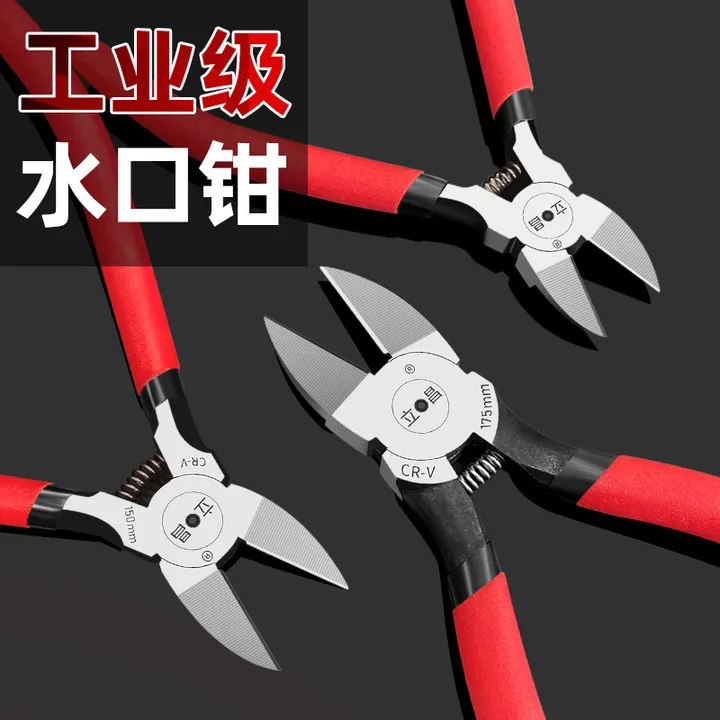
Seven configurations across three sizes and three patterns, from a light 5 in tool up to a heavy 8 in. Prices are per tool.
| Size and pattern | Best for | Price |
|---|---|---|
| 5 in, thick | Small fixings and everyday bench work | $8.99 |
| 5 in, upgraded | The same reach with better finish | $9.57 |
| 6 in, thick | General maintenance and repair | $10.01 |
| 6 in, upgraded | Daily trade use in the middle size | $10.03 |
| 6 in, standard | A light tool for occasional use | $13.15 |
| 8 in, thick | Stubborn fixings with room to work | $14.48 |
| 8 in, upgraded | Heavy daily work at the top of the range | $14.73 |
Read the table as a ladder: the price rises with size first and pattern second, and the gap between the standard and upgraded pattern at the same size is small. If you are buying one tool to cover most jobs, the 6 in upgraded pattern is the one that sits in the middle of both the price and the work.
Looking after a forged tool
- Never extend the handle with a pipe; the extra leverage is what bends a forged tool.
- Keep the working end clean so it seats fully on the fastener instead of on the corners.
- Wipe the tool down after use, because workshop grit wears the plating and starts corrosion.
- Store forged tools so they cannot rub against each other; plating damage is where rust begins.
- Replace a tool with a bent body rather than straightening it, since the temper has already gone.
- Match the tool size to the fastener, because an oversized or undersized fit is what rounds corners.
Signs a tool has reached the end
The first sign is usually a change in feel rather than a visible defect: a tool that used to grip firmly needs more pressure to stay seated. That is the working end wearing, and it is the point at which continuing to use it starts damaging the fasteners instead.
A bent or twisted body is the second sign, and it should end the tool’s working life. Straightening a bent forged tool introduces a stress point that will fail under the next heavy load, and a tool that fails while loaded usually takes skin with it. Plating that has flaked away is a lesser problem but an early one, because exposed steel in a damp workshop corrodes quickly and the corrosion roughens the fit.
Frequently Asked Questions
Is chrome vanadium better than chrome molybdenum?
Both are good, and they are chosen for different jobs. Chrome vanadium is used for general hand tools; chrome molybdenum holds up better to impact, which is why impact sockets are made from it.
Should I buy the thick pattern or the standard one?
Buy the thicker pattern if the tool is used daily or sees high loads. For occasional use the standard pattern gives the same reach for less weight.
Can I hit a chrome vanadium tool with a hammer?
No. Hardened steel struck with hardened steel can chip, and a chip from a tool face travels fast. Use a soft-faced mallet and the correct tool for the job.
Does a longer tool mean more strength?
It means more leverage, not more strength. A longer tool multiplies the force you apply, which is helpful on a tight fixing and dangerous on a small one.
How do I stop plating from flaking?
Keep the tool clean and dry, and never use it as a lever or a drift. Plating fails first where the tool has been used outside its intended job.
Choosing the right one
Pick the shortest size that reaches the fixing, then decide the pattern by how often the tool will be used. The chrome vanadium range covers 5 in, 6 in and 8 in in standard, thick and upgraded patterns.