Blog
Scouring Pads and Rolls: Removing Rust, Grease and Scale

Scouring pads and emery rolls do the preparation work that makes a finish last: removing rust, scale, grease and old coatings from a surface so that a paint or a coating can grip. They are cheap, they are used by hand, and they are frequently the wrong grade for the job. This guide covers the pads, cloths and rolls we stock and how to match the grade to the surface.
What a scouring abrasive has to do
- Remove the contaminant, not the material. The aim is a clean, keyed surface, not a reshaped one.
- Follow the shape. A pad or cloth wraps around a pipe, a weld or a moulding, which a rigid disc cannot do.
- Survive the work. A cloth roll backed with a tough weave keeps cutting when a paper sheet would disintegrate.
- Leave a key. The scratch pattern left behind is what the coating bonds to, so the grade decides the grip.
Grades and their jobs
| Product | Job | Note |
|---|---|---|
| Coarse emery cloth | Heavy rust, scale and weld discolouration | Leaves a deep scratch that may need refining |
| Medium emery cloth | General rust removal and surface preparation | The usual starting point before painting |
| Fine nylon abrasive | Keying a surface and cleaning without scoring | Leaves a finish that a topcoat can sit on |
| Scouring pad | Small areas, edges and detail cleaning | Handy where a roll is too wide to reach |
Pads for detail and small areas
An emery scouring pad in nylon for rust and stain removal is the pad for edges, welds and small areas of staining, where a roll is too wide to control. The nylon structure holds the abrasive and lets it work around a profile, and it is the tool to reach for before a coating goes on a repair area. Where the pad has to remove heavier corrosion, the same material in a coarser grade does the job without gouging the base metal.
Rolls for larger surfaces
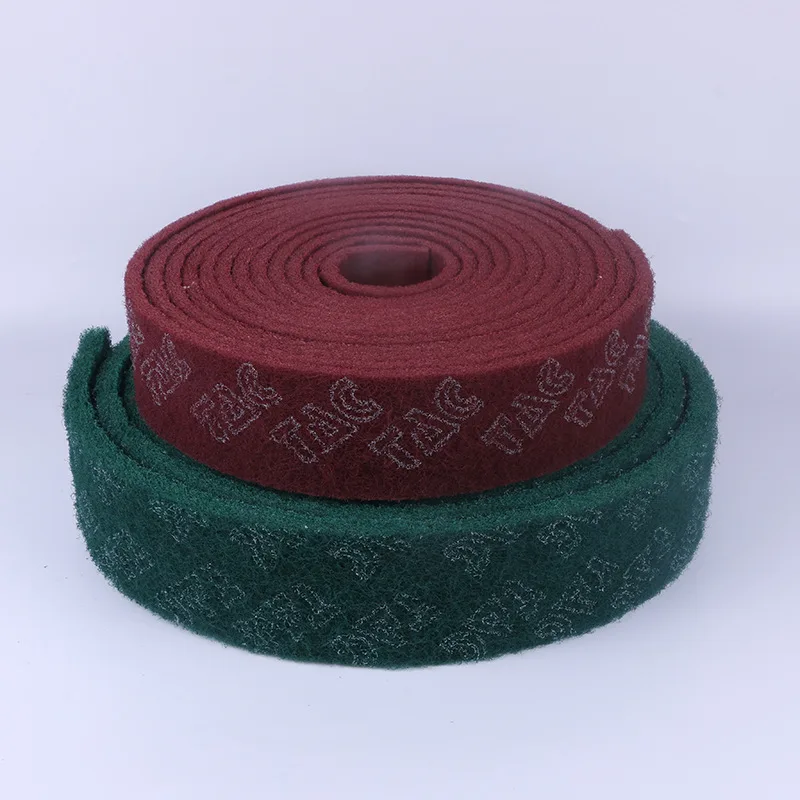
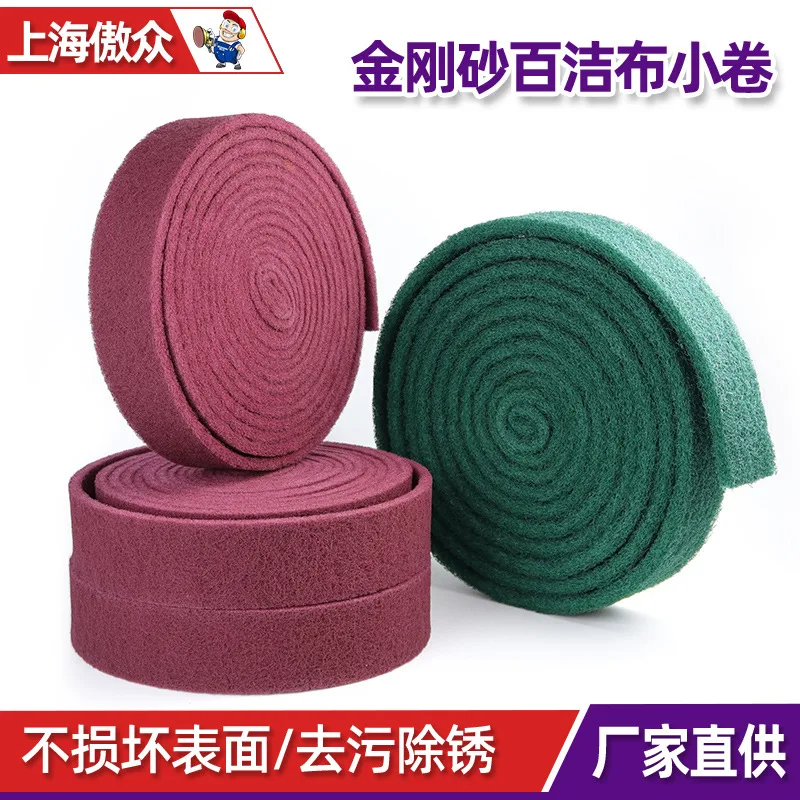
An emery scouring cloth roll in 85 mm width with a scraper covers pipe, bar and sheet, and the scraper edge combined with the cloth handles a surface that has both loose scale and rust. An abrasive scouring cloth roll from 70 to 145 mm wide in emery and nylon gives you a width for the job rather than forcing one size to cover everything, and a heavy-duty nylon abrasive scouring cloth is the grade for repeated use on rough surfaces. A roll is the economical format for preparation work, because the cloth keeps cutting as it unwraps instead of glazing in one spot the way a small pad does.
Preparation as a sequence
Surface preparation follows the same logic as sanding: remove the worst of the contamination with the coarsest grade, then refine the scratch pattern until the coating can key to it. On a rusty steel surface that means starting with a coarse emery cloth to take the scale off, moving to a medium grade to remove the rust that is left, and finishing with a fine nylon abrasive to leave an even key. Wiping the surface down afterwards matters as much as the abrasion: dust and oil left on the surface are what make a coating lift at the edges, so degrease before and after, and let the surface dry fully before painting.
Materials, backing and why nylon lasts
- Emery grain. A natural abrasive blend bonded to cloth, effective on rust and scale and economical for large areas.
- Nylon abrasive. Grain bonded throughout a nylon web, so new grain is exposed as the surface wears. It will not shed a coat of abrasive the way a coated cloth can.
- Cloth weight. Heavier cloth holds its shape and resists tearing on an edge; lighter cloth conforms to a curve.
- Open structure. Gaps in the web let the debris escape, which is why nylon abrasives resist loading far better than paper.
Using abrasives on surfaces that will be coated
Two mistakes account for most coating failures that are blamed on the paint. The first is abrading a surface that still has oil on it, which drives the contamination into the scratch pattern rather than removing it. The second is leaving too fine a finish: a surface polished with a very fine grade has nothing for the coating to grip, and the paint will not adhere. Follow the coating manufacturer’s specified profile, abrade in one direction where a directional key is wanted, and remove the dust before the first coat. On non-ferrous metals and stainless steel, keep the abrasives separate from those used on plain steel, because embedded iron particles rust and stain the surface.
Cutting the roll to fit the job
A roll is only economical if it is used in the right width. Tear or cut a length long enough to wrap around the work with a firm grip and short enough that the loose end cannot catch on an edge, then fold the ends so the cloth does not unravel. For pipe and bar, wrap the cloth around the section and pull it back and forth rather than rubbing along the length, which keeps the scratch pattern even and works the whole circumference. Replace the length when it glazes, and keep a separate roll for stainless and for plain steel so contamination does not transfer between them.
Frequently asked questions
What grade should I use to remove rust?
Start coarse to take off heavy rust and scale, then move to a medium or fine grade to leave a uniform key for the coating.
Is emery cloth the same as sandpaper?
No. Emery cloth bonds the abrasive to a cloth backing, so it bends around shapes and survives edges. Sandpaper is paper-backed and tears.
Can I use a scouring pad on stainless steel?
Yes, but keep it separate from pads used on plain steel. Iron particles embedded in the pad will rust and stain stainless steel.
Do I need to degrease before scouring?
Yes. Abrading an oily surface pushes contamination into the scratches. Degrease, abrade, then degrease again before coating.
Why does my paint flake off a scoured surface?
Usually the surface is too smooth for a key, or dust and oil were left behind. Use the profile the coating specifies and clean thoroughly.
Where to start
Browse the full Scouring Pads & Wipes range, or the wider Abrasives category if you also need discs, belts or sharpening stones. Tell us what you are removing and what will go on afterwards, and we will point you at the grade and format that fit.