Blog
Cordless Electric Grease Gun: What to Check Before You Order


Choosing cordless electric grease gun is a short exercise if the right three or four figures are on the table. Everything below is arranged so those figures can be found quickly, without reading the whole listing first.
All 6 options are shown with prices from $48.90 to $77.43. The spread is wide enough that the correct answer is normally one specific option rather than either end of the range.
The range at a glance
The table below puts the whole listing on one screen: how many options there are, what the price band is and how far the sizes or capacities actually span.
| Item | This listing | What it tells you |
|---|---|---|
| Options available | 6 options | Each option is priced separately |
| Price band | $48.90 to $77.43 | The step between options is the specification change |
| Size or capacity span | Not set by size | The choice is by material and finish rather than size |
| Units used in the options | cc | The units you will be comparing against the job |
| Format | Variable product | How the options are structured on the site |
Sizing it to the job
The three dimensions below are the ones that change the result. Two of them can be measured from the work itself; the third is a judgement about how the item will be used.
| Dimension | What it decides | How to choose |
|---|---|---|
| Working pressure | What the tool or gun is designed to run at | Set at the tool, not guessed at the compressor |
| Air consumption | The volume the tool needs to hold speed | Matched to the compressor’s free air delivery |
| Hose bore and length | Pressure lost between the tank and the tool | Wider and shorter for high-consumption tools |
The Cordless Electric Grease Gun listing
The listing below is the one described above, with the options and prices as they stand today.
What to check when it arrives
Most of what goes wrong after delivery is visible in the first few minutes, which is why the checks below are worth doing before the item goes into service.
| Check | Why it matters | What good looks like |
|---|---|---|
| Regulator and gauge are fitted | Pressure at the tool is what matters | An adjustable regulator with a readable gauge |
| Hose bore suits the consumption | A narrow hose starves the tool | Bore and length matched to the demand |
| Couplers seal without leaking | Leaks cost pressure and money | Matching couplers on every tool |
| Filtration is in place | Water and oil reach the finish otherwise | A filter or separator before the tool |
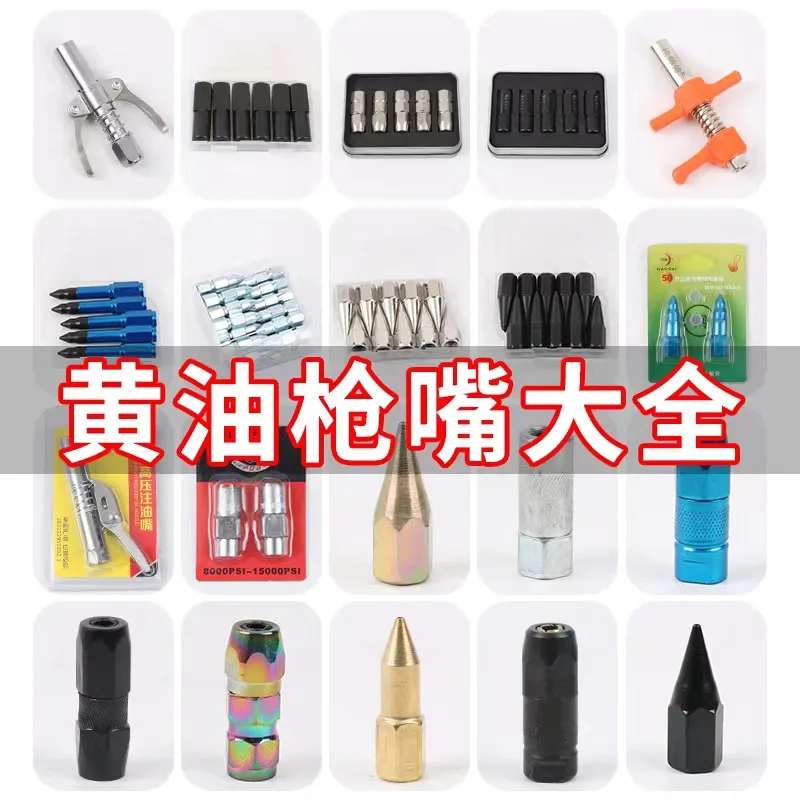
| Nozzle or tip sizes are standard | Consumables decide the running cost | Common fitments, locally stocked |
| Seal and repair kits exist | O-rings and seals fail first | A stocked kit for the common sizes |
Where these go wrong
The problems below account for most of the complaints in this category, and nearly all of them have a cause that can be corrected without replacing anything.
| Symptom | Likely cause | What to do |
|---|---|---|
| Tool runs slow or stalls | Too little flow, not too little pressure | Shorten or widen the hose, then check the regulator at the tool |
| Finish has fisheyes or water marks | Oil or water in the line | Fit a separator and drain the tank regularly |
| Pressure creeps or drops | Leaking coupler or a worn regulator seat | Leak-test the line with soapy water, then reseal |
| Spray pattern is uneven | Blocked or worn nozzle, or the wrong tip | Clean or replace the tip and re-test the pattern |
Air, spray and maintenance in practice
Air equipment is a system, not a tool. Pressure is set at the compressor, flow is limited by the hose, and the finish is decided by what happens at the nozzle.
Air quality decides how long everything downstream lasts. Water and oil carried through a line reach the tool, the gun and the finish, and cleaning them out afterwards costs more than filtering them out first.
Flow is the figure that gets ignored. A tool rated for a pressure needs a volume of air behind it, and a small bore hose or a long run quietly starves it.
Ordering for a team or a season
Past a single unit the question stops being which option and becomes how many, and the answer comes from consumption rather than from the price list.
Quoting works on quantity, so it pays to give the number required and the date it is needed together instead of asking for a unit figure and negotiating afterwards.
What is in the box
The option selected is what gets delivered, packed for transport and despatched by the carrier chosen at checkout. There is no fixed bundle sitting behind the listing.
If a case, an accessory or a spare is included it is stated against that one option and nowhere else, so two options can be judged on what they actually contain.
Frequently Asked Questions
The answers below cover the questions that decide most orders in this range.
Pressure or flow: which do I set?
Pressure is set at the tool and flow comes from the compressor and hose. Most complaints about a weak tool turn out to be a flow problem, because pressure measured at a dead-ended gauge says nothing about volume.
Why is there water in my finish?
Air carries moisture as it cools on the way to the tool. A separator near the tool and a drained tank solve nearly all of it.
How much compressor do I need?
Look at the free air delivery at the pressure you will work at, not the tank size or the headline figure. Tank size buys time between cycles; delivery decides what the tool can do.
Does nozzle choice matter as much as the machine?
For finish quality, more. The nozzle sets the pattern, the atomisation and the film build, and the machine only has to feed it consistently.
What should I check when it arrives?
Regulator and gauge, hose bore, coupler condition and whether the filter is complete. Those four decide whether the equipment works on the first job.
Keeping it working
Clean, check, store. Those three habits cover nearly everything that shortens the life of this equipment.
- Drain the receiver daily; water carried downstream is the commonest fault.
- Check the regulator setting at the tool monthly rather than at the tank.
- Inspect hoses for cuts and couplers for wear before each use.
- Clean or replace filters on a schedule, not when the finish fails.
- Oil pneumatic tools with the grade and quantity the maker states.
- Soak and clean spray equipment immediately after every use.
Ordering and what happens next
Trade and repeat buyers can have larger quantities quoted, and the per-unit price reflects the quantity rather than a fixed list figure.
The Cordless Electric Grease Gun page carries the current stock and the price of every option in this range.
Wear parts are the items to check for availability before ordering, because they decide whether the equipment is still useful in a few years.
Settle the size from the job, confirm the material and the finish from the environment, and the rest of the decision follows without argument.