Blog
Stainless Steel Universal Joint: What to Check Before You Order


Choosing stainless steel universal joint is a short exercise if the right three or four figures are on the table. Everything below is arranged so those figures can be found quickly, without reading the whole listing first.
All 17 options are shown with prices from $8.99 to $26.97. The spread is wide enough that the correct answer is normally one specific option rather than either end of the range.
The range at a glance
The table below puts the whole listing on one screen: how many options there are, what the price band is and how far the sizes or capacities actually span.
| Item | This listing | What it tells you |
|---|---|---|
| Options available | 17 options | Each option is priced separately |
| Price band | $8.99 to $26.97 | The step between options is the specification change |
| Size or capacity span | Not set by size | The choice is by material and finish rather than size |
| Units used in the options | Mixed | The units you will be comparing against the job |
| Format | Variable product | How the options are structured on the site |
Sizing it to the job
The three dimensions below are the ones that change the result. Two of them can be measured from the work itself; the third is a judgement about how the item will be used.
| Dimension | What it decides | How to choose |
|---|---|---|
| Size and standard | What it fits, and which standard it meets | Measured against the mating part, not the label |
| Material or grade | Strength, corrosion resistance and temperature | A stated grade rather than a trade name |
| Compatibility | The tool, machine or system it belongs to | Confirmed against the maker’s list |
The Stainless Steel Universal Joint listing
The listing below is the one described above, with the options and prices as they stand today.
What to check when it arrives
Most of what goes wrong after delivery is visible in the first few minutes, which is why the checks below are worth doing before the item goes into service.
| Check | Why it matters | What good looks like |
|---|---|---|
| Size and pitch are stated and measured | A near match fails under load | Both dimensions given, in the standard used locally |
| Grade or standard is named | It sets the strength and the limits | A recognised grade, not a description |
| Finish suits the environment | Coating decides the working life outdoors | Plated, galvanised or stainless as needed |
| Compatibility is confirmed | Accessories for the wrong model do nothing | Matched to the tool or machine model |
| Quantities suit the job | Small packs cost more per unit, large ones sit unused | A size that matches the real consumption |
| Replacements are available | Supplies are consumed, not repaired | The same item still supplied |
Where these go wrong
The problems below account for most of the complaints in this category, and nearly all of them have a cause that can be corrected without replacing anything.
| Symptom | Likely cause | What to do |
|---|---|---|
| Fixing will not hold | Wrong size, pitch or material for the substrate | Re-check the standard and use the correct anchor or fixing |
| Parts corrode early | Wrong finish for the environment | Move to a galvanised or stainless grade |
| Accessory does not fit | Model mismatch or a different standard | Confirm against the maker’s compatibility list |
| Consumable wears out quickly | Wrong grade for the duty, or a substitute part | Use the specified grade rather than the nearest size |
Workshop supplies in practice
Supplies are chosen on compatibility. Nothing here works on its own; it works with the tool, the material or the machine it is fitted to, and that fit decides whether it does anything at all.
The cheapest item in a workshop is also the one most often wrong. Sizes, thread pitches and material grades look alike on a shelf and behave very differently in use.
Consumables and accessories are bought repeatedly, so the running cost is decided by how many are used and how often they must be replaced rather than by the unit price.
Ordering for a team or a season
Past a single unit the question stops being which option and becomes how many, and the answer comes from consumption rather than from the price list.
Quoting works on quantity, so it pays to give the number required and the date it is needed together instead of asking for a unit figure and negotiating afterwards.
What is in the box
The option selected is what gets delivered, packed for transport and despatched by the carrier chosen at checkout. There is no fixed bundle sitting behind the listing.
If a case, an accessory or a spare is included it is stated against that one option and nowhere else, so two options can be judged on what they actually contain.
Frequently Asked Questions
The answers below cover the questions that decide most orders in this range.
How do I make sure a part fits?
Measure the mating part and check both the size and the standard before ordering. A nominal match in a different standard is the commonest source of returns.
Does the grade really matter?
For anything carrying load, heat or corrosion, yes. Grade sets the strength and the working limits, and substituting by appearance is how parts fail early.
How many should I order?
Work from real consumption over a season, then buy slightly above it. Small packs cost more per unit, but stock that sits for years is not a saving either.
What if the accessory is for an older model?
Check the maker’s compatibility list by model rather than by picture. Accessories and spares change between revisions even when the product name does not.
Why does the cheapest option disappoint?
Usually because the grade or the finish was chosen on price. Supplies are consumed quietly, so the failure appears long after the purchase, which is why the specification is worth the extra.
Keeping it working
Clean, check, store. Those three habits cover nearly everything that shortens the life of this equipment.
- Store by size and standard so the wrong item is never picked.
- Keep packaging and labels until the batch is used up.
- Keep consumables dry; damp degrades coatings and adhesives.
- Record the batch for anything structural or safety related.
- Check stock against the tools actually in service.
- Re-order before stocks run out rather than mid-job.
Ordering and what happens next
Trade and repeat buyers can have larger quantities quoted, and the per-unit price reflects the quantity rather than a fixed list figure.
The Stainless Steel Universal Joint page carries the current stock and the price of every option in this range.
Wear parts are the items to check for availability before ordering, because they decide whether the equipment is still useful in a few years.
Settle the size from the job, confirm the material and the finish from the environment, and the rest of the decision follows without argument.
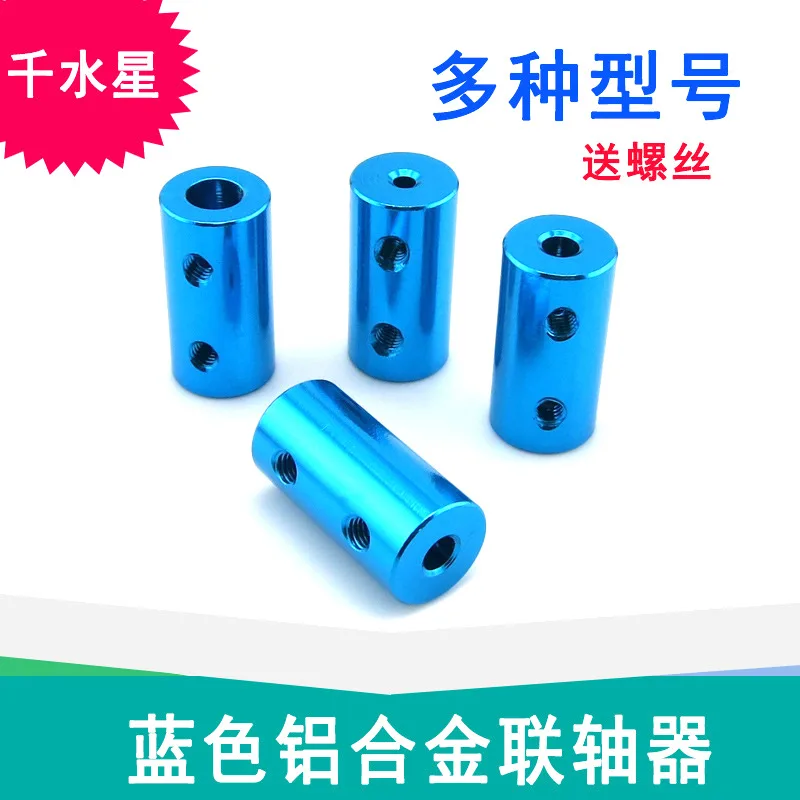 Multi-specification Color Aluminum Alloy Couplings, Motor Coupling Accessories, 3.175, 16 Options
 1-inch Air Cannon Socket Adapter, 3/4-inch Pneumatic Socket Adapter, 15985 / 100 / 15992 / 15954