Blog
Suction Cup Size Guide: Diameter, Hold and Colour Choice


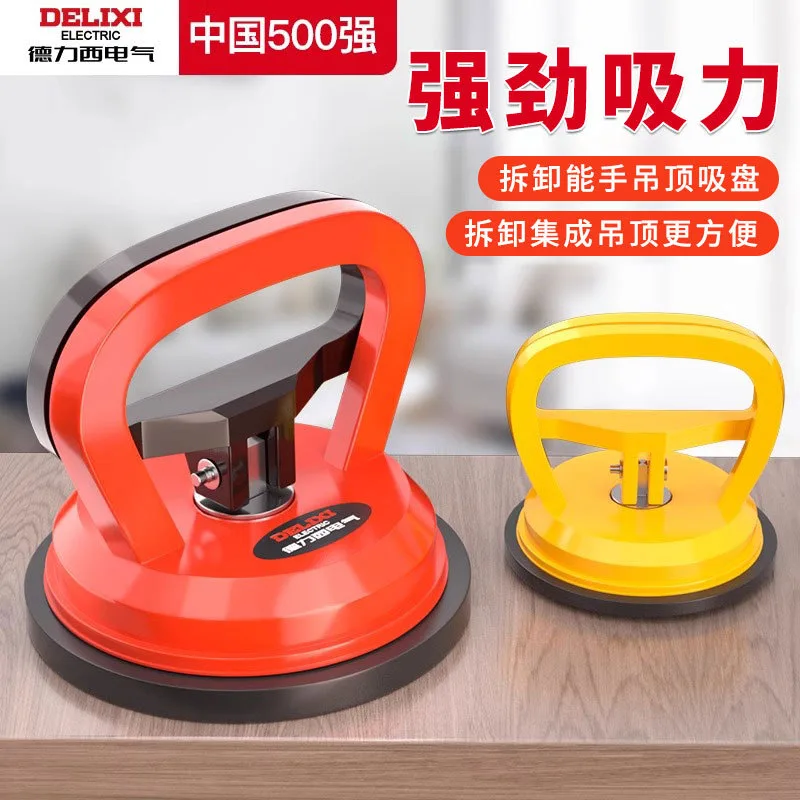
Suction cup size is not a styling choice: it is the specification. Holding force comes from the area inside the seal multiplied by the pressure difference, so a pad 5.6 cm across holds several times what a 3.5 cm pad does, even though the diameter has only grown by a little over half. That is why the same range offers small cups for positioning and larger ones for lifting, in a spread of colours. This guide covers what cup diameter changes, which size suits which panel, and what the colour options are for.
Diameter is the whole specification
- Area grows with the square of the diameter. A pad that is 60 per cent wider has about two and a half times the sealed area, and therefore about two and a half times the hold.
- Bigger cups are harder to place. A large pad needs a large flat area, so it will not sit on a narrow strip, a moulding or a small tile.
- Small cups are for positioning. A small pad is enough to lift a tile into place or hold a trim while it is fixed, which is a different job from carrying a sheet.
- Pad softness matters as much as size. A soft rim conforms to slight curvature; a firm one holds better on a perfectly flat surface but leaks on a curved or dirty one.
- Two cups beat one large cup. A pair of moderate cups lets you control rotation and share the load, and if one slips the other is still holding.
- Colour helps you match the cup to the job. Keeping sizes in different colours is how a kit stays sorted on a site where several people use the same tools.
Cup size against the panel
| Cup | Typical hold | Suits | Limit |
|---|---|---|---|
| Around 3.5 cm | Light; enough to position and steady | Small tiles, trims, handles and fittings | Not enough for a full sheet |
| Around 5.6 cm | Moderate; the working size for tile and glass | Tiles, small glass panels, splashbacks | Needs a flat area at least as wide as the pad |
| Large pattern | Highest of the range on a clean flat surface | Large tiles and glass panels | Will not seal on a narrow or curved surface |
The practical rule is to go down a size for anything fiddly and up a size for anything heavy, and to remember that the numbers above assume a clean, smooth, room-temperature surface. On a cold, dusty site every one of those figures falls, which is why the test tug before lifting matters more than the rating.
The suction cups in this guide
Every option in this range
Thirteen options across two cup diameters and seven colours, at two price points. Prices are per unit.
| Cup | Colours | Best for | Price |
|---|---|---|---|
| Small cup, single | Standard | Positioning tiles, trims and fittings | $8.99 |
| Standard cup, single | Green, blue, orange, purple, red, yellow and black | Tiles and small glass panels | $26.97 |
| Large pattern, single | Black, orange and yellow | Large tiles and glass panels | $26.97 |
The pattern in the pricing is unusual and worth understanding: the small cup costs a fraction of the rest, and every other cup in the range costs the same regardless of colour or of the larger pad. The price is set by the vacuum mechanism and the housing, so the diameter and the colour add nothing to the cost. Choose on the panel, not on the price.
Colour as identification
Seven colours in one range is more than decoration. On a tiling job with two or three people, colour is how each person’s cups stay identifiable, how a set of cups stays together, and how a cup that has been left on a panel gets spotted before the panel is fixed. Colour also helps you separate sizes within a kit: keep the positioning cups in one colour and the lifting cups in another and the kit stays sorted without labels.
Getting the best from a cup
- Wipe the pad and the surface before every use. A single grain of grit under the rim is enough to break the seal on a large cup.
- Press the cup flat, then engage the vacuum. Setting the pad on an angle traps air under the rim and the cup never reaches full hold.
- Push the load, do not pull it sideways. Where a panel has to move horizontally, support it and slide the support rather than the cup.
- Match the cup to the flat area. A large pad needs somewhere at least as wide as itself. For a narrow strip, use the small cup.
- Check the seal indicators. Where a cup has a marker for the vacuum state, glance at it whenever the cup is under load.
- Store pads off the surface. A pad left pressed against something takes a set and stops conforming. Keep cups hanging or in a case.
Frequently Asked Questions
How much more does a larger cup hold?
Roughly in proportion to the sealed area, so a cup about 60 per cent wider holds around two and a half times as much, on the same clean flat surface.
Can I use a small cup on a large tile?
It can position and steady a tile, but it will not carry the weight of a large panel. Use the small cup to place the tile and the larger cup or two hands to hold it.
Does the colour mean a different material?
No. The colours in this range are identification, not specification. Every cup at the standard diameter is the same tool with a different housing colour.
Why do different sized cups cost the same?
Because the vacuum mechanism and housing dominate the price, and they are shared across the range. The pad diameter is the cheapest part of the tool.
What surface can I not use these on?
Anything porous or textured, such as unglazed tile, brick, rough timber and dusty concrete. The rim cannot seal, and without a seal there is no hold at all.
Buying the right one
Buy the small cup where the job is positioning and the full size or the large pattern where the job is lifting, and use colour to keep sizes and owners apart. The suction cups in this range cover both diameters in seven colours.