Blog
Tailor Shears Sizes: Small, Medium and Large Explained

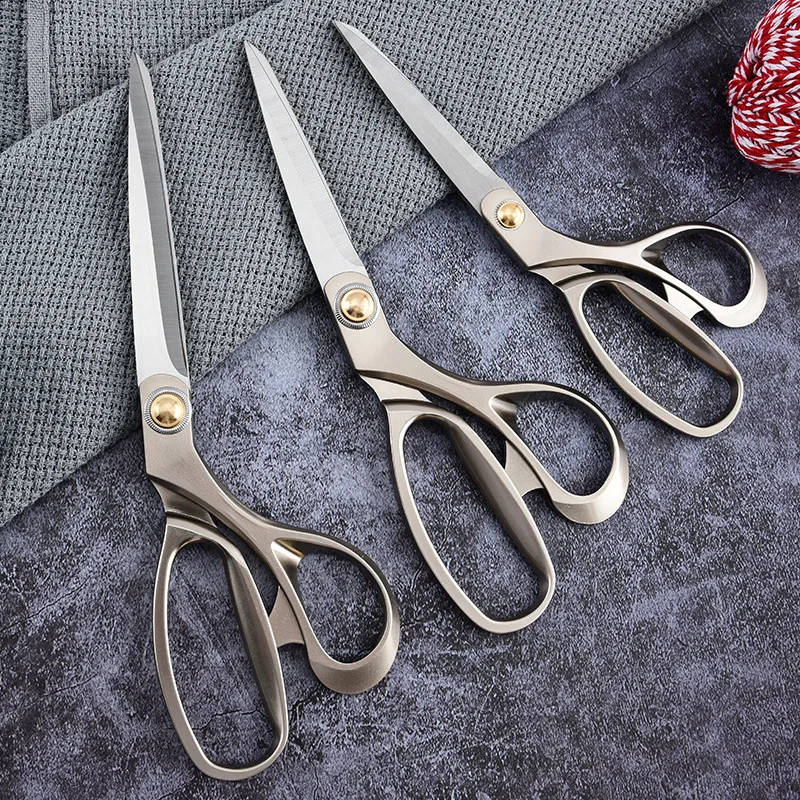
Shears are sized by the length of the cutting blade, and that length controls two things at once: how much material is cut in one stroke and how much leverage the handles give you. A short pair turns quickly and cuts curves; a long pair takes a full stroke through heavy fabric, leather or carpet without the cut stalling. This range covers three sizes, and this guide explains what each one is for, how to tell when a pair is too small for the material, and how to cut heavy work without wrecking the edge.
What shears size actually measures
- Blade length, not overall length. The cutting edge is what takes a stroke through the material, and it is the figure that decides whether a cut stalls.
- Handle length gives the leverage. Long handles turn hand force into blade force, which is what lets a shears cut heavy material at all.
- Long blades cut straighter. A long edge holds a line over distance; a short edge turns within a small radius, which is why it is the choice for curves.
- Weight follows length. A large pair is heavier in the hand and its leverage works both ways: it magnifies your force and the load on your wrist.
- Size is about the material, not the user. A small pair in strong hands still stalls on carpet. Match the size to the resistance of what is being cut.
- Pivot quality matters as much as size. A loose pivot on a large pair cuts worse than a tight pivot on a small one.
Size against the material
| Size | Best at | Stalls on |
|---|---|---|
| Small | Light fabric, thread, curves, detail cutting | Any heavyweight textile or leather |
| Medium | General fabric cutting, dressmaking, upholstery fabric | Thick leather and dense carpet |
| Large | Heavy textile, leather, carpet and long straight runs | Tight curves, where the blades cannot turn |
A pair that stalls is a pair that tears. The moment a cut stops progressing and the material starts to fold between the blades, the size is wrong for the material, and pushing harder is what spreads the blades and ruins the pivot.
The tailor shears in this guide
Every option in this range
Six options covering three sizes, each listed twice in the range. Prices are per unit.
| Size | Supplied as | Best for | Price |
|---|---|---|---|
| Small | Single pair | Light fabric, curves and detail work | $9.77 |
| Medium | Single pair | General fabric and upholstery cutting | $11.41 |
| Large | Single pair | Heavy textile, leather and carpet | $11.57 |
The three sizes are within two dollars of each other, which makes the choice purely about material: there is no cost reason to buy the small pair if the work is carpet. Where a workshop handles more than one material, the medium and large together cover almost everything.
Cutting heavy material
- Keep the work on the table. Material lifted off the surface folds between the blades. Cut with the lower blade flat against the table.
- Open the blades fully before each stroke. A full stroke uses the whole edge. Chopping with the middle of the blades stalls and chews.
- Do not close the tips completely. Stopping just short keeps the very ends of the blades meeting and avoids nicking them.
- Cut in a straight line for long runs. Long blades follow a mark well; steering the pair to follow a curve is what twists the blades out of line.
- Cut leather from the back. The flesh side is less likely to mark than the finished face, and the blades meet the material more evenly.
- Take two shallow strokes rather than one deep one. On dense material, a first stroke to open the cut and a second to finish it is faster than forcing one pass.
Care that keeps a pair cutting
- Check the pivot first when cutting quality drops. Blades that have opened up ride over the material. Tighten until they just pass each other.
- Wipe both blades after every session. Fabric dust, starch and hand sweat all contribute to corrosion and to a dragging cut.
- Oil the pivot lightly. One drop worked in by opening and closing the shears keeps the action smooth and even.
- Store closed and dry. A shears kept closed protects its edge and stops the tips being knocked against other tools.
- Keep one pair for textile only. Paper, card and wire take the edge off a cutting pair far faster than fabric ever will.
- Hone only the bevel. The flat face is lapped to sit against its partner; grinding it destroys the clearance the blades need to shear.
One measurement worth taking before buying: put the pair down on the table with the blades open and measure from the pivot to the tip. That figure, not the overall length printed on the pack, is what determines the stroke and the leverage, and two pairs sold as the same size can differ by a centimetre in cutting edge alone.
Frequently Asked Questions
What size shears should I buy first?
Medium. It cuts dressmaking and upholstery fabric, turns a moderate curve and still handles heavier cloth, which covers most textile work.
Will a small pair cut leather?
Thin leather, slowly, and at the cost of a strained pivot. Leather is work for the large size, where the handle length gives the leverage the material needs.
Why does my cut stall halfway?
The pair is too small for the material, or the blades have opened up at the pivot. Check the pivot first, then move to a larger size if the cut still stalls.
Can I use tailor shears on carpet?
Yes, with the large size. Cut from the back with the blades flat to the floor, and take two strokes rather than forcing one pass through the pile.
Do the sizes cost much more as they get bigger?
Not in this range: the three sizes are within two dollars of each other, so the material decides the size rather than the budget.
Buying the right one
Match the blade length to the resistance of the material, and keep one pair for textile only. The tailor shears in this range cover small, medium and large in stainless steel.