Blog
Impact Drills, Chucks and Magnetic Drill Presses


Not every hole is a drill job, and not every drill is a hammer. An impact drill drives into masonry by adding a hammer action to rotation, a magnetic drill press holds itself to a steel plate so you can drill a large hole accurately, and a rock drill breaks ground rather than making a clean hole. This guide covers the impact drills, chucks and presses we stock, and how to decide which machine the hole actually needs.
What the three machine types do
- Impact drill. Rotation plus a hammer action, for brick, block and light concrete. The hammer action is mechanical, driven by the rotation, so it stops when the chuck stops turning.
- Magnetic drill press. An electromagnet clamps the base to a steel plate, and a slide holds the drill in alignment. It is the only practical way to drill a large hole in a plate or a beam without a workshop machine.
- Rock drill. A heavier percussive machine for breaking and for drilling stone and concrete, where the hole is a means to an end rather than a finished feature.
Matching the machine to the material
| Material | Machine | Note |
|---|---|---|
| Brick and block | Impact drill with a masonry bit | Hammer action on, and let the bit clear the dust |
| Light concrete | Impact drill, or a rotary hammer for larger holes | Bit diameter drives the choice more than depth |
| Steel plate and beams | Magnetic drill press with an annular cutter | The magnet needs a clean, flat, thick surface |
| Stone and ground | Rock drill or breaker | Percussive, not a finishing tool |
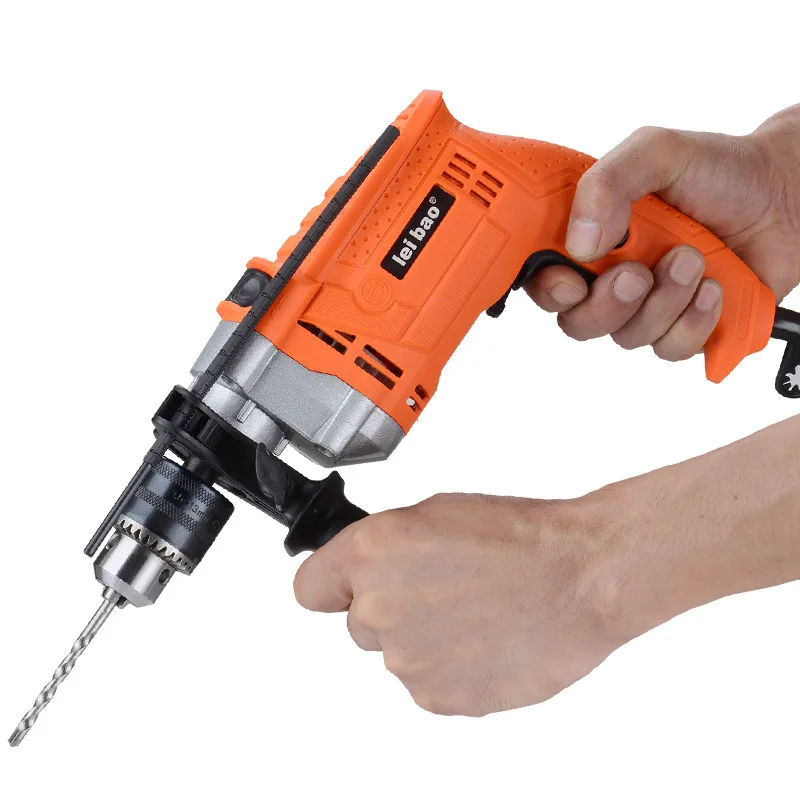
Impact drills
Impact drills in a range of sizes put a hammer action behind the bit, and the size of the machine sets the maximum hole diameter in masonry rather than the depth. A simple fixed impact drill covers occasional work in brick and block. Two settings matter in use: hammer action off for steel and timber, and hammer action on only for masonry, because running a twist bit in hammer mode in steel destroys the bit and the hole.
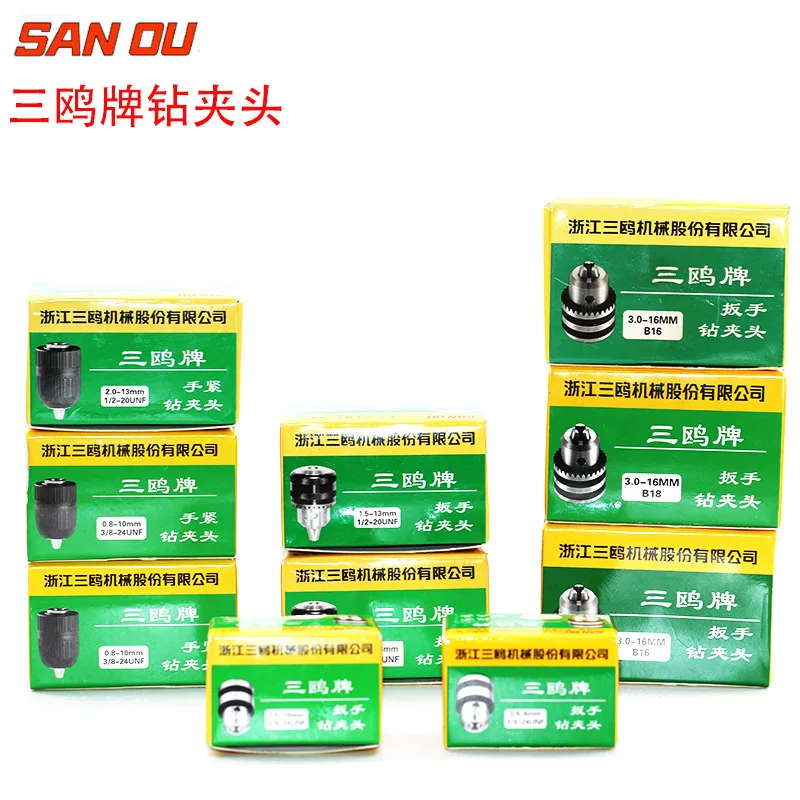
Drill chucks
Drill chucks in a wide range of sizes decide which bits a machine can hold and how much runout the hole will have. A smaller range of chucks covers the common sizes. A worn keyless chuck slips under load, and a slipping chuck scores the bit shank and elongates the hole, so a chuck that will not hold should be replaced rather than tightened harder.
Magnetic drill presses
Magnetic drill presses in a range of sizes clamp to a steel surface and hold a cutter in alignment, which is what makes a large hole accurate on site. A heavier magnetic press takes larger cutters and deeper cuts. The limiting factors are the material thickness the magnet can hold and the surface condition: paint, rust, scale or a curved surface all reduce holding force, and a press that slides while cutting breaks the cutter and can injure the operator.
Rock drills for stone and breaking
Electric rock drills in a range of sizes are percussive machines for drilling stone and for breaking work where a clean hole is not the objective. A heavier rock drill covers larger diameters and harder material. Because these machines work by impact, the consumable is the chisel or bit, and the operator’s technique is the rest: let the machine do the work, keep the tool lubricated, and stop if the bit stops rotating, because a percussive machine that is not turning is hammering in place and damaging itself.
Bits, cutters and the hole itself
- Masonry bits. Carbide-tipped, with a flute that clears dust. A blunt carbide tip polishes the hole instead of cutting it, and generates heat that destroys the tip.
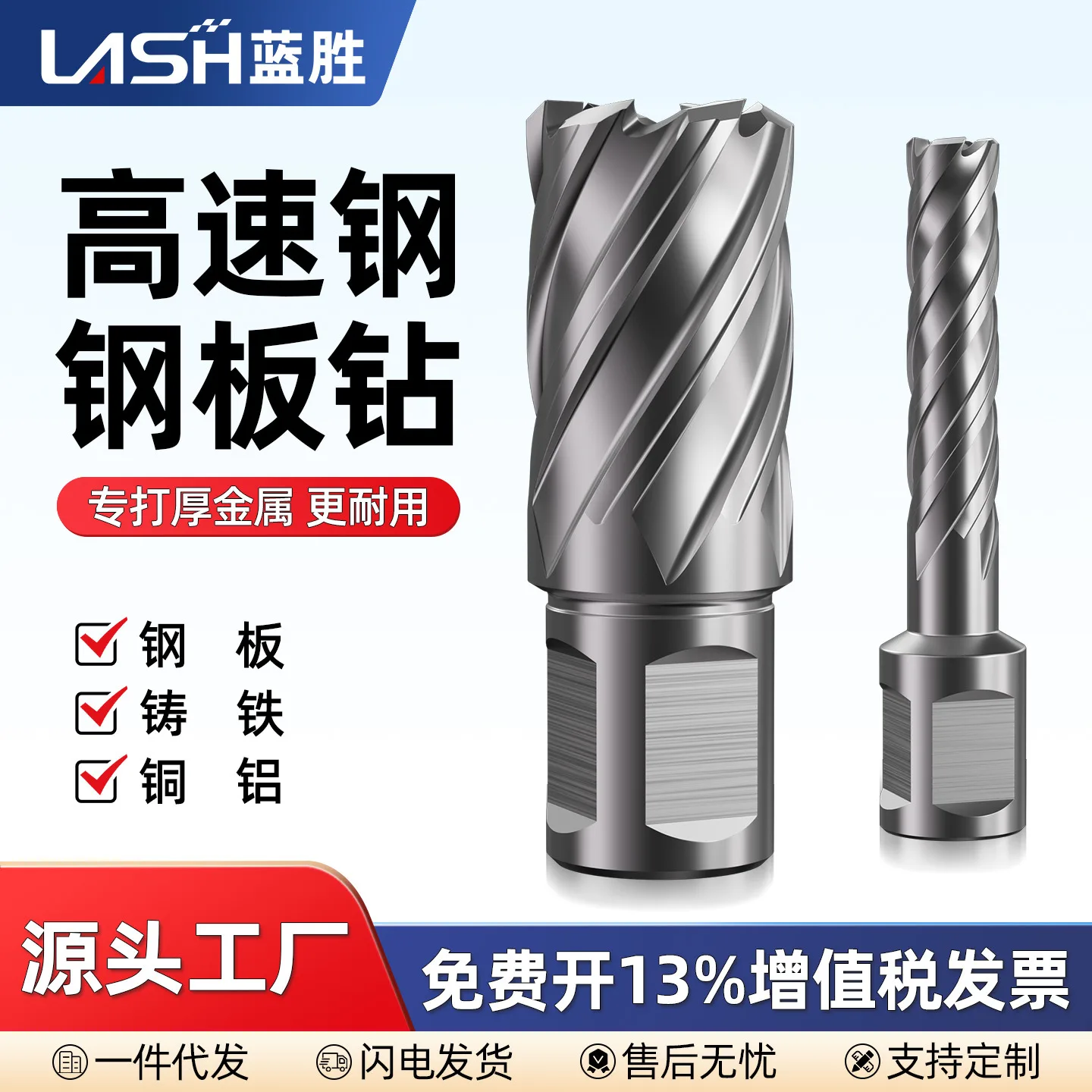
- Annular cutters. Cut a ring rather than a full cylinder, which is why a magnetic press can make a large hole with a smaller machine than a twist drill would need.
- HSS twist bits. For steel, with coolant or a slow speed. Running them fast is what burns the edge.
- Chisel and point tools. For breaking. Keep the shank clean and the tool sharp, because a blunt chisel transmits the shock into the machine instead of the material.
Working safely with percussive tools
Percussive machines are the loudest and most vibration-heavy tools in a workshop, so hearing protection and a vibration break matter: vibration white finger is cumulative and permanent. Keep both hands on the machine, use the side handle, and never drill toward a cable or pipe you have not located. On a magnetic press, check the holding force before cutting by trying to move the base, and use a safety strap where the work is overhead or vertical. Clear the work area of anything that can fall, and keep the cable behind the machine. Where dust is generated, use extraction or a rated mask, because masonry dust is a serious respiratory hazard.
Frequently asked questions
What is the difference between an impact drill and a hammer drill?
In practice the terms overlap, and both add a percussive action to rotation. A rotary hammer uses a separate pneumatic hammer mechanism and is the tool for larger or repeated masonry holes.
Can I use an impact drill on steel?
Yes, with the hammer action switched off and a sharp HSS bit at the correct speed. Leaving the hammer on destroys the bit and the hole.
How thick does steel need to be for a magnetic drill press?
Thick enough to carry the magnet’s holding force, typically 10 mm or more for a full-size press. Thin sheet cannot hold the magnet safely.
Why does my masonry bit stop cutting?
The carbide tip is blunt, or the flutes are packed with dust. Replace the bit and let it clear the hole, because pressing harder only generates heat.
Do I need a rock drill for concrete?
For breaking and for large holes, yes. For a few small holes, an impact drill or a rotary hammer is the more sensible machine.
Where to start
Browse the full Power Tools range, or the wider Power Tools category if you also need saws, grinders or accessories. Tell us the material, the hole diameter and how many holes, and we will point you at the machine and bit that fit.