



Frequently Bought Together


More in This Category


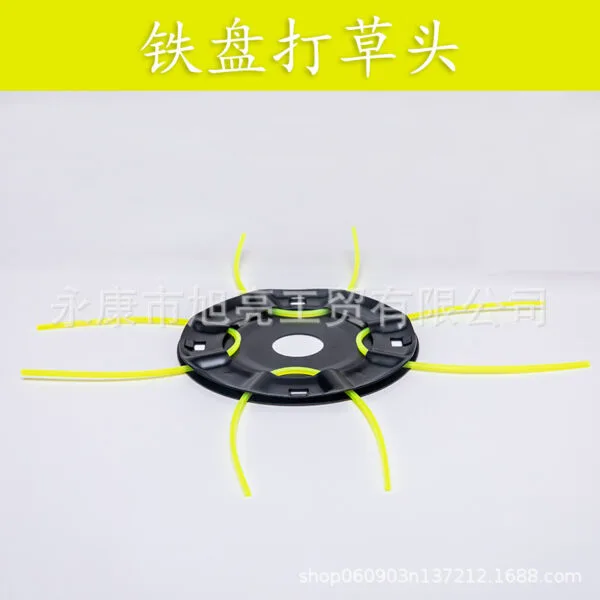

Brush Cutter Blade Head, Iron, Steel Disc, Petrol / Battery Brush Cutter
Price range: $15.99 through $17.99

Telescopic Cleaning and Glue Removal Knife, 40.55-42.13 in
Price range: $8.99 through $17.99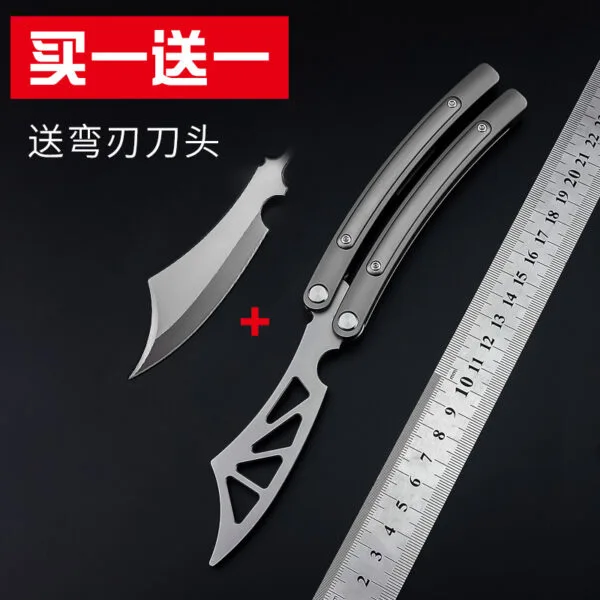

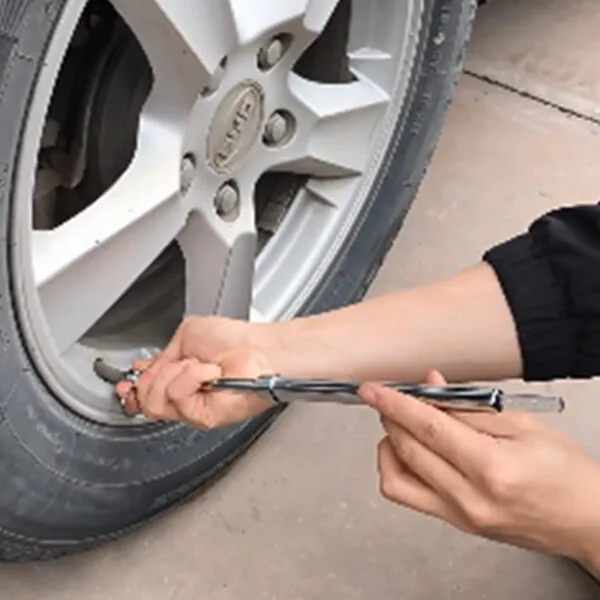
Stainless Steel Tyre Pressure Pen Gauge, ///Bicycle
Price range: $8.99 through $9.99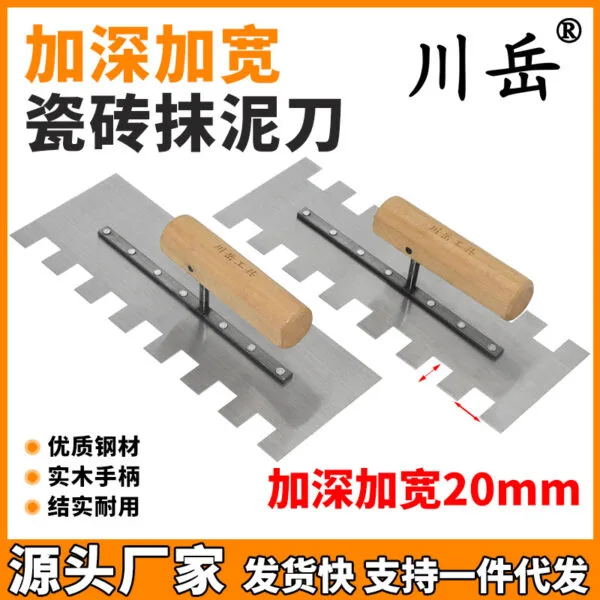
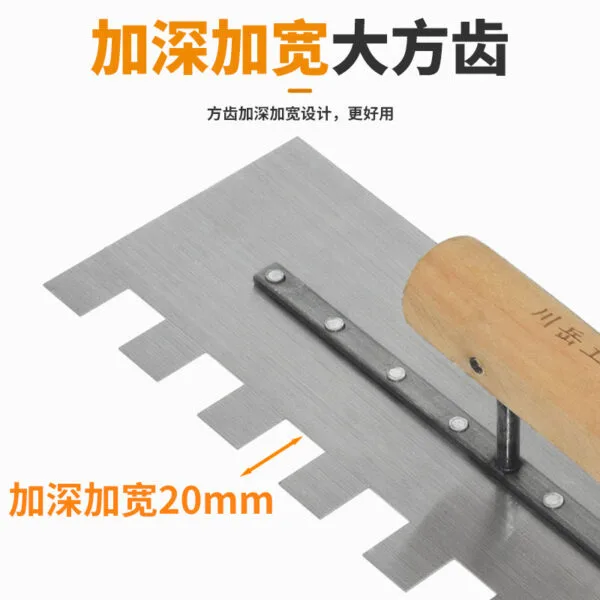
Notched Tile Adhesive Trowel, 30-40 cm, Wooden, 0.8 mm (0.03 in)
Price range: $8.99 through $14.99


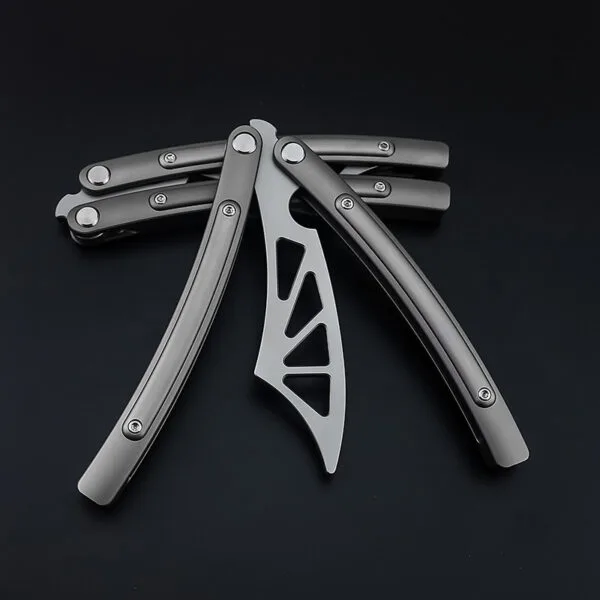
Training Butterfly Knife, One-Piece Handle, Stainless Steel
Price range: $15.99 through $17.99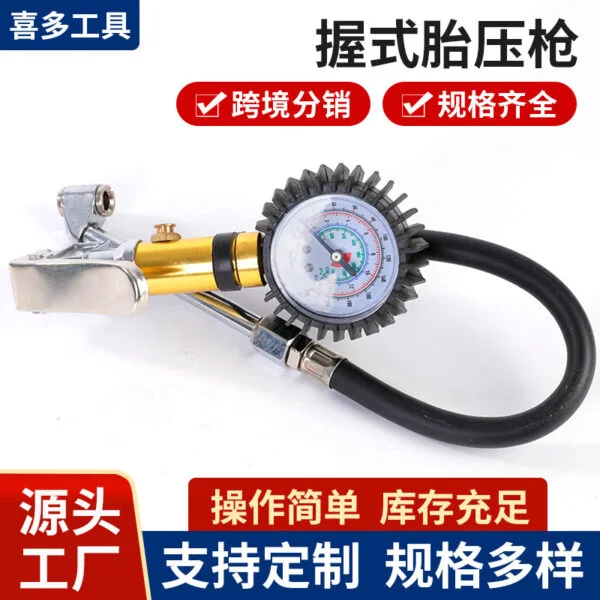

Car Tyre Inflator Gun with Pressure Gauge, Alloy
Price range: $24.99 through $41.99

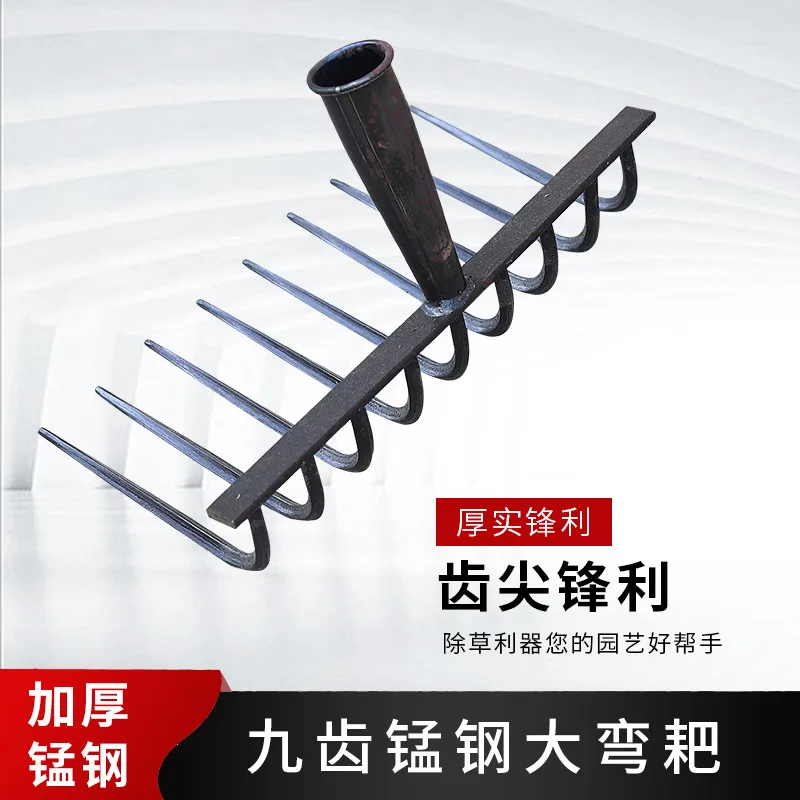
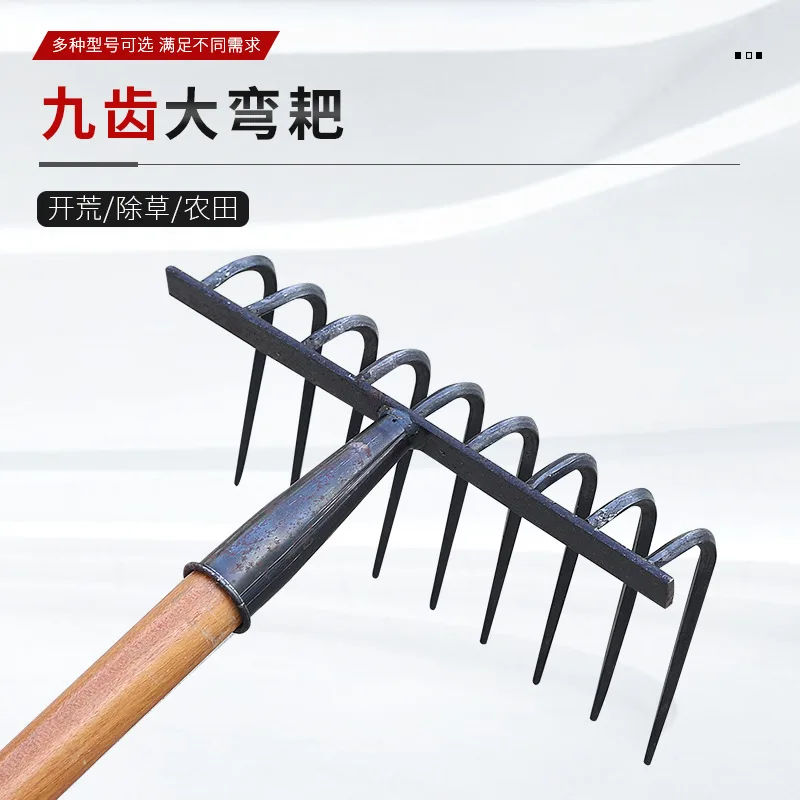
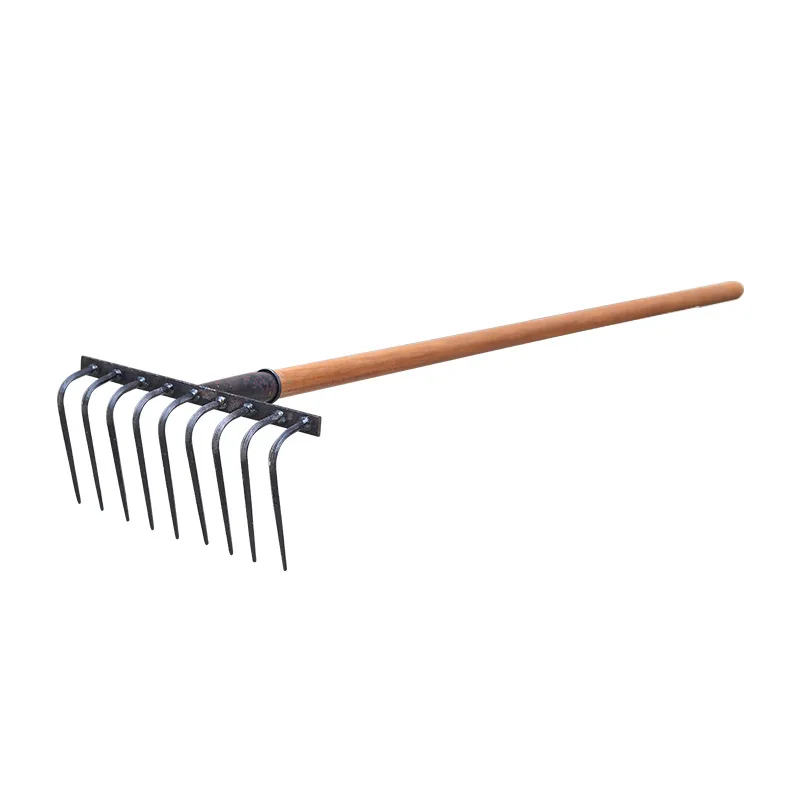
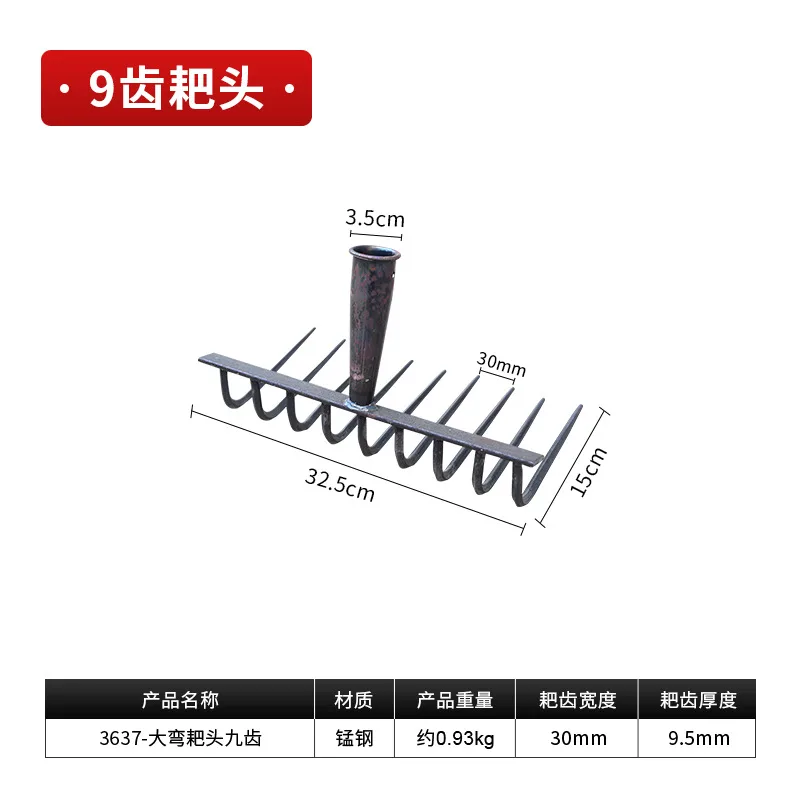
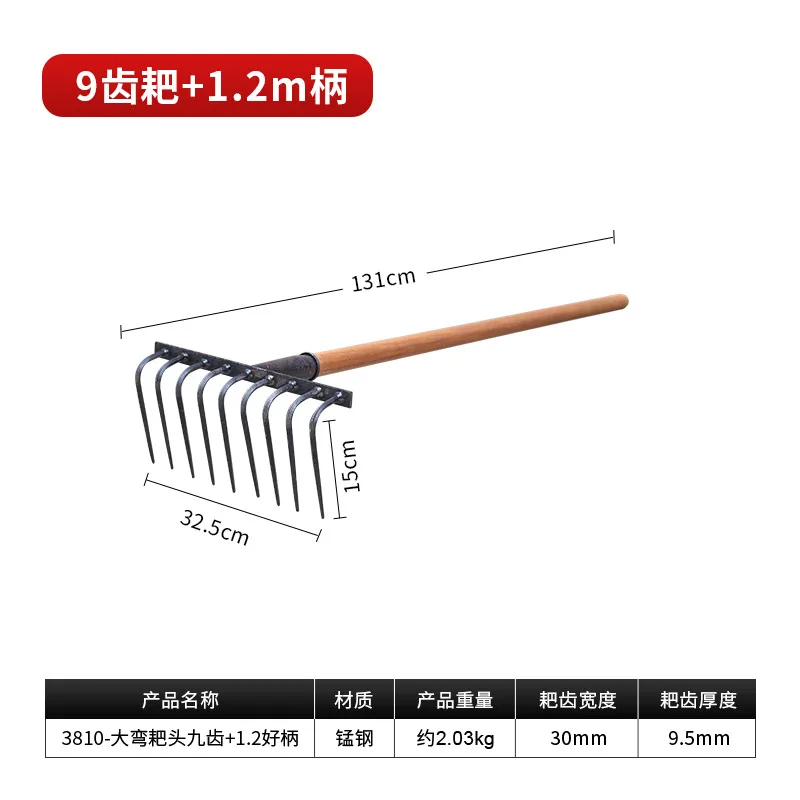
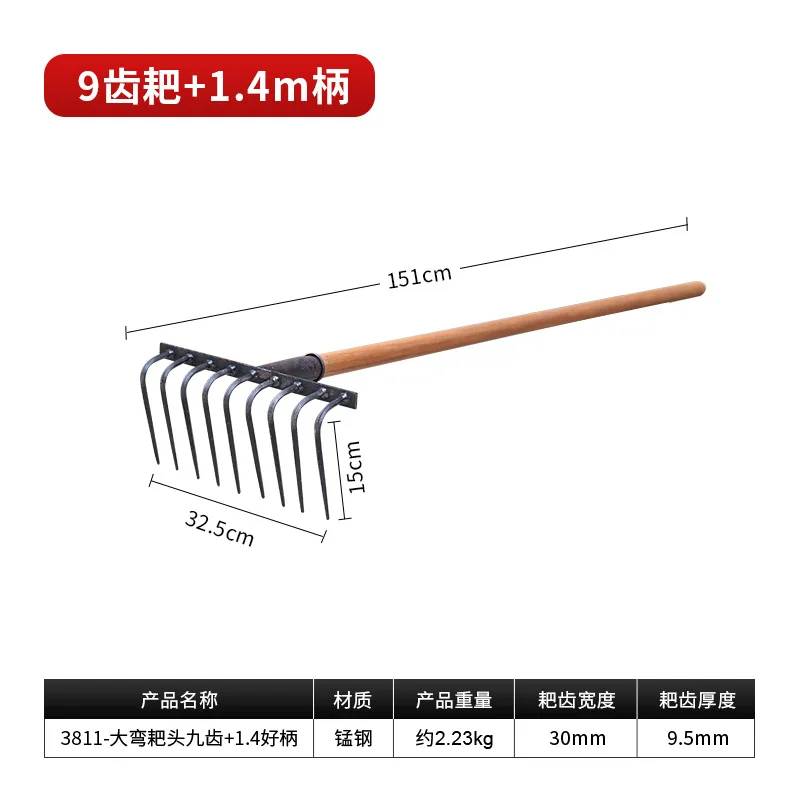
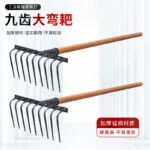
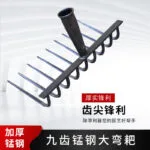
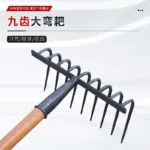
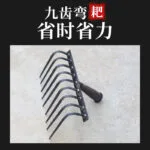
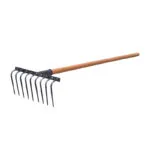
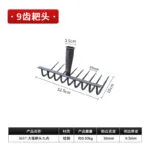
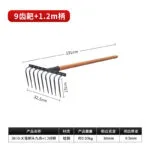
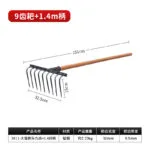
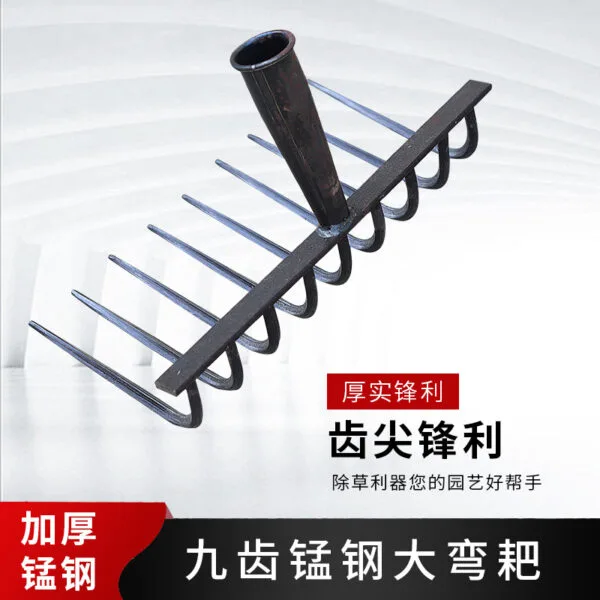
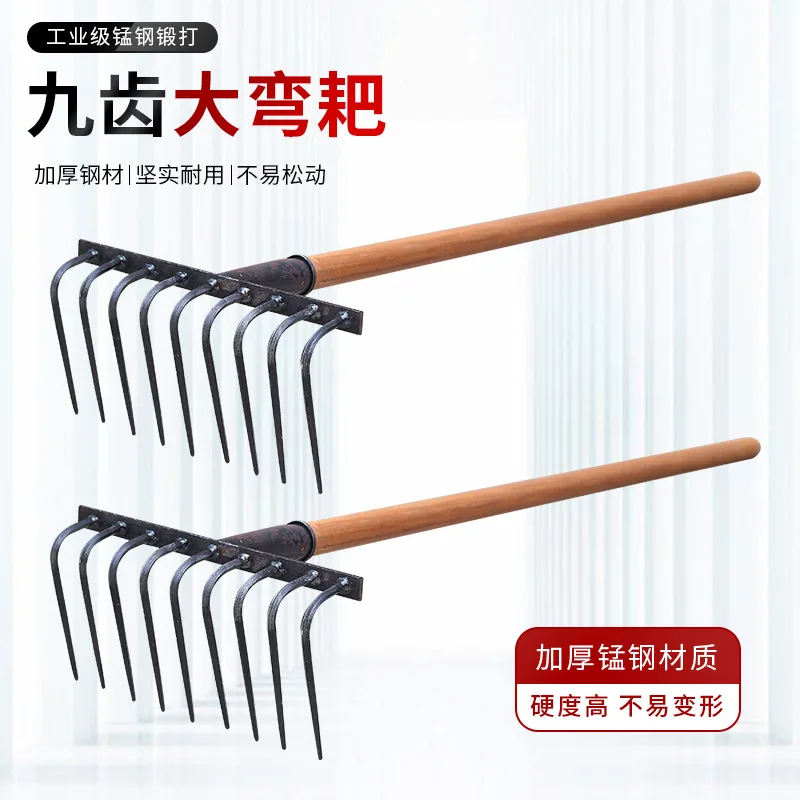
A manganese steel nine-tooth bent rake for breaking up, levelling and clearing ground, offered in three configurations: the bare rake head on its own, or the same head supplied with a 1.2 m or a 1.4 m handle. It is the tool that turns compacted, clodded or stony soil into something a seedbed can actually use.
Manganese Steel Agricultural Harrow Rake: Overview
A rake looks like the simplest tool in the shed, and it is also the one most often bought badly. A straight-toothed garden rake dragged across heavy ground simply rides over the surface. A bent-tooth rake is a different instrument: the curve in each tooth lets it bite, lift and turn the soil instead of skimming it, which is why bent rakes are the standard tool for seedbed preparation on smallholdings, market gardens and farms.
This range is built around a nine-tooth bent head in high-carbon manganese steel. The specification is deliberately narrow, because the useful choice here is not the number of variations but the handle: whether you already own a handle, whether you are working standing up over a wide bed, or whether you are working in a confined space where a shorter shaft is easier to control. All three configurations share the same head, so the decision comes down to reach and to whether you want to carry a spare head rather than a complete tool.
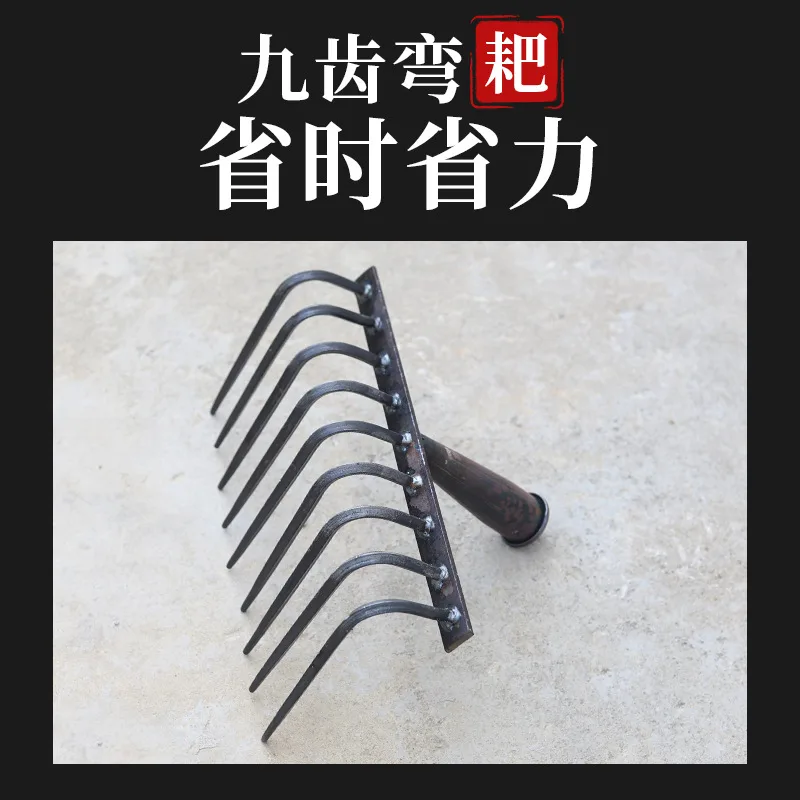
The head is a single pressed and hardened unit with nine swept teeth set at a working angle. The teeth are spaced wide enough to clear the soil between them rather than clogging, which matters more than most buyers expect: a rake that loads up every two metres costs more in time than it saves in price. Working weight for the complete tool is a little under 4 kg, light enough to use for a long session but heavy enough to bite without being forced.
Every configuration ships as an export-packed unit, and the three options are priced separately so that a buyer replacing a worn head is not paying for a handle they already own.
What Decides How a Bent Rake Performs
Four things decide whether a rake works on your ground: the shape and spacing of the teeth, the grade and hardness of the steel, the length of the handle, and the working width of the head. The table below sets out what each one changes in practice.
| Factor | What it changes | What to look for here |
|---|---|---|
| Tooth shape | Whether the rake lifts and turns soil or skims over it | Swept or bent teeth, not straight ones |
| Tooth spacing | How easily soil and trash pass through instead of clogging | Open spacing with nine teeth across the head |
| Steel grade | How the teeth hold their shape against stones and roots | High-carbon manganese steel, hardened |
| Handle length | Reach, leverage and how upright you work | 1.2 m for general work, 1.4 m for wide beds |
| Working width | How much ground is covered in each pass | A nine-tooth head sized for one-handed guiding |
The single most common mistake is choosing a rake by width alone. A very wide head covers ground quickly on the first pass and then becomes unmanageable the moment the soil is wet or the bed is narrow. A nine-tooth bent head is the compromise that most growers settle on, and it is the reason this shape has not changed in a century.
The Three Configurations
The range covers a head-only option and two complete tools. Prices move with what is included rather than with the head itself, and each option is listed and priced separately.
| Configuration | What is included | Price |
|---|---|---|
| 3637 head only | Nine-tooth bent rake head, no handle | $24.99 |
| 3810 with 1.2 m handle | Nine-tooth bent head, 1.2 m handle fitted | $43.99 |
| 3811 with 1.4 m handle | Nine-tooth bent head, 1.4 m handle fitted | $47.99 |
Buying the head on its own
The head-only configuration exists for two kinds of buyer. The first already owns a handle and simply wants to replace a worn or snapped head. The second is kitting out a team and prefers to standardise on one shaft length while keeping spare heads on the trailer. If you fall into either group, this is the cheapest way into the range and the head is identical to the one supplied on the complete tools.
The 1.2 m handle
A 1.2 m handle is the general-purpose length. It lets you work reasonably upright without the head feeling remote from your hands, and it is short enough to use one-handed when you are pulling debris out of a bed. For most garden and smallholding work this is the length to choose.
The 1.4 m handle
A 1.4 m handle buys reach and leverage at the cost of a little control. It suits wide beds where you want to cover ground without stepping onto the soil you have just prepared, and it is easier on the back over a long day. If you are working standing rows or raised beds from a path, the extra 20 cm is worth having.
Using a Bent Rake Well
A bent rake is a soil-working tool, not a sweeping tool, and the technique is different from what most people first try.
- Work the soil when it is dry enough to crumble. If a handful pressed in the palm holds its shape like putty, the ground is too wet and raking will smear it.
- Pull, do not push. Draw the head towards you with the teeth angled into the surface. Pushing drives the teeth flat and rides over the clods.
- Let the teeth lift. The curve does the work; a light grip and a steady pull turn and aerate the top layer without burying the teeth.
- Clear the head before it loads up. Two seconds tipping the teeth clear saves a minute of dragging a clogged rake.
- Rake in two directions. A first pass along the bed and a second across it leaves a far more level tilth than a single direction ever will.
- Keep the head out of the soil when you stop. Standing the rake on its teeth in damp ground is how heads get bent and handles get split.
Care, Storage and Replacement
Manganese and high-carbon steels are tough, but they are not immune to rust, and a rake left out in the rain will lose its edge and start to pit. Wipe the head down after use, keep it dry, and store the tool hanging by the head rather than standing on the teeth. A light film of oil on the teeth at the end of the season costs almost nothing and prevents most of the corrosion that shortens a rake’s life.
Check the handle-to-head fixing at the start of each season. Rakes fail at the joint far more often than they fail at the tooth. If a tooth is bent, straighten it cold with light pressure rather than hammering it, and never heat the head to reshape it, as that destroys the hardening that keeps the teeth sharp.
Frequently Asked Questions
Is this a garden rake or a farm rake?
It is sized for serious soil preparation rather than lawn tidying. The nine-tooth bent head and hardened steel suit smallholding, market garden and farm use, breaking clods and levelling seedbeds. It will happily rake leaves, but that is not what it is built for.
Which configuration should I buy?
Buy the complete tool if you are starting from nothing: the 1.2 m version covers most work and the 1.4 m version suits wide beds and taller users. Buy the head only if you already own a handle of the right diameter or want to keep spare heads for a team.
Will the teeth bend on stony ground?
Hardened high-carbon manganese steel resists bending far better than mild steel, but no rake survives being used as a crowbar. Work stones out with the teeth rather than levering under them, and lift the head over buried rock instead of forcing it through.
Does the head fit a standard handle?
The head-only option is supplied as the head alone, without a socket or handle. If you plan to fit it to an existing shaft, check the fixing before ordering, or take the complete tool and keep the spare head for later.
How much does it weigh?
The complete tool is a little under 4 kg, which is light enough for long sessions and heavy enough that the head does its own work. The head-only option is correspondingly lighter in the parcel.



















Reviews
Clear filtersThere are no reviews yet.