Blog
In-stock Heavy-duty Shelves: Load per Level, Bay Size and Deck

Buying In-stock Heavy-duty Shelves is less about picking a brand than about matching three or four figures to the job in front of you. Get those right and the tool disappears into the work; get them wrong and the same money buys something that fights you every time.
The range runs to 16 options priced between $56.78 and $102.88. Prices move with the specification, so it is worth reading the option list before deciding which end of the range suits the work.
What decides how an in-stock heavy-duty shelve performs
The specification of an in-stock heavy-duty shelve comes down to a handful of measurable figures. Everything else on the listing is marketing.
| Factor | What it changes | Typical choices |
|---|---|---|
| Load per level | The uniformly distributed load each shelf or beam pair carries, not the total for the bay. | 150 kg / 500 kg / 2,000 kg |
| Bay size | Width, depth and clear height decide what fits and how it is picked. | 900 / 1,200 / 2,700 mm |
| Levels and height | Every added level raises the load on the uprights and the effort to reach the goods. | 2 / 4 / 6 levels |
| Deck type | Steel panel, wire mesh and beam-only each suit a different load and airflow. | Steel panel / wire mesh / beam only |
| Material and finish | Cold-rolled steel with a powder coat suits dry stores; stainless and galvanised survive wash-down. | Powder coated / galvanised / stainless |
The pattern across this range is the same as across the trade generally: the middle of the range holds the value, and both ends exist for specific reasons.
Shelving and racking types
Comparing types is faster than comparing individual listings, because the type decides what the item can be used for before the specification decides how well.
| Type | Best for | Note |
|---|---|---|
| Boltless shelving | Hand-loaded parts and stores | Adjusts in fixed increments |
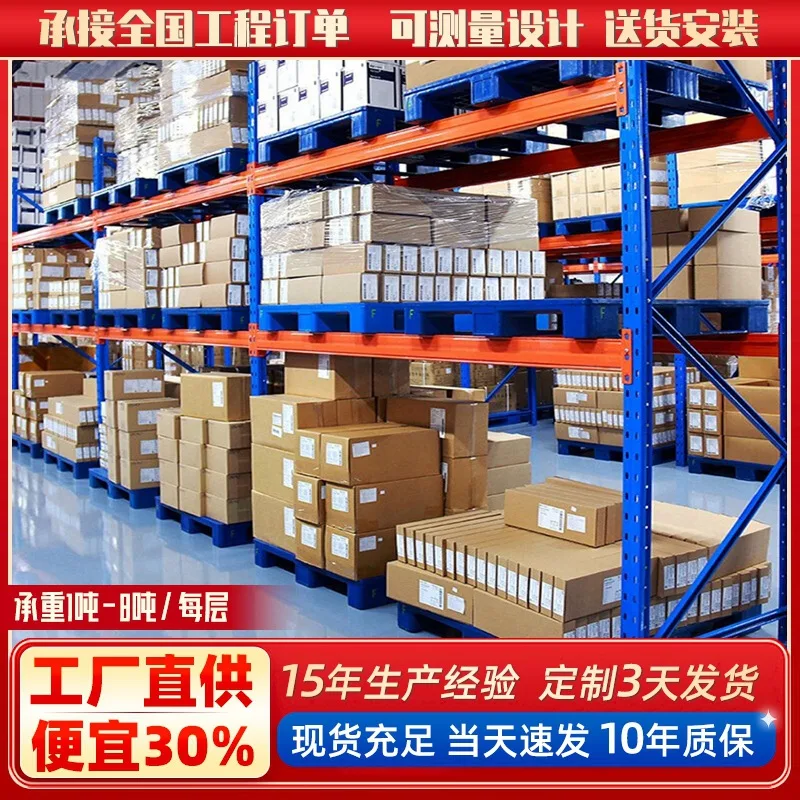
| Beam-type pallet rack | Pallets and truck access | The load goes into the beams |
| Mezzanine | A second floor over the store | Needs a structural check first |
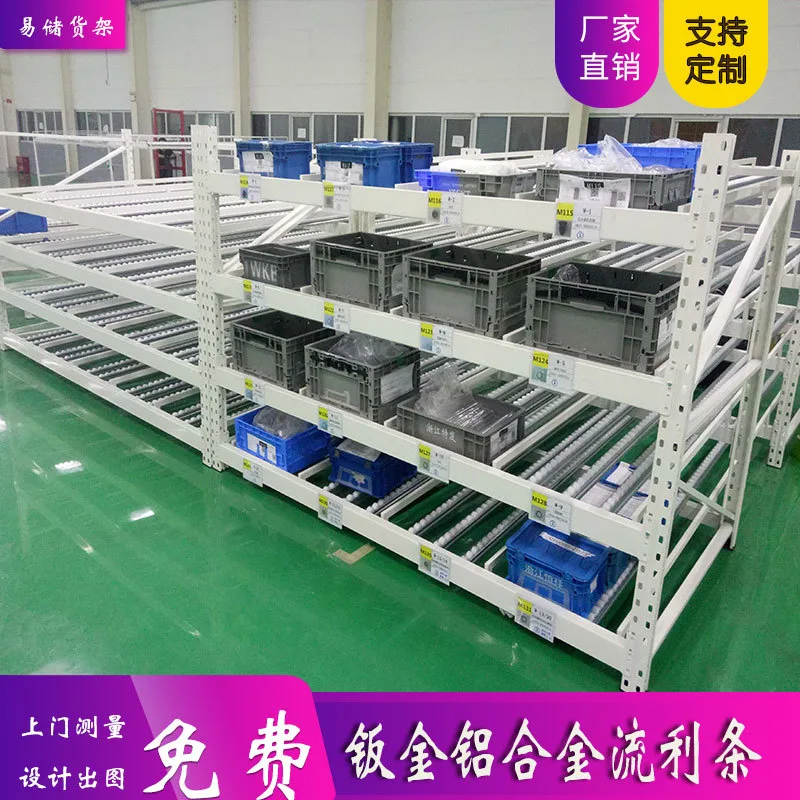
| Flow rack | First-in, first-out picking | Rollers must be set to the load |
Planning a bay that stays safe
The order of these steps is not arbitrary; skipping one is what produces most of the problems people blame on the item.
| Step | What to do | Why |
|---|---|---|
| Add up the load | Work out what each level really holds | The rating is per level, not per bay |
| Set the level heights | Work down from the tallest item | Rebuilding a bay later costs a shift |
| Level and fix the feet | Level the feet, then anchor if the maker calls for it | Racking fails sideways, not downwards |
| Keep the aisles clear | Check the truck or trolley still passes | A bay that blocks the aisle gets hit |
In-stock Heavy-duty Shelves in this range
Here is the same product on the site, with live pricing and the full option list.
Every option in this range
The full option list follows, sorted from the lowest price upwards. Nothing in the range is hidden behind a quote.
| Part of the range | Price | Options | Notes |
|---|---|---|---|
| Lower third of the range | $56.78 to $74.05 | 5 options | The sizes most buyers start with |
| Middle third of the range | $75.83 to $82.06 | 5 options | Where most of the value sits |
| Upper third of the range | $82.06 to $102.88 | 6 options | For heavy or continuous work |
Where the spread from $56.78 to $102.88 looks large, it usually reflects a size change rather than a quality change. Match the size to the work first.
Prices and what the money buys
Because each option is priced separately, it is possible to buy exactly the specification needed. That is usually cheaper than buying a bigger option and never using the extra capacity.
Looking after in-stock heavy-duty shelves
Maintenance here is a matter of minutes, not hours. The list below is short because the failures that matter are few and predictable.
- Check uprights and beams for impact damage after every busy week.
- Replace a bent upright rather than straightening it; straightening voids the rating.
- Keep goods off the floor and the bottom beam clear of standing water.
- Re-tighten safety clips and beam locks on a fixed schedule.
- Report any bay that has been hit, even when it still looks straight.
- Keep the load plate on each bay legible so the rating can always be read.
Buying in quantity
Ordering more than one changes the calculation. Unit prices for larger quantities are quoted separately, and the saving usually appears once the order goes past a small multiple rather than on the second item.
For trade buyers the practical question is how many will be consumed in a year. Buying a year’s worth at once removes the cost of repeat shipping and the risk of a size going out of stock mid job.
Fitting and first use
Check the item against the listing as soon as the parcel is opened. Size, option and finish are the three things that are wrong when something is wrong, and all three are obvious in the first minute.
Read the maker’s clearance and torque figures before the first use rather than after. Nearly every early failure in a range like this is an installation problem rather than a manufacturing one.
Frequently Asked Questions
Below are the answers to the questions buyers ask most about in-stock heavy-duty shelve.
What does uniformly distributed load mean?
It means the rating assumes the weight is spread evenly across the level. A single heavy item in the middle of a shelf stresses it far more than the same weight spread out.
Can I add a level later?
On most boltless shelving yes, and on beam rack you can add a beam level within the capacity of the upright. Adding a level lowers the rating of the levels beneath it.
Does the decking matter?
It does. Wire mesh lets water and dust through and suits wash-down and sprinkler coverage; a solid steel panel carries the same load with a lighter beam.
How long does delivery take?
Delivery times depend on the destination and the shipping method chosen at checkout. The shipping policy lists the typical transit times for each service.
Which option should I start with?
Start with the entry option if the job is occasional, and move up the range only when the work is regular or the material is demanding.
Choosing the right one
The right answer is usually the middle of the range for a workshop and the entry option for occasional use. Buying above that is buying capacity that will never be used.
The In-stock Heavy-duty Shelves range here covers every option listed above, with live stock and pricing.
It is worth checking spare part availability before buying, because that is what decides whether a tool is still useful in five years.