Blog
Suction Cup Lifter Guide: Surfaces, Loads and Pad Care

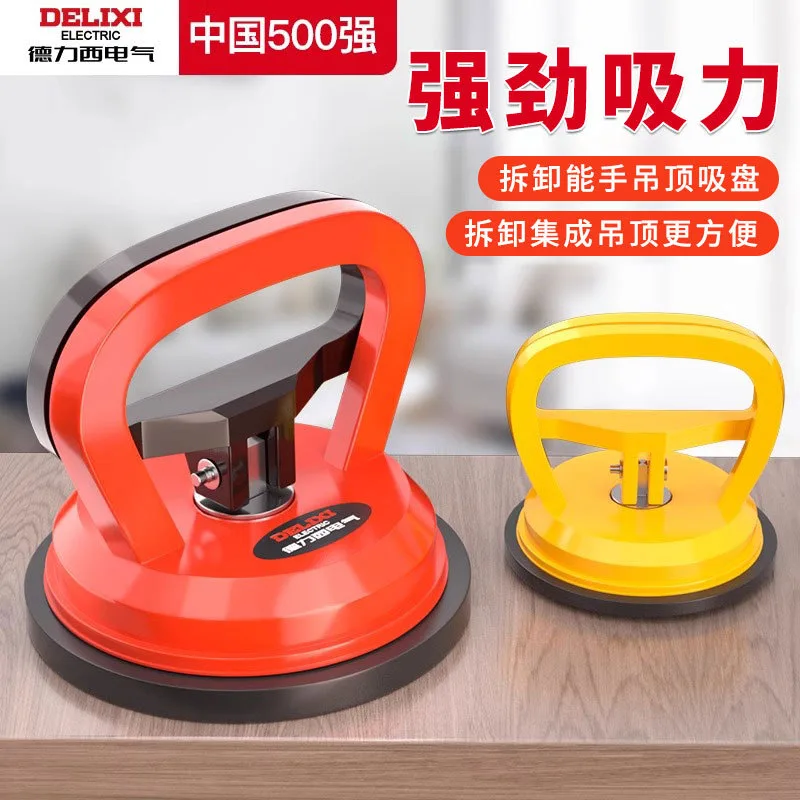
A suction cup lifter looks like a simple tool, which is why it gets misused. The pad grips by holding a vacuum against a smooth surface, and everything about the way the tool fails comes down to that seal: a dusty surface, a cold pad, a scratch across the contact area or a slow leak all reduce the hold without any visible warning. This range covers single-cup lifters in alloy and standard bodies, and this guide covers surface preparation, how to test a grip before lifting, and the load directions that a vacuum cup cannot take.
What decides whether a cup holds
- Surface smoothness. Glass, tile, polished stone and painted metal seal well. Textured, dusty and porous surfaces leak air under the pad edge and cannot be trusted.
- Pad condition. A soft, pliable rubber pad conforms to the surface and seals. A pad that has hardened with age or picked up a coating of dust will not.
- Cleanliness. Grease, dust and loose grit stop the seal at the rim. A wipe with a damp cloth and a dry-off is the most valuable step in the whole job.
- Temperature. Cold stiffens the rubber and reduces the hold. A pad that works in summer can slip in an unheated space in winter.
- Vacuum integrity. A lever cup holds its vacuum mechanically; a pump cup relies on a valve. Either way, a slow leak is the failure mode, and it always happens while the load is in the air.
- Load direction. Vacuum cups resist being pulled straight off far better than they resist being slid sideways. Shear load is what makes a cup let go.
Load direction and the cup
| Load | How the cup behaves | Practical limit |
|---|---|---|
| Straight pull (tension) | Strongest direction; the vacuum resists directly | Rated capacity, on a clean smooth surface |
| Slide (shear) | Weakest direction; the pad rolls at the edge | A fraction of the tension rating |
| Sustained hold | Any leak reduces the hold over time | Re-check the grip before each lift |
| Angled lift | Combination of the two; the pad peels | Keep the lift as vertical as possible |
| Off-centre load | One edge of the pad carries most of the force | Centre the cup over the load’s balance point |
That table is the reason a lifter should never be used as the only thing holding a heavy panel above head height. A cup is a handling aid that takes the awkwardness out of carrying a sheet; it is not a lifting sling, and the load should still be supported or handed off wherever it can be.
The suction cup lifters in this guide
Every option in this range
Sixteen options covering single-cup lifters in standard and upgraded form. Prices are per unit.
| Option | Body | Fit | Best for | Price |
|---|---|---|---|---|
| Standard lifter | Moulded body, single cup | Handle grip | Occasional handling of sheet and tile | $18.58 |
| Upgraded lifter | Reinforced body, single cup | Handle grip | Frequent handling and heavier panels | $26.70 |
| Alloy lifter | Alloy body, single cup | Handle grip | Trade use where the body takes knocks | $26.97 |
Most of the range sits at the top of the price band, which tells you the pads and the vacuum mechanism are what cost the money rather than the handle. The one cheaper option is the standard-bodied cup, and it is the sensible buy for a workshop that handles occasional sheets rather than lifting panels every day.
Before every lift
- Clean the surface and the pad. Wipe both with a damp cloth, then dry them. Grit under the rim is the most common cause of a cup letting go.
- Check the pad for damage. Run a thumb around the sealing lip. Cuts, hardening and embedded grit all mean the cup cannot be trusted for a heavy load.
- Set the cup on the flat centre of the panel. Not near an edge and not over a joint or a handle cut-out.
- Engage the vacuum and watch the indicator. Some cups show the state of the seal with a line or a button. If there is no indicator, press and listen for a leak.
- Test with a light tug. Lift a few centimetres and pull gently in the direction of the lift before taking the full weight. A cup that is going to fail will usually fail at this point, not at head height.
- Keep the lift vertical. Every degree of angle adds shear load, and shear is where cups let go.
Looking after the pads
- Store the cup off the surface. A pad left pressed against a shelf takes a set and no longer conforms to a panel edge.
- Keep oil and solvent away. Both soften or harden the rubber and shorten the life of the seal. Clean with water and a mild soap only.
- Do not leave a loaded cup hanging. A cup under load for hours will creep and leak. Land the panel and release the vacuum.
- Replace worn pads. A pad is a consumable part. Once the rim is nicked or the rubber has gone hard, the cup is a handling aid that no longer handles.
- Warm a cold cup. In a cold workshop, keep the cup indoors until it is needed, or warm the pad in your hands before setting it. Cold rubber does not seal.
- Never use a cup as the only support. Hand the load off to a bench or a second person before releasing the grip.
Frequently Asked Questions
How much can a suction cup lifter hold?
It depends on cup diameter, surface and temperature, and the useful figure is well below the theoretical one. Treat the rating as a maximum on a perfect surface and stay under it.
Why does my cup keep losing grip?
Usually a dirty or hardened pad, a dusty surface, or a slow leak at the valve. Clean both surfaces, inspect the rim, and test the cup on a scrap of glass before trusting it.
Can I use a cup on textured tile?
No. Textured and porous surfaces leak under the rim. Cups are for smooth, non-porous surfaces such as glass, glazed tile, polished stone and painted metal.
Can I slide a panel with a cup attached?
Only with care. Sliding puts the load in the weakest direction and peels the pad edge. If a panel has to be slid, support its weight first.
How long do the pads last?
Years with careful storage and replacement when the rim is damaged. Heat, oil and being left compressed are what shorten a pad’s life.
Buying the right one
Buy one good cup for occasional handling and a pair where panels are lifted and positioned regularly, because two cups let you control rotation as well as lift. The suction cup lifters in this range cover standard, upgraded and alloy bodies.