Blog
Stiff Blade Scraper Guide: Widths, Technique and Edge Care


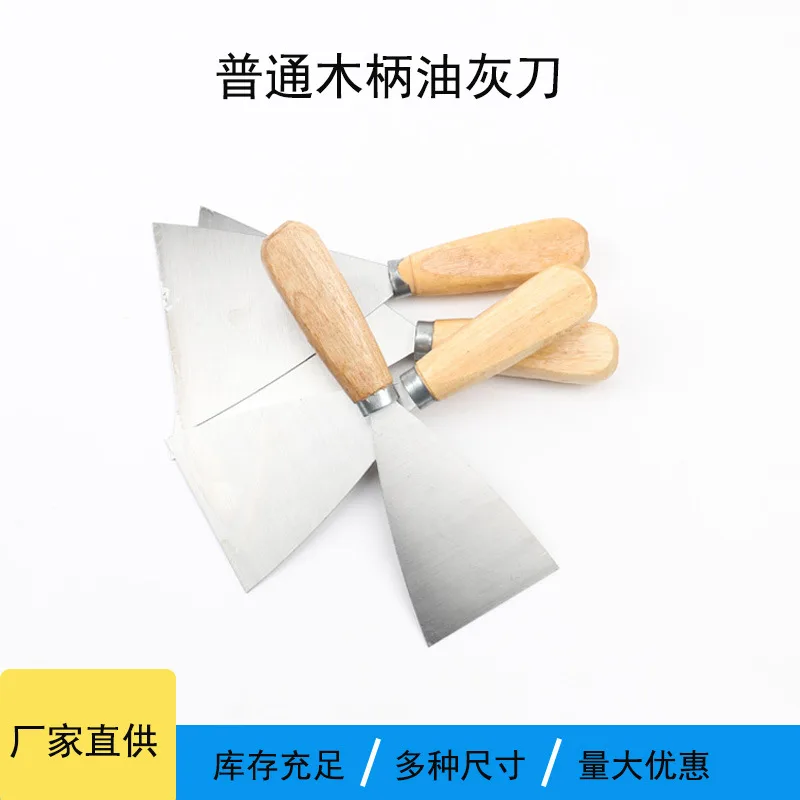
The difference between a filling knife and a scraper is not the shape of the blade but its stiffness. A thin, flexible blade is made to draw filler flat; put the same blade against dried paint or old adhesive and it simply bends, skating over the surface instead of lifting it. A stiff blade puts the force where it is needed and stays flat while it does it. This range is the stiff version of the same tool, in five widths, and this guide covers where rigidity matters and how to keep an edge on a scraper that is used hard.
When a blade has to be stiff
- Removing dried coatings. Paint, varnish and adhesive come off when the edge is driven under them, which needs a blade that will not fold away from the surface.
- Working on a rough substrate. Render, brick and old timber are uneven. A stiff blade bridges the low spots instead of following them into the surface.
- Leaving a hard edge behind. Where a flexible blade feathers filler to nothing, a scraper is used to cut a clean line and stop.
- Prising small components. Light levering, such as lifting a tile or a trim piece, needs a blade that returns to shape. A flexible blade takes a permanent set.
- Working with pressure. Any job where both hands are pushing wants rigidity; spring in the blade turns effort into heat instead of progress.
- Stripping in tight corners. A narrow stiff blade reaches into a corner and holds its shape where a wider flexible one cannot.
Stiff against flexible blades
| Property | Stiff blade | Flexible blade |
|---|---|---|
| Behaviour under pressure | Stays flat, force goes into the edge | Springs, force is absorbed |
| Best use | Scraping, stripping, light prying | Applying and levelling filler |
| Surface it suits | Rough and uneven substrates | Flat surfaces and fine repairs |
| Edge life | Long, and can be re-dressed | Long, but loses its feather |
| Wide widths | Still usable at four to six inches | Flexes badly beyond three inches |
| Risk | Can gouge soft material | Skates over hard coatings |
Both columns have a place on the same bench, and the useful rule is that the blade should be the stiffness of the material you are working. Soft filler wants spring; anything that has set hard wants rigidity and a sharp edge.
The stiff blades in this guide
Every option in this range
Five widths, all with the heavier blade of the two patterns. Prices are per unit.
| Width | Blade | Best for | Price |
|---|---|---|---|
| 2 in | Heavier gauge, single knife | Corners, trim and narrow stripping | $8.99 |
| 3 in | Heavier gauge, single knife | General scraping and small panels | $9.71 |
| 4 in | Heavier gauge, single knife | Stripping panels and levelling patches | $10.43 |
| 5 in | Heavier gauge, single knife | Wide panels and floor work | $11.15 |
| 6 in | Heavier gauge, single knife | Full-width stripping and large flat areas | $12.59 |
The whole range spans less than four dollars, so the width is effectively free of price pressure: buy the width the panel needs. A six inch blade strips a door in a few passes; a two inch blade gets into the mouldings the six inch one cannot reach.
Scraping technique
- Work at a shallow angle. Around 30 degrees to the surface. Too steep and the edge digs in and gouges; too shallow and it skates.
- Push with both hands. One hand on the handle and the other on the blade back keeps the edge flat and doubles the force available.
- Take narrow strips. Work in overlapping bands rather than trying to clear a wide panel in one pass. The edge lifts coating better when it is only loaded across part of its width.
- Soften before you scrape. A heat gun or a chemical stripper turns a hard, chipping job into one that comes off in strips and leaves the substrate intact.
- Re-dress the edge often. A scraper works by having a square, sharp edge. Once it rounds over it polishes the surface instead of cutting it.
- Watch the corners. The corners of the blade do the gouging. Ease them slightly on a stone if the work is a surface that will show.
Looking after a scraper edge
- File the edge square, then hone. A few strokes with a fine file to restore the square edge, then a stone to take the burr off.
- Do not use the blade as a chisel. Scrapers are hardened to hold an edge, not to be struck. Hammering the handle splits it.
- Wipe the blade after every session. Stripper residues and water-based fillers both attack steel, and a rusty edge will not cut cleanly.
- Oil before storage. A thin film on the blade is enough, and it prevents the rust that dulls an edge faster than use does.
- Keep a narrow one for corners. The most common reason a scraper stops being useful is that the wide blade cannot reach where the remaining coating is.
Frequently Asked Questions
Can a stiff-bladed knife be used for filling?
Yes, for filling that needs to be pressed into a repair. It is less good at feathering a skim coat, because a stiff blade does not blend the edges down to nothing.
Which width is best for stripping a door?
Five or six inches for the flat panels, with a two inch blade for the mouldings and the frame. The wide blade clears the panels, the narrow one finishes the detail.
How do I stop a scraper gouging the surface?
Lower the angle, ease the blade corners on a stone, and work in narrow overlapping bands rather than pushing a wide edge across the surface.
Does a scraper need sharpening?
Yes, and more often than most people expect. The edge should be square and sharp; once it rounds, the tool polishes rather than cuts.
Will these blades rust?
They will if they are stored wet or used with water-based products and put away without drying. A wipe and a light oil film is the whole routine.
Buying the right one
Match the blade to the panel rather than to the budget: a wide blade where the coating is on a flat surface, a narrow one for mouldings and corners. The stiff-bladed knives in this range cover two inches to six inches.