Blog
Putty Knife Widths: One Inch to Five Inches and What Fits

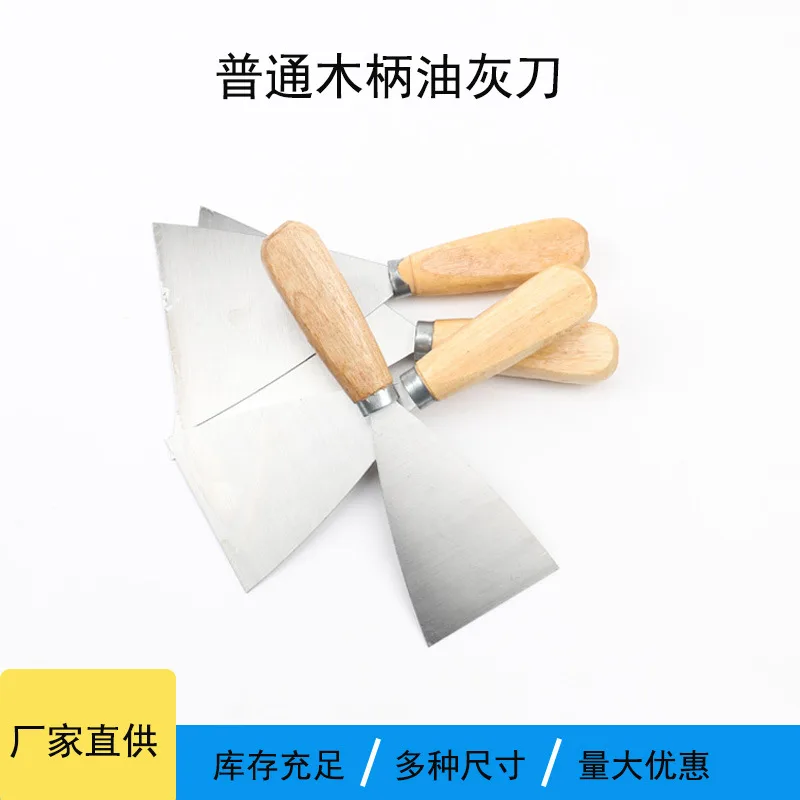
A putty knife is a flat blade with a handle, and the blade width decides what it can do. A narrow blade puts filler into a crack and follows a curve; a wide blade spreads a skim coat flat and scrapes a broad surface in one pass. The width also decides how much pressure the blade will take, because a long edge springs where a short one stays rigid. This range runs from one inch to five inches, and this guide explains which width suits which job and why a single knife is rarely enough.
Width is the decision that matters
- Narrow blades work curved surfaces and cracks. Under about two inches the blade follows a moulding, a corner or a crack without bridging it, which is what makes a repair invisible.
- Wide blades spread filler flat. From three inches up, the blade spans a wide area and draws a skim coat down to an even thickness in fewer passes.
- Wide blades spring. A thin blade five inches wide flexes under pressure, so the filler varies in thickness across the width. Stiffening comes from blade thickness, not width.
- The edge profile decides the finish. A square edge leaves a sharp ridge where the filler stops; a slightly rounded or feathered edge blends it in.
- A flexible blade is for filling, a stiff one is for scraping. The same width in two blade thicknesses behaves like two different tools.
- Handle shape decides control. A wide blade with a narrow handle is hard to keep flat, and a flat blade is the whole point of the tool.
Width against the job
| Width | Best at | Limit |
|---|---|---|
| 1 in | Cracks, small repairs, glazing putty, tight corners | Too slow for any broad surface |
| 1.5 in | Detail filling and trim repairs | Still narrow for skim work |
| 2 in | The general-purpose repair width | Compromise on both large and tiny jobs |
| 2.5 in | Patches, small areas of skim, scraping between mouldings | Can bridge a narrow crack |
| 3 in | Skim coating and scraping flat panels | Needs a stiff blade to stay flat |
| 4 in | Wide skims and stripping large flat areas | Flexes unless the blade is thick |
| 5 in | Full-width skimming and broad scraping | Hard to control in a confined space |
Notice how the limits sit next to the uses: every width is the right answer somewhere and the wrong answer everywhere else. That is why the practical kit is two or three widths rather than one, and why the widths you choose matter more than the brand.
The putty knives in this guide
Every option in this range
Seven widths from one inch to five inches. Prices are per unit, and they rise with the width.
| Width | Supplied as | Best for | Price |
|---|---|---|---|
| 1 in | Single knife | Cracks, corners and glazing work | $8.99 |
| 1.5 in | Single knife | Detail filling and trim repairs | $9.43 |
| 2 in | Single knife | General repair filling | $10.09 |
| 2.5 in | Single knife | Patches and scraping between mouldings | $11.18 |
| 3 in | Single knife | Skim coating and panel scraping | $12.28 |
| 4 in | Single knife | Wide skims and stripping flat areas | $14.47 |
| 5 in | Single knife | Full-width skimming and broad scraping | $16.66 |
The whole range costs less than two mid-range power tool accessories, which is the argument for buying two or three widths rather than trying to make one work. A one inch and a three inch knife between them cover almost every filling job in a building.
Filling technique
- Load the blade on the back edge. Filler on the leading edge is pushed off the work; filler on the back is drawn into the repair as the blade passes over.
- Draw, do not push. Pull the knife toward you across the repair with the blade at a shallow angle. Pushing digs the edge in and leaves ridges.
- Two passes, not ten. Apply, then draw the blade flat over the repair once to level it. Working the filler repeatedly pulls it back out of the crack.
- Clean the edges as you go. Filler set on the blade lifts the next layer off the work. Wipe the blade on a rag between passes.
- Match the blade to the filler. A stiff filler wants a narrow, stiff blade; a runny one wants a wider, more flexible blade drawn faster.
- Feather the edge. Finish the last pass with the blade almost flat so the filler thins to nothing at the edges of the repair.
Faults and their causes
| What you see | Usual cause | Fix |
|---|---|---|
| Ridges at the edge of the repair | Blade held too steeply, or edges not feathered | Finish with the blade almost flat against the surface |
| Filler pulled back out of a crack | Blade too wide, bridging the crack | Use a narrower blade so the filler is pressed in |
| Uneven thickness across a skim | Blade flexing under pressure | Use a stiffer blade or a narrower one and overlap passes |
| Blade lifts filler already applied | Filler set on the blade | Wipe the blade between passes |
| Rust on the blade | Water-based filler left on steel | Wash, dry and oil after use |
Frequently Asked Questions
What width putty knife should I buy first?
Two inches. It fills cracks and small repairs and can be drawn across a patch, which covers most jobs before you know which way your work leans.
Why does my wide knife leave ridges?
Because the blade is flexing and the edge is not held flat. Either move to a stiffer blade or a narrower one and overlap the passes.
Can I use one knife for filler and for scraping?
You can, but the blade edges wear differently. A knife used for scraping loses its sharp edge and then drags the filler instead of spreading it.
How do I stop the filler drying on the blade?
Wipe it while the filler is still soft, before it sets. Once it has cured, lifting it off the blade takes the edge with it.
Do I need the five inch size?
Only for full-width skimming or stripping large flat panels. For repairs and general filling a three inch blade does the same work with more control.
Buying the right one
Buy a narrow blade for cracks and corners and a wider one for skim work, and choose the stiffness by what you are doing rather than by the width alone. The putty knives in this range cover one inch to five inches.