Blog
Resizing a Watch Bracelet: How Many Links to Remove

Resizing a bracelet is technically simple and easy to get wrong, because the decision is not about the tool. The difficult part is working out how many links to remove and from which side of the clasp, and a bracelet that has been shortened unevenly never sits comfortably however well the pins were pushed.
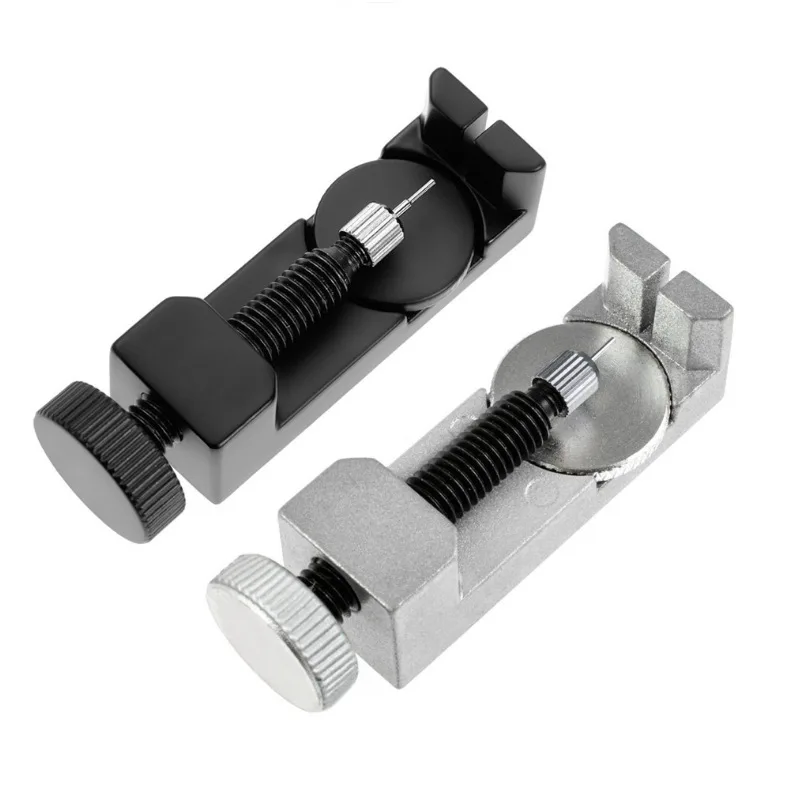
This range covers adjustable watch band tools in black and silver. This guide covers the measurement and the arithmetic, which is what decides whether the finished bracelet looks and feels right.
Measuring the wrist properly
A wrist measurement taken with a tape pulled tight will be wrong, and the error shows up as a bracelet that is too short. Measured loosely, the same wrist gives a figure that produces a comfortable bracelet. The difference between the two is often a full link.
| Measurement | How to take it | What it gives you |
|---|---|---|
| Wrist circumference | Tape around the wrist, snug but not tight | The target inside length of the bracelet |
| Bracelet length | Measure the bracelet laid flat, including the clasp | The starting point |
| Link length | Measure one link from pin to pin | How much each removal changes the fit |
| Preferred fit | Loose by about a finger’s width | The comfort allowance on top of the measurement |
Dividing the difference between the bracelet length and the target by the link length gives the number of links to remove. That calculation is worth doing rather than guessing, because removing one link too many means the whole process has to be reversed and the pins are less reliable the second time.
Which side to remove from
Links should be taken out in a way that keeps the clasp centred under the wrist. On most bracelets the clasp has a longer and a shorter section, and removing all the links from one side moves the clasp noticeably off centre, which is felt as an imbalance rather than seen.
| Bracelet type | Where to remove | Result |
|---|---|---|
| Symmetrical bracelet | One or two links from each side | Clasp stays centred |
| Asymmetrical with a long clasp side | Remove from the shorter side first | Balances the clasp position |
| Expanding or spring-link band | Adjust the clasp position rather than removing links | No pins to remove |
| Two-tone or patterned bracelet | Remove from the same area on both sides | Pattern stays symmetrical |
The rule of thumb is to keep the clasp directly opposite the watch head. If it ends up to one side, the bracelet pulls to that side all day, and the fit that looked right on the bench becomes uncomfortable within an hour.
Watch band tools in this range
Every option in this range
Metal watch band tools with adjustable height, supplied with spare pins. Prices are per tool.
| Finish | Detail | Price |
|---|---|---|
| Black | Metal body, adjustable height | $8.99 |
| Silver | Metal body, adjustable height | $8.99 |
Both finishes are priced the same, so the choice is settled by which is easier to see on the working surface. The pins being worked with are a fraction of a millimetre across, and a tool that is easy to locate is a small advantage on a fiddly job.
Reversing a resize that went too far
- Keep the removed link with its pin; the pair is what makes the reversal possible.
- Insert the pin from the direction it came out, following the taper.
- Check the joint articulates before moving on to the next link.
- Remove a link from the other side before adding one back, since the imbalance may be the whole problem.
- Allow a couple of days of wear before deciding the fit is still wrong.
- Note that the clasp position can often be adjusted instead of adding a link back.
Fitting by feel, not only by measurement
The measurement gets the bracelet into the right range and the wrist decides the rest. A bracelet worn loose in summer tightens in winter when the wrist is smaller, and a bracelet that is a fraction loose on the bench is usually right in wear. This is why fitting one link at a time, and wearing the watch for a day before deciding, is a better method than removing several links in one sitting.
Direction of wear also matters. A clasp with a fold-over cover has a preferred orientation, and a bracelet that is shortened on the wrong side ends up with the cover on the outer face of the wrist, where it catches on sleeves and looks wrong. Checking the orientation before removing anything avoids a second session on the same bracelet.
Tools and the working setup
Resizing a bracelet needs very little: the link tool, a small pair of pliers or a pin pusher for the extracted pins, and somewhere that small parts cannot disappear. A tray with a raised lip is the single most useful item, because a link pin dropped on a carpet is gone and a pin dropped in a tray is retrieved in a second. A soft mat under the work protects both the bracelet and the bench.
Light matters as much as the tray. Link pins are tiny and their direction is only visible under a close, bright lamp; overhead lighting leaves them in shadow and the direction then has to be guessed. A simple desk lamp positioned to one side, so the pin end casts a shadow that reveals the taper, makes the whole job quicker and removes the main reason a pin is pushed the wrong way.
When a bracelet cannot be resized at home
Some bracelets should not be touched with a pin tool at all. A bracelet with solid end links that are integrated into the case often has no removable links near the watch head, so shortening it means working at the clasp, which varies by design. A bracelet with hollow or folded links deforms under pressure and cannot be restored. A vintage bracelet with stretched joints may already be loose enough that removing a link makes it worse rather than better.
In those cases the honest answer is that a jeweller or the watch manufacturer has the parts and experience. The cost of a professional resize is usually less than the cost of one damaged link, and recognising that boundary is a better use of a home tool kit than pushing it beyond what it can do.
Frequently Asked Questions
How many links should I remove?
Divide the difference between the bracelet length and the wrist measurement by the length of one link. Usually that is one or two links.
Should links come off both sides?
Usually yes, one from each side, so the clasp stays centred under the wrist. Removing all from one side pulls the watch to that side.
How loose should a metal bracelet be?
Loose enough to slide about a finger’s width, so it does not bind in warm weather.
Can I add a link back if the fit is wrong?
Yes, provided the link and its pin were kept. Push the pin back in the direction it came out.
What if the bracelet has no removable links?
Some bands adjust at the clasp instead. Mesh and expanding bands are usually adjusted that way rather than by removing links.
Getting the fit right
Measure loosely, remove a link at a time, and keep the clasp opposite the watch head. The adjustable watch band tools in this range come with spare pins in two finishes.