Blog
Vacuum Pumps and Generators: Air-Driven Vacuum in the Workshop


Vacuum is not a thing that exists; it is the absence of air, and every vacuum system in a workshop is really a machine for moving air out of one place and putting it somewhere else. That is why vacuum pumps, vacuum generators and vacuum components appear together: the pump or generator creates the flow, and the components decide where it goes and how fast. This guide covers the vacuum equipment in this range and how the parts of a system fit together.
How vacuum is produced
- Vacuum pump. A mechanical pump with an inlet and an exhaust, used where vacuum has to be held continuously or pulled down deeply.
- Vacuum generator. A venturi that uses compressed air to create vacuum. No moving parts, tiny, and ideal at the point of use.
- Vacuum component. Cups, pads, filters, valves and fittings: the parts that turn vacuum into grip, lift or extraction.
- Flow versus level. Vacuum is measured as a level, but what a system needs is flow. A small pump can reach a deep vacuum and still take a long time to evacuate a volume.
- Leak rate. Any leak in the system sets the vacuum the pump can hold, which is why sealing matters more than pump size in most small systems.
Vacuum equipment in this range
| Equipment | Typical use | Note |
|---|---|---|
| Vacuum pump | Continuous vacuum, evacuation, holding | Mechanical, needs oil or a dry-running design |
| Vacuum generator | Pick and place, extraction at the tool | Runs on compressed air, no moving parts |
| Vacuum component | Cups, pads, filters, valves | Decides grip, flow and cleanliness of the system |
Vacuum pumps
Vacuum pumps in 100 by 80 by 38, 70 by 50 by 30, 120 by 80 and 100 by 80 sizes with ten options and a second vacuum pump range in 35 by 50, 40 by 60, 50 by 70 and 60 by 80 sizes cover the mechanical end of the family. A vacuum pump is chosen by the volume it has to evacuate and the level it has to reach, and by what it is pumping: a pump that is collecting dust-laden air needs a filter in front of it, and a pump handling solvent vapour needs a design that tolerates it. Keep the inlet filter clean, because a restricted filter reduces flow and makes the pump look weak.
Vacuum generators
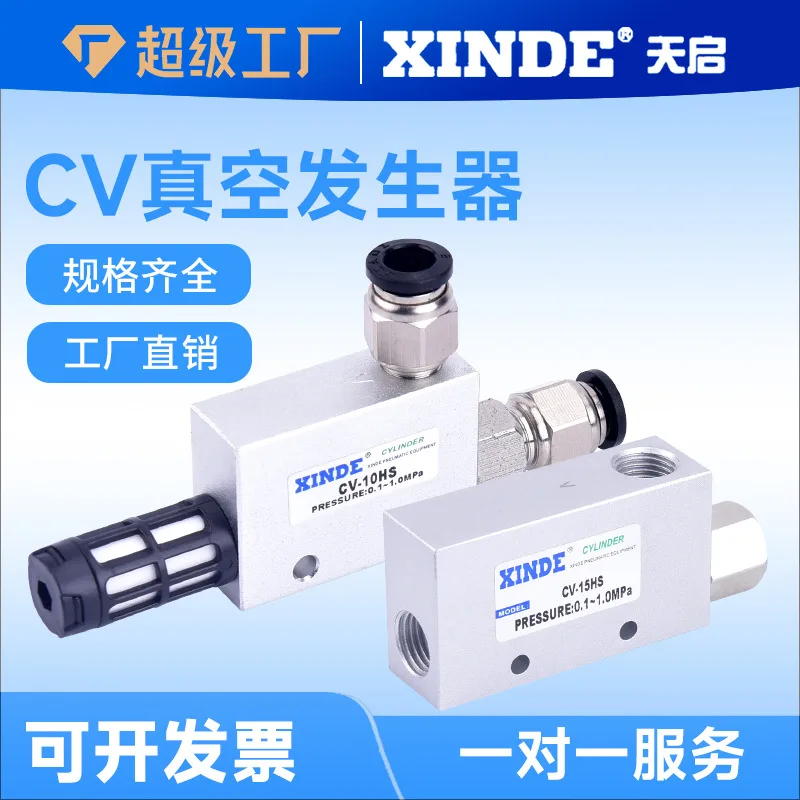
Vacuum generators with seventeen options and a second generator range with sixteen options work on a different principle from a pump: compressed air is forced through a venturi, and the pressure drop pulls air out of the vacuum port. There are no moving parts to wear out, the unit is small enough to mount at the point of use, and it cannot overheat. The trade is air consumption, and the vacuum level depends on the supply pressure staying steady. A generator that stops gripping is usually a compressed air problem rather than a vacuum problem, which is why the supply line deserves as much attention as the vacuum side.
Vacuum components
Vacuum components in plastic and a second vacuum component range are the parts that decide how well a system actually works: suction cups and pads, filters, valves, silencers, hose and fittings. Cup material and shape decide what can be picked up: a flat cup for a smooth panel, a bellows cup for a curved or uneven surface, and a soft cup for a delicate finish. Filter and silencer condition decides both flow and noise, and a clogged silencer is a very common reason for a system that has gradually stopped performing.
Air-driven vacuum or a mechanical pump
The choice comes down to duty. An air-driven generator is right when vacuum is needed intermittently, at a moving point, in a small space or in an environment where a motor is unwelcome. A mechanical pump is right when vacuum must be held continuously, when a deep level is needed, or when the volume to be evacuated is large. In practice many workshops have both: a generator at the robot or the fixture, and a pump for the bench where a part has to sit under vacuum for minutes at a time. Size the generator from the air available and the flow needed at the cup, and size the pump from the volume to be evacuated and the level required, then add a filter in front of it to protect it from whatever it is pulling.
Where vacuum is used in a workshop
- Lifting and pick and place. Suction cups grip a panel without marking it, which is why vacuum is standard on glass, sheet and finished surfaces.
- Holding for machining. A vacuum table holds a thin or delicate part flat without clamps in the way of the cutter.
- Extraction. Vacuum moves dust and swarf from a tool to a collector, which is why sanders and routers are often sold with an extraction port.
- Degassing and filling. Vacuum pulls air out of resin, silicone and oil, and pulls liquid into a closed system.
- Packaging and forming. Vacuum forming and bagging both rely on a steady pull across a large area.
Getting a vacuum system to hold
Most vacuum faults are leaks, and the discipline is to think in terms of flow rather than level. Start at the cup or the fixture: is the seal clean, is the surface porous, is the part actually sitting flat? Then work back through the hose and fittings, because a small leak on the vacuum side costs far more than the same leak on a compressed air line. Check the filter and the silencer, which clog gradually and show up as a system that used to work. Only then question the pump or the generator, and if you do, measure the supply pressure at the generator inlet while it is running rather than at rest. A system that holds at first and then loses grip is almost always pulling air through a seal, not losing it at the pump.
Frequently asked questions
What is the difference between a vacuum pump and a vacuum generator?
A pump has moving parts and produces vacuum mechanically. A generator uses compressed air through a venturi, has no moving parts and is normally mounted at the point of use.
Which one should I use for pick and place?
Usually a generator, because the duty is intermittent and the vacuum is needed at a moving point. Use a pump where vacuum has to be held continuously or pulled down deeply.
Why does my suction cup lose grip?
Check the cup for wear and contamination, then the hose and fittings, then the filter. Vacuum faults are leaks far more often than they are pump faults.
Do I need a filter in front of a vacuum pump?
Yes, whenever the pump is pulling air that may contain dust, liquid or process debris. A restricted filter is one of the most common causes of a pump that seems to have lost power.
How much vacuum do I need to lift a part?
Enough to hold the weight with a safety margin at the cup area, which depends on the size and number of cups rather than on the pump alone. Calculate from the load and the cup area, then add margin.
Where to start
Browse the full Air Tools & Spraying range, or the wider Air Tools & Spraying category if you also need air tools, pumps, hoses or spray equipment. Tell us what you are lifting, holding or extracting and the air supply you have, and we will point you at the pump, generator and components that fit.