Blog
Thread Systems Explained: Pitch, Tapping Drills and Repair

A thread is a system, not just a diameter. Two fasteners of the same nominal size can be completely incompatible because one is metric coarse and the other is UNC, or because the pitch is fine where the drawing calls for coarse. Reading a thread callout correctly is what stops a workshop ordering the wrong tap, stripping a thread and then having to drill it out. This guide covers the thread systems in this range, tapping drill sizes and the options for repairing a thread that has already failed.
Reading a thread callout
- Metric. Written as M followed by the nominal diameter and the pitch in millimetres, so M8 by 1.25 is an 8 mm thread with a 1.25 mm pitch.
- Metric coarse and fine. Coarse is the default for general work. Fine is used on thin walls, hydraulic fittings and anything subject to vibration.
- Unified. Written as a diameter and threads per inch, so 1/4-20 UNC is a quarter inch thread with 20 threads per inch. UNF is the fine version of the same family.
- Left-hand. Marked LH or with a reversed arrow, used on rotating assemblies so the fastener tightens with rotation rather than loosening.
- Pipe threads. BSP and NPT are sized by the pipe bore rather than the thread diameter, which is why their dimensions look wrong until you know the convention.
The systems you will meet
| System | Where it appears | Note |
|---|---|---|
| Metric coarse | General machinery and fixtures | The default in most workshops |
| Metric fine | Thin walls, hydraulics, vibration | Same diameter, smaller pitch |
| UNC and UNF | Imported machinery and older equipment | Sized in inches with threads per inch |
| Left-hand | Rotating assemblies, repair work | Also used to remove broken taps |
Imperial and unified threads
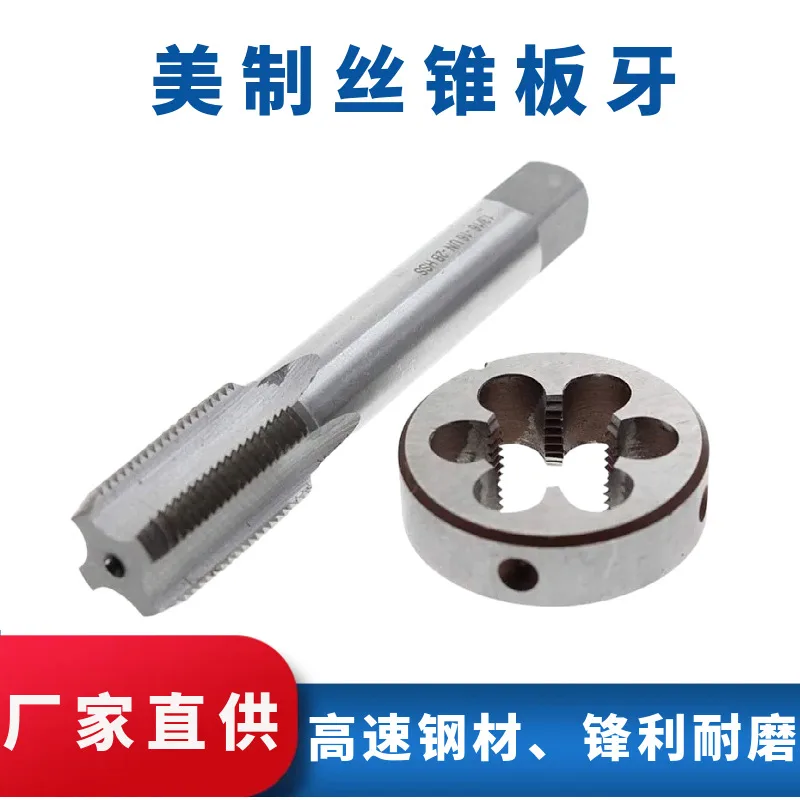
A UN and UNF tap and die set from 4-40 to 1-3/16 inch is the set that makes imperial work possible without hunting for a single tap at a time. Unified threads are the ones found on imported equipment, classic machinery and anything designed in inches, and they do not interchange with metric sizes however close the diameters look. A 1/4 inch thread is 6.35 mm, which is not M6, and forcing a metric tap into an imperial hole produces a thread that holds nothing.
Metric threads
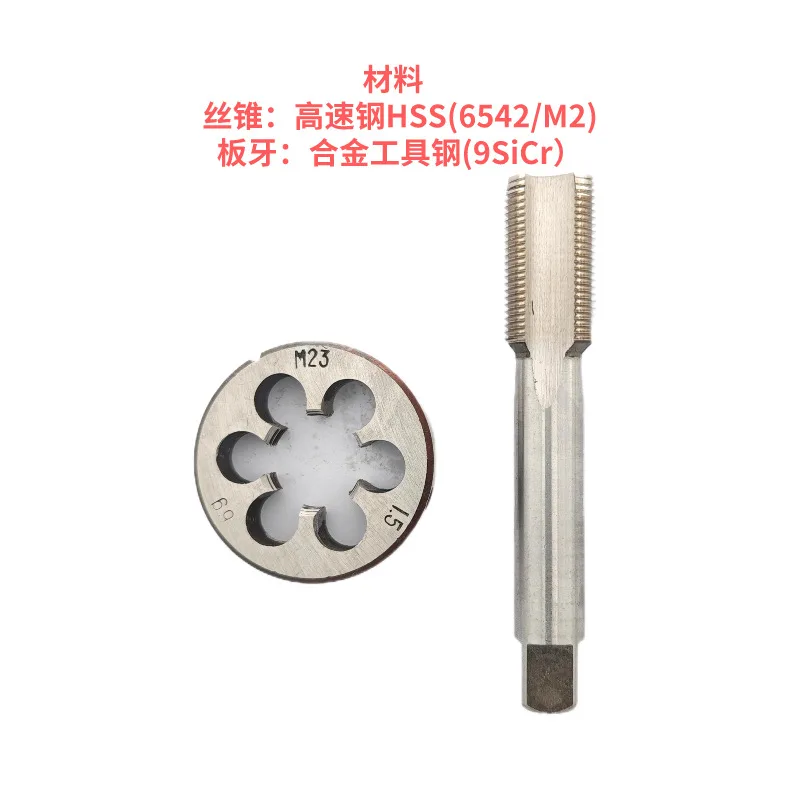
A machine tap range in metric coarse and fine from M3 to M30 covers the threads that most work uses, and having both pitches in one set is what stops a job when the drawing specifies a fine thread. A machine tap and die pair in metric coarse from M3 to M24 across twelve sizes and a pair in the in-between metric sizes from M3.5 to M21 fill in the range, and the in-between sizes matter more than they look: a fitting that takes M14 by 1.5 will not accept a tap from a coarse-only set.
Thread repair and removal
A left-hand tap set in coarse and fine sizes is the tool for a broken tap or stud. A left-hand tap cuts counter-clockwise, so it grips the broken piece and winds it out as it bites, which is far better than trying to drill out a hardened tap. Where a thread has stripped rather than broken, the options are to go up a size, to fit a thread insert that restores the original size, or to weld and re-tap, and the choice depends on the load the fixing carries. Cleaning up an existing thread is the simplest repair of all: run the correct tap or die down it with lubricant, reverse often and check the fastener as you go.
Tapping drills, pitch and the numbers that matter
The tapping drill is chosen from the pitch, not from the diameter, and the metric rule is simple: subtract the pitch from the nominal diameter. M8 by 1.25 takes a 6.75 mm drill, and M10 by 1.5 takes 8.5 mm. For imperial threads the answer comes from a chart, and it is worth keeping one on the wall rather than guessing, because a hole that is a few hundredths too small is what breaks a tap. Deeper than about one and a half times the diameter, a tap needs to be backed out regularly to clear chips, and in a blind hole the thread has to be deep enough for the fastener to reach full engagement without the tap bottoming out. Measure the result rather than assuming: a pitch gauge or a caliper across a known number of threads tells you what you actually cut, which is the check that catches a mistake before the part is assembled.
When a thread insert is the right answer
Where a thread has stripped in a casting, an insert restores the original size instead of forcing a larger fastener. The hole is drilled and tapped oversize, the insert is wound in and locked, and the original bolt then fits as it did before. That is the correct repair for a stripped spark plug thread, a machine housing or any part that cannot be replaced, and it is worth doing properly with the right insert system rather than by welding a hole shut. Where the material is too thin even for an insert, the answer is a larger fastener or a through-bolt with a nut, and neither is wrong as long as the load is considered rather than the convenience.
Frequently asked questions
How do I know what thread I am looking at?
Measure the outside diameter, then the pitch with a gauge or by counting threads over a known length. Diameter plus pitch plus the system is what identifies a thread.
Is M8 the same as 5/16 inch?
No. They are close in diameter and completely incompatible. Metric and imperial threads are separate systems and must never be mixed.
What is the difference between fine and coarse threads?
Coarse threads have a larger pitch, cut faster and are stronger in soft material. Fine threads have a smaller pitch and are used where wall thickness or vibration demands them.
How do I remove a broken tap?
A left-hand tap is the first approach, because it grips and winds the stub out. Failing that, a tap extractor or careful spark erosion by a specialist, since drilling a hardened tap rarely works.
How deep should a tapped hole be?
Deep enough for the fastener to reach full engagement plus room for chips. In a blind hole, allow for the tap to finish the thread without bottoming out.
Where to start
Browse the full Tap & Die Sets range, or the wider Tool Sets category if you also need socket sets, spanner sets or screwdriver sets. Tell us the thread system, the size and what you are repairing, and we will point you at the taps, dies and holder that fit.