Blog
Carbon Steel Shears: Honing the Edge and Stopping Rust

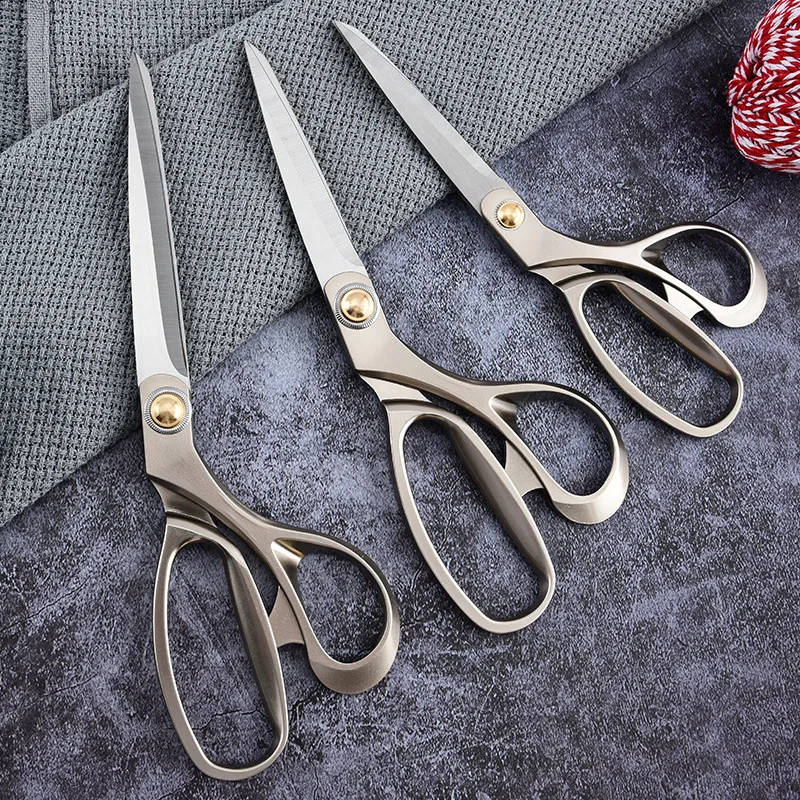
Tailor shears are cutting tools with a long lever, and the steel they are made from decides whether that lever stays sharp. Carbon steel takes a keener edge and hones back far more easily than stainless, which is why it holds on in cutting work despite rusting if it is left wet. The trade is maintenance: a carbon steel edge will cut fabric for years if it is wiped, honed and kept dry, and will pit within weeks if it is thrown into a damp bag. This guide covers why the steel behaves that way, how to hone the bevel, and the care routine that keeps a shears cutting.
Why carbon steel shears cut differently
- A finer bevel. Carbon steel holds a thinner edge angle, so the blades pass through fabric rather than pushing it apart.
- Easy honing. A few strokes on a fine stone restore the edge. Stainless of the same hardness takes longer to bring back.
- Deformation rather than chipping. An edge pressed against a pin or a staple rolls slightly and can be honed back; a harder, more brittle blade chips and has to be ground.
- No built-in rust protection. Carbon steel has no useful chromium content, so moisture, hand sweat and starch from fabric all start corrosion.
- A patina is normal. A grey film on the flat of the blade is stable and harmless. Rust on the bevel is not, and it is what turns a sharp pair into a dragging one.
- Handle length still matters. The longest pair in the range is not automatically the best; the handle has to match the material’s resistance.
Carbon steel against stainless shears
| Property | Carbon steel | Stainless steel |
|---|---|---|
| Edge sharpness | Finer bevel, cuts cloth with less force | Slightly blunter angle needed to avoid chipping |
| Rust resistance | None; needs drying after use | Good; tolerates a damp bag |
| Honing | Quick on a fine stone | Slower; harder to raise a burr |
| Edge life | Very long with regular honing | Longer between services, less total edge per sharpening |
| Best for | Bench cutting with a wipe-down routine | Kits and bags where the tool gets put away wet |
That table is the whole argument. Carbon steel rewards a routine and punishes neglect; stainless tolerates neglect and never quite matches the edge. For a pair that lives on a cutting table and is wiped at the end of a session, carbon steel is the better tool.
The tailor shears in this guide
Honing a shears edge
- Check the pivot before sharpening. Blades that have opened up will not cut whatever you do to the bevel. If the pair has an adjustable pivot, tighten it until the blades just pass each other.
- Look for notches first. A notch has to be ground past before the bevel will meet evenly. Honing over a notch leaves a strand uncut on every stroke.
- Match the existing bevel angle. Lay the blade on the stone and feel for the angle already ground. Shears bevels are shallow; steepening one turns it into a pair that pushes fabric apart.
- Hone the bevel, not the flat. The flat face of a shears blade is lapped to sit against its partner. Grinding it destroys the clearance the blades need.
- Work along the curve of the edge. Take strokes that follow the arc of the blade rather than straight across it, alternating sides so the bevel stays even.
- Test on cloth, not paper. A pair that cuts paper cleanly may still push fabric apart. Test on the material the shears are meant for.
Keeping rust off a carbon steel edge
| When | What to do | Why it matters |
|---|---|---|
| After every session | Wipe both blades dry and close them | Hand sweat and starch are what start corrosion |
| After cutting damp material | Dry thoroughly before the shears is put away | A closed pair traps water between the blades |
| Weekly in regular use | One drop of oil at the pivot, worked in | Keeps the action smooth and the blades meeting evenly |
| Monthly | Check the pivot for play and the edge for notches | Catches wear while the bevel can still be saved |
| Before storage | Clean, dry, light oil on the blades, store closed | Long storage is where pitting does the most damage |
Cutting with a long-handled shears
- Cut on the table, not in the air. Fabric lifted off the surface folds between the blades. Keep the work flat and the lower blade down.
- Take long strokes. A shears is designed to cut with the full length of its blades, opened wide and closed once.
- Do not close the blades fully. Stopping just short keeps the tips meeting and avoids the click that nicks the very end of the edge.
- Keep the blades square to the cloth. An angled pair pushes the fabric ahead of the cut instead of slicing it.
- Never cut paper, card or wire. Abrasive material shortens the life of a cutting edge faster than any amount of fabric.
- Keep a second pair for rough work. One pair for textile, one for anything else, is cheaper than re-honing a good pair every month.
Frequently Asked Questions
Will carbon steel shears rust?
Yes, if they are stored wet. A wipe after every session and a light oil film is the whole defence, and it keeps a pair working for years.
How often should they be honed?
When the shears starts pushing fabric rather than cutting it, or when a stroke leaves a strand uncut. With regular use that is a few minutes on a stone every few weeks.
Can I sharpen shears with a file?
A file removes too much material and leaves a rough bevel. Use a fine stone or a diamond plate, and match the angle already ground into the blade.
Why do the blades ride over each other?
Because the pivot has loosened. Tighten it until the blades just pass, then test. If the pair has no adjustment, it is worn beyond a simple fix.
Is stainless better for a workshop?
Only where the tool is put away wet. For bench cutting with a wipe-down routine, carbon steel holds a finer edge and hones back far more quickly.
Buying the right one
A carbon steel shears costs little and keeps cutting as long as it is dried and honed, which is the whole routine. The carbon steel tailor shears here takes the honing and care described above.