Blog
Diamond Tool Sizes: What 3×140 and 5×180 Mean

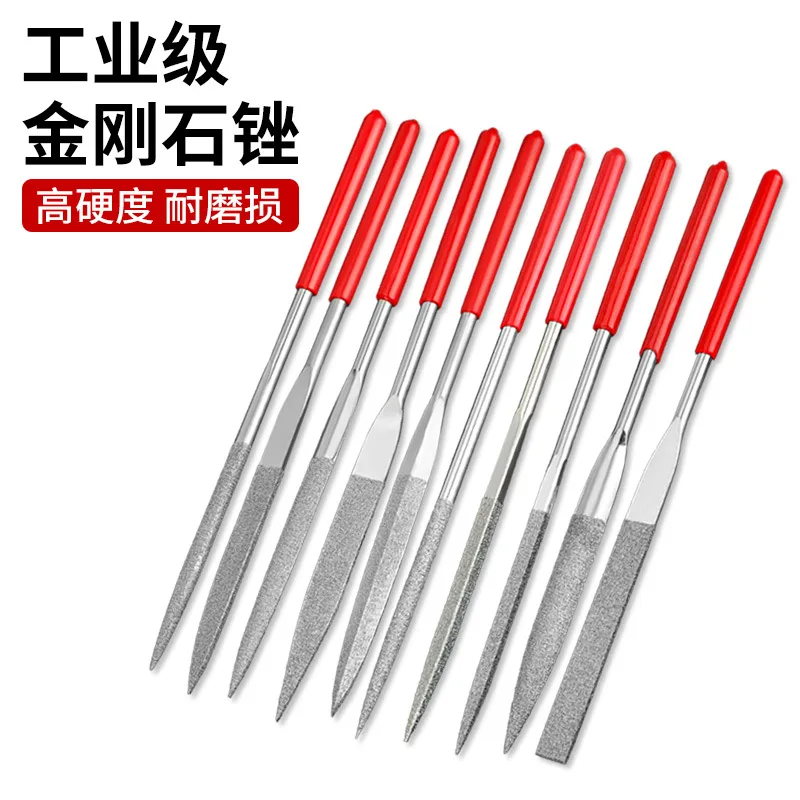
Slim diamond tools are sold by a two-figure size, and reading it correctly saves buying the wrong tool twice. In a code such as 3×140 or 5×180 the first figure is the diameter of the working section and the second is its length. Diameter decides where the tool will fit and how much it removes; length decides how far it reaches into a hole, a slot or a seam.
This range offers both sizes as single items, in packs of five and in sets of ten, which makes the pack size as much a decision as the size of the tool itself. This guide covers both.
How to read the size code
The code is a diameter and a length, and the two figures do different jobs. Diameter has to be smaller than the opening the tool works in, with enough clearance for the abrasive to turn without binding; length has to be longer than the depth of the hole or the reach needed across a face.
| Part of the code | What it controls | Practical limit |
|---|---|---|
| Diameter (3 mm or 5 mm) | Where the tool fits and how stiff it is | A 3 mm tool flexes in a deep hole; a 5 mm one stays straighter |
| Length (140 mm or 180 mm) | How far it reaches | The longer the tool, the more it wanders at the tip |
| Coating | What it will cut | Hard and brittle materials, not soft sticky metal |
| Pack size | How long the tool will last between orders | Coating wear, not breakage, ends the life of these tools |
A useful way to think about it is that the diameter buys access and the length buys reach, and both of them cost stiffness. A long, slim tool will follow a hole but will bend under pressure, so it removes material slowly and needs a light touch.
Choosing between 3 mm and 5 mm
The 3 mm tool is the one for detail: cleaning a narrow slot, deburring the inside of a small hole, dressing a tight internal corner. The 5 mm tool is the one for anything with a little more room, because it stays straight and removes material faster without wandering.
| Job | Size to use | Why |
|---|---|---|
| Deburring a small drilled hole | 3 mm | Fits the bore without catching the edge |
| Cleaning a narrow slot | 3 mm | Reaches the base of the slot |
| Dressing an internal corner | 3 mm | Follows the corner without cutting the faces |
| Refining a wider seam or edge | 5 mm | Stays straight and cuts evenly |
| Working a deep hole | 5 mm | Less flex, so the tip stays where it is aimed |
| Opening up a slot after sawing | 5 mm | Removes material faster |
Most workshops keep both. The 3 mm tool does the work that nothing else can reach, and the 5 mm tool does the bulk of the material removal, so a set that contains one of each covers more ground than a pack of either size alone.
Diamond tools in this range
Every option in this range
Sixteen configurations across two sizes and three pack sizes. Prices are per item, per pack of five or per set of ten.
| Option | Suits | Price |
|---|---|---|
| 3×140, single | Detail work and narrow openings | $8.99 |
| 5×180, single | General work with more reach | $17.08 |
| 3×140, pack of five | A workshop that uses the slim size often | $26.97 |
| 5×180, pack of five | Repeated work with the larger size | $26.97 |
| 3×140, set of ten | Keeping the slim size in stock | $26.97 |
| 5×180, set of ten | Keeping the larger size in stock | $26.97 |
The pack prices are the interesting part of that table. A pack of five or a set of ten at the same price as a single 5 mm tool makes the larger packs the obvious buy for anyone who uses these regularly, because the coating is what wears out and a spare tool costs nothing when it is already in the box.
Using slim diamond tools safely
- Wear eye protection; these tools throw fine grit and swarf rather than chips.
- Keep the speed moderate and let the abrasive cut, instead of pressing to make it cut faster.
- Support the work so it cannot move, because a slim tool that catches will bend or break.
- Keep the tool moving; holding it in one spot wears a groove and loads the coating.
- Clean the working section after use so dried swarf does not stop the next cut.
- Store the tools so the coated sections cannot rub together in the box.
Wear, breakage and storage
These tools fail in two ways and the difference matters. The first is coating wear, which is gradual: the tool cuts slower, then polishes instead of abrading. The second is breakage, which happens suddenly when a slim tool is bent or overloaded in a deep hole. Wear is normal and expected; breakage is nearly always the result of pressing on a tool that was already flexing.
Storage protects against both. A tool kept loose in a drawer loses its coating to rubbing and its straightness to being knocked, while the same tool kept in a sleeve or a box arrives at the next job straight and sharp. Because these are thin tools working in tight places, a small amount of care in storage makes a noticeable difference to how they perform.
Where these tools fit in a workshop
Slim diamond tools are not the first thing a workshop buys and they are rarely the last tool used on a job. They sit between the roughing stage and the finishing stage, doing the work that a bigger tool cannot reach and a file cannot cut. That is why they earn their place in a box that already contains burrs, files and a grinder: they solve the jobs the other tools refuse.
Keeping a small stock of both diameters makes the most of them. A single 3 mm tool is easy to lose or bend, and a job that stops because the only slim tool in the workshop has been damaged costs more than a pack of five. For anybody working on hardened steel, carbide tooling or instrument repairs on a regular basis, the sensible arrangement is a small box with both sizes, checked before each job rather than during it.
Frequently Asked Questions
What does 3×140 mean?
A working section 3 mm in diameter and 140 mm long. Diameter decides where it fits; length decides how far it reaches.
Should I buy a single tool or a set?
If the tool is used regularly, a pack of five or a set of ten is better value. For a one-off repair, a single tool is enough.
Why does a slim tool wander in a deep hole?
Because it flexes. A larger diameter stays straighter, or the tool can be started with a guide and then worked by hand.
Can these tools be used on soft metal?
They can, but aluminium and soft brass load the coating and stop it cutting. Use a burr for soft materials.
How do I know when the tool is finished?
When it polishes a surface instead of removing material. Once the coating has worn through, no amount of pressure will restore the cut.
Choosing the right size
Match the diameter to the opening and the length to the depth, then decide the pack size by how often the tool will be used. The 3×140 and 5×180 range covers singles, packs of five and sets of ten.