Blog
Stainless Steel Tweezers: Tips, Grades and Which to Buy

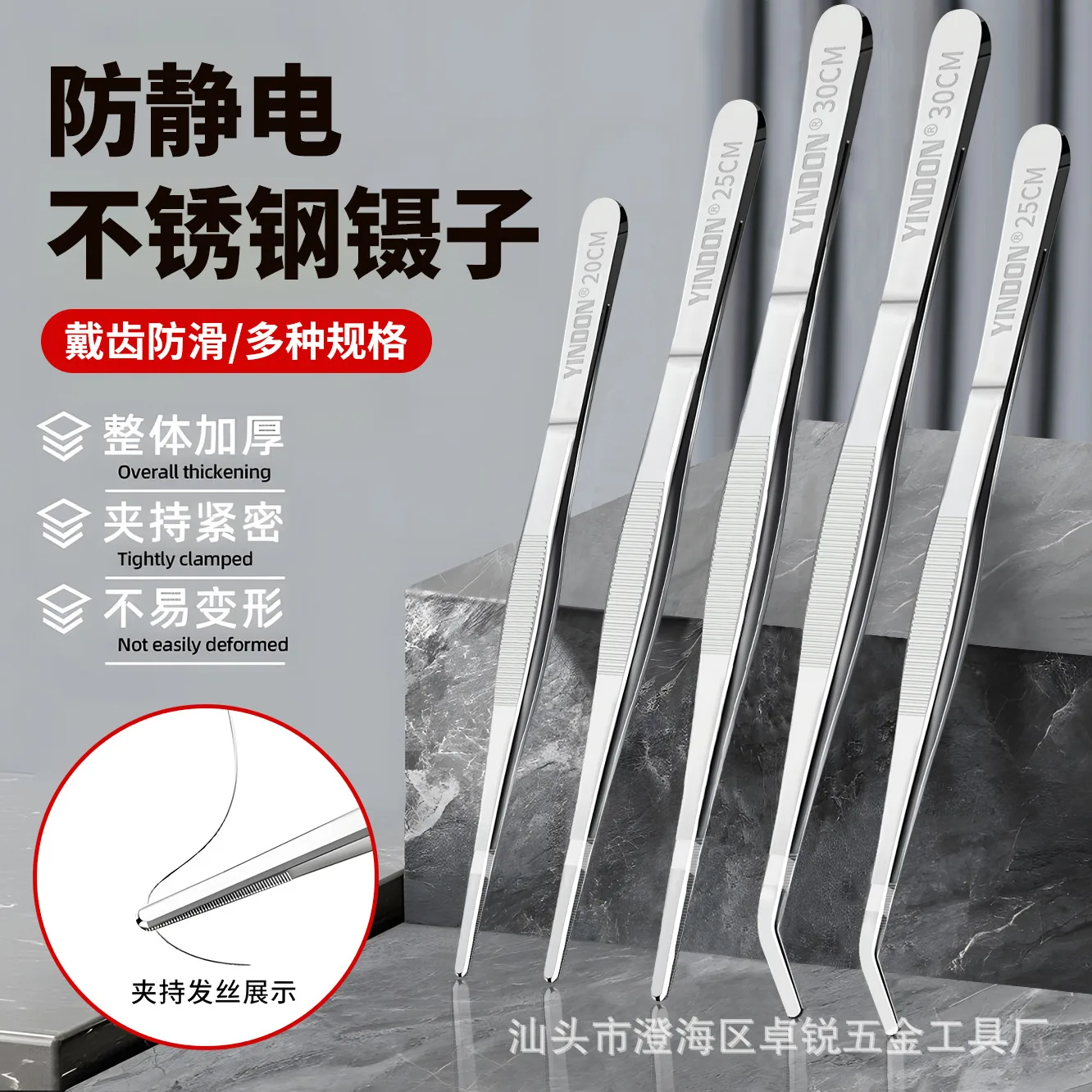
Tweezers look almost identical on a shelf and behave completely differently in the hand. The steel is usually stainless, the length is similar, and the price is similar, but the tip is what decides whether a pair grips a 0.5 mm wire, holds a splinter, or slides off both.
This guide is about choosing a pair by the two things that actually matter, the tip shape and the alignment of the jaws, and about keeping them precise once the right pair has been found.
Tip shape decides the job
A tweezer tip is ground to a shape, and the shape sets how much of the work you can see and how firmly the jaws close on it. Pointed tips concentrate pressure and pick up the smallest items; flat or blunt tips spread the pressure and hold a larger part securely; curved and fine tips reach into places the eye can see but a straight pair cannot enter.
| Tip shape | Grip | Best for |
|---|---|---|
| Fine pointed | Very high pressure on a tiny area | Small wire, components, splinters, hair |
| Straight blunt | Even pressure across a wider face | Larger parts, lifting a flat item, laboratory work |
| Curved or angled | Reaches around an obstruction | Assembly inside a housing, watch and jewellery work |
| Serrated or grooved | Extra grip on smooth surfaces | Slippery round parts, small bearings, beads |
The pair most people need is not the finest one available. A very fine tip is easy to bend and applies all its pressure on a spot, so it damages soft parts and loses its own alignment quickly. A slightly wider, well-ground tip holds more and survives longer.
Grade, magnetism and finish
Stainless steel for tweezers is chosen for corrosion resistance first and hardness second. A harder grade keeps a fine tip for longer but is more brittle; a softer grade tolerates a knock but loses its point sooner. For electronics and instrument work the property that usually matters most is whether the steel picks up a magnetic field, because a magnetised pair drags small parts where they were not intended to go.
| Property | Why it matters | What to look for |
|---|---|---|
| Corrosion resistance | Handling, damp workshops, cleaning | A stainless grade that does not spot after washing |
| Hardness | How long the tip holds its shape | Hard enough that a fine point resists bending |
| Magnetism | Whether small parts jump to the tool | Non-magnetic for electronics and instrument work |
| Finish | Grip and cleanliness | Smooth, burr-free edges that will not scratch the part |
| Alignment | Whether both jaws meet | Tips that meet along their length, not at a point |
Alignment is the property buyers forget to check and the one that decides whether a pair is usable. Tips that meet only at their very ends cannot hold anything thin, because the grip is a single point rather than a line. Holding a pair up to a light and closing it slowly shows the fault immediately: the jaws should meet evenly along their length.
Stainless steel tweezers in this range
Every option in this range
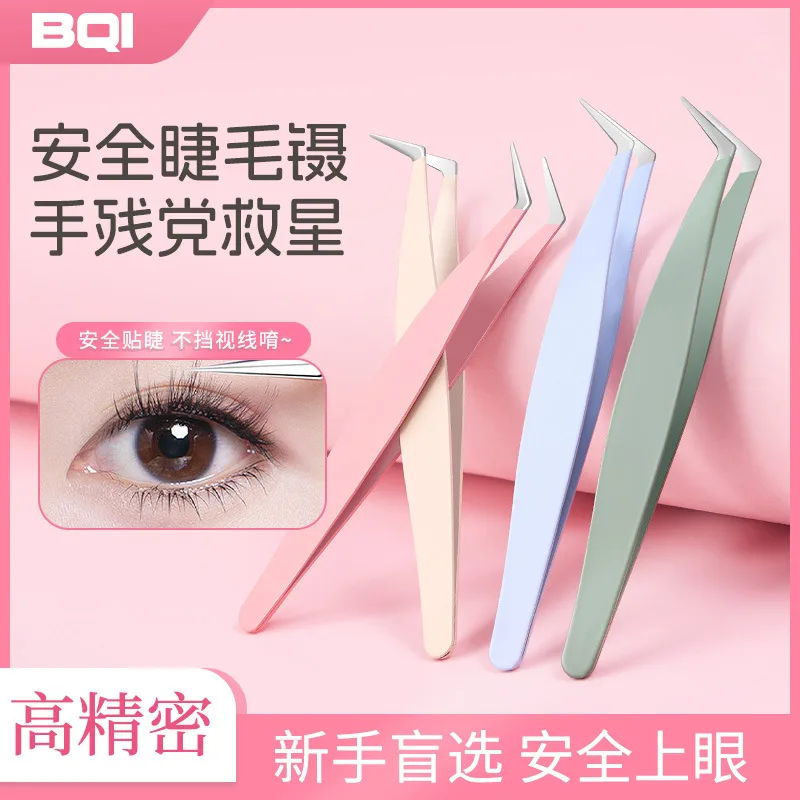
Four configurations, supplied with coloured finishes so a set can be told apart at the bench. Prices are per pair.
| Option | Suits | Price |
|---|---|---|
| Option 2 | General handling and assembly | $8.99 |
| Option 4 | Fine work where a narrower tip helps | $8.99 |
| Blue finish | Colour-coded for one task in a shared set | $8.99 |
| Green finish | A second colour code for a different task | $8.99 |
All four options cost the same, so the decision is entirely about shape and colour coding rather than value. Colours are worth taking seriously in a workshop where several people use the same bench: a pair designated for magnets, or for adhesives, or for handling parts that must stay clean, is easier to keep to its job when it looks different from the others.
Using tweezers without damaging the work or the tool
- Hold the tweezers near the tip for fine control and further back for larger parts.
- Use the pad of the thumb and forefinger rather than the fingertips, so the grip is steady.
- Never force a tip into a gap it does not fit; the point folds and the pair is never the same again.
- Keep the jaws clean, because dried adhesive or flux makes the tips slide apart.
- Return the pair to a sleeve or a rack rather than dropping it in a drawer with other tools.
- Check the alignment before fine work, not after a part has been dropped.
Keeping a pair precise
Tweezers fail in three ways: the tips bend and stop meeting, the points blunt and stop gripping, and the steel becomes magnetised and starts attracting swarf. The first two are mechanical and can be corrected with a fine stone, working the jaws back to a matched face, as long as the tip has not been folded over. The third is a matter of handling and is best avoided altogether.
Storage is the cheapest protection. A pair that lives loose in a drawer collides with everything else in it, and the collisions are what bend fine tips. A rack, a sleeve or a small box with the tips protected keeps a pair usable for years and costs far less than replacing them every few months. Cleaning with solvent rather than abrasives also protects the finish, because a scratched jaw face holds dirt and starts to slide.
Working under magnification
Fine tweezers are usually used with the eye an inch from the work, which means the hand holding the tool has to stay outside the line of sight. That is the practical reason a slightly longer or angled pair often proves easier than the finest point available: the tip reaches the part while the fingers stay out of the way of the eye or the microscope.
It also means the tips are the only part of the tool you can see, so damage is noticed late. Checking a pair under the same magnification used for the work, before starting rather than part way through a delicate assembly, is the habit that saves both the part and the tool.
Frequently Asked Questions
What are the best tweezers for small electronics?
A non-magnetic pair with a fine, well-aligned tip. Magnetic steel drags small components, and a tip that meets only at its end cannot hold fine wire.
Why do my tweezers not grip?
Usually the jaws meet at a point rather than along their length, or the faces have become polished. Checking the alignment and dressing the faces restores the grip.
Does the colour of the finish mean anything?
It is mainly a way of telling pairs apart so each one keeps to its own task, which matters when a bench is shared.
Can I sharpen tweezers?
A blunted tip can be dressed back to a matched face with a fine stone. A folded or broken tip cannot be repaired economically.
How should tweezers be stored?
In a sleeve, rack or small box with the tips protected. Loose storage in a drawer is what bends fine points.
Choosing the right pair
Choose the tip shape for the work, then check the alignment before anything else. The stainless steel tweezers in this range come in four configurations with colour-coded finishes.