Blog
Single, Twin or Triple Cylinder Foot Pumps: Which to Choose

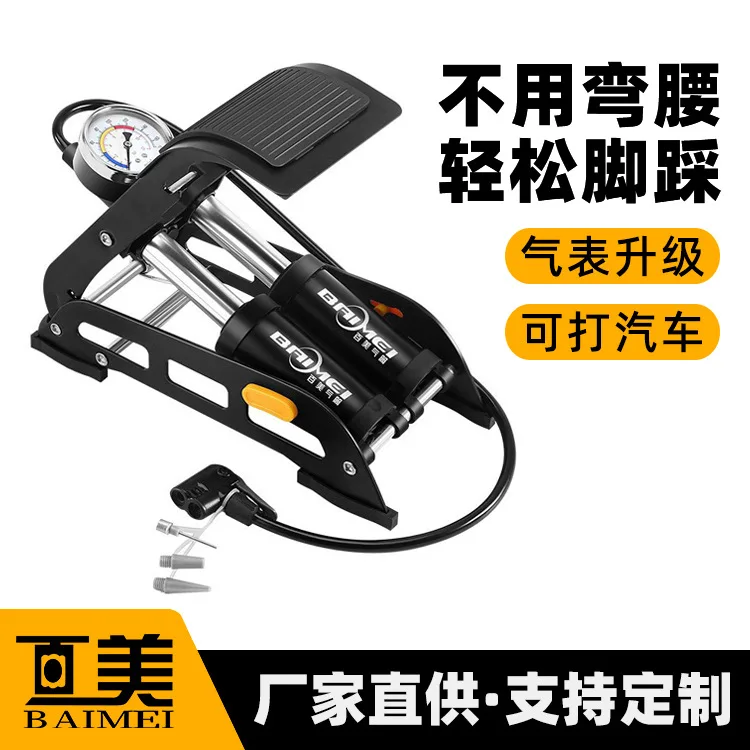
Cylinder count is the clearest way to describe a foot pump and the least well understood. Adding a cylinder does not raise the pressure the pump can reach; it raises the amount of air moved with each stroke, which shortens the work and lowers how hard each press feels.
Single, twin and triple cylinder designs all appear in this range at the same 160 psi rating, which shows the principle neatly: the pressure figure is identical and the difference is entirely in the effort and the time. This guide explains where each step pays.
What each cylinder adds
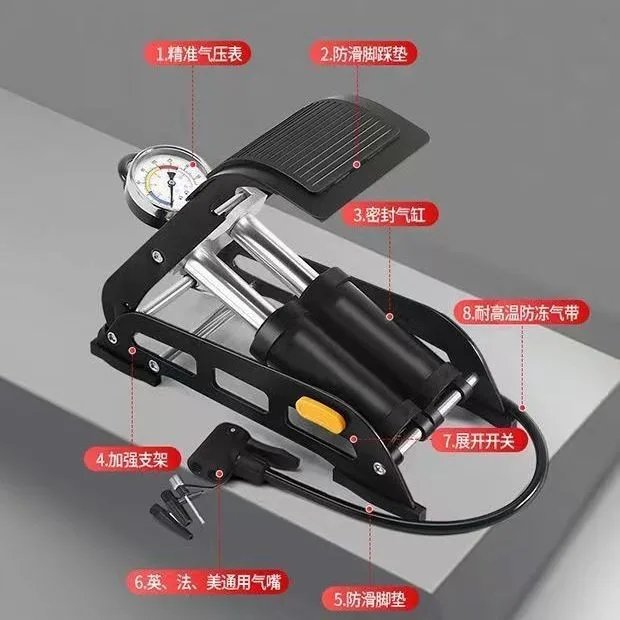
Every cylinder is a barrel with its own piston and seal, and all of them feed a shared outlet. A single cylinder pump delivers one barrel per stroke; a twin delivers two; a triple delivers three. Because the work is spread across more pistons, each stroke also resists less for the same delivered pressure, which is why a triple cylinder pump feels remarkably easy underfoot.
| Design | Air per stroke | Feel underfoot | Bulk |
|---|---|---|---|
| Single cylinder | One barrel | Firm, especially at high pressure | Smallest and lightest |
| Twin cylinder | About two barrels | Noticeably easier than single | Wider foot plate |
| Triple cylinder | About three barrels | The easiest of the three | The largest and heaviest of the range |
The gain from the first additional cylinder is large; the gain from the second is smaller in proportion, because the stroke count was already reduced. That is the shape of the whole decision: each cylinder costs money, size and weight, and the return on each one diminishes.
Stroke counts on real tyres
Thinking in strokes rather than in barrels makes the difference concrete. The figures below are approximate and depend on the tyre, but the ratios hold: what takes a long stint on a single cylinder is a short job on a triple.
| Tyre | Single cylinder | Twin cylinder | Triple cylinder |
|---|---|---|---|
| Car tyre from flat | A long stint of presses | Roughly half as many | About a third as many |
| Car tyre, top-up | A few presses | A few presses | A few presses |
| Van or 4×4 from flat | Considerable effort | Manageable | Comfortable |
| Bicycle at 100 psi | Short; pressure is the limit | Short | No advantage |
| Air bed or inflatable | Slow | Quick | The quickest of the three |
Two lessons come out of that table. The first is that for a top-up of a few psi, all three designs finish in the same handful of strokes, so cylinder count is irrelevant. The second is that the benefit is concentrated in the large tyres filled from flat, which is exactly where a workshop or a van driver spends their time.
Foot pumps in this range
Every option in this range
Single, twin and triple cylinder designs, all rated to 160 psi, with integrated or separate gauges. Prices are per pump.
| Configuration | Cylinders | Suits | Price |
|---|---|---|---|
| Standard, with gauge | Single | Occasional topping up | $8.99 |
| Heavy single cylinder, integrated gauge | Single | Regular use with a heavier body | $19.31 |
| Twin cylinder, integrated gauge | Twin | Cars, trailers and frequent use | $21.98 |
| Twin cylinder, steel dial gauge | Twin | Frequent use where a clear dial helps | $23.31 |
| Triple cylinder, flagship | Triple | Vans, 4x4s and the heaviest work | $26.97 |
The price ladder shows the diminishing return clearly. The step from a standard single to a heavy single costs more than the whole standard pump; the step from twin to triple costs a fraction of that again and adds the most capacity of any step in the range. For anyone working with large tyres, the triple cylinder is the best value at the top of the ladder.
Weight and space are the real cost
- Weigh the pump against where it will live; a pump too big for its storage place does not get used.
- Consider whether the pump is carried or kept in one place, since a triple cylinder is a bench tool in practice.
- Check the foot plate width, because a wide plate is easier to use but takes more floor space.
- Think about how often tyres are filled from flat, which is the only case where the extra cylinders pay.
- Keep the hose and connector with the pump, so the volume advantage is not lost at a leaking joint.
- Store flat with the plate released, whatever the cylinder count.
Why all three are rated at the same pressure
The 160 psi figure describes the maximum pressure the barrel, seals and hose are designed to contain, and it does not change with cylinder count because each cylinder is the same diameter and built to the same standard. What changes is the rate at which that pressure can be produced. A workshop buying on the pressure figure alone will see three apparently identical pumps on the shelf and have no way of telling which one will fill a van tyre before lunch.
The useful comparison is therefore volume per stroke, and where that figure is not published the cylinder count is a good proxy. As a rule of thumb, doubling the cylinders roughly halves the strokes and noticeably reduces the effort per press, while adding a third cylinder is worth doing only when the first doubling has already proved its value in daily use.
Maintaining a multi-cylinder pump
Each cylinder has its own seal, and the seals wear at different rates because the pistons do not carry identical loads. The symptom is a pump that gradually becomes easier to press on one side than the other, or a drop in output that cannot be explained by the connector. When that happens, the worn seal is almost always in the cylinder that was doing the most work, and replacing all of them at once saves opening the pump again within a few months.
Keeping the barrels dry matters more as the count rises, because there are more surfaces to corrode and more seals to damage. A pump stored in a damp shed will show pitting inside a barrel long before the outside looks worn, and a pitted barrel destroys a new seal in a short time. Storing the pump indoors, with the plate released and the hose coiled loosely, is the maintenance that prevents the repair.
Frequently Asked Questions
Does a triple cylinder pump give higher pressure?
No. All three designs reach the same rated pressure. Added cylinders move more air per stroke, which shortens the job.
Is a twin cylinder worth it over a single?
Yes for cars, vans and anything filled from flat. For topping up a bicycle tyre the difference is negligible.
How much easier is a triple cylinder pump?
Each press resists less and the stroke count drops to about a third of the single cylinder figure on a large tyre.
Which design is best for a bicycle?
A single cylinder with a narrow barrel. Bicycle tyres need pressure rather than volume, and a lighter pump is easier to carry.
Can a foot pump damage a tyre valve?
Not through cylinder count. Valve damage comes from pushing a connector on at an angle or pulling it off sideways.
Choosing the right one
Count how often tyres are filled from flat, then buy for that job rather than for the occasional top-up. The single, twin and triple cylinder range covers all three designs at the same 160 psi rating.