Blog
Buying a Single Hollow Punch: Edge, Wall and Bore Checks

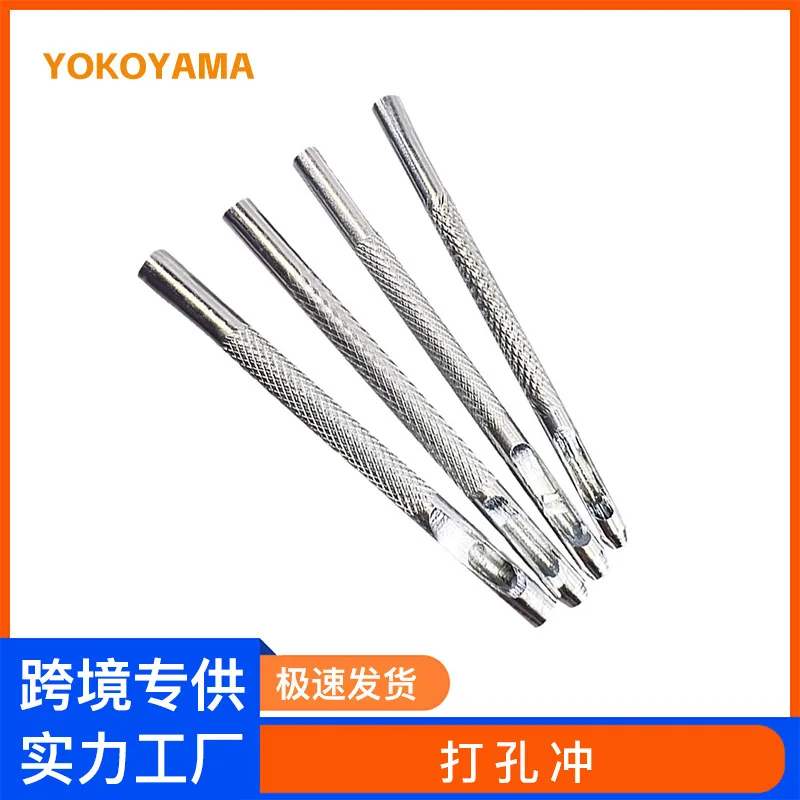
Buying one hollow punch instead of a set is a perfectly sensible decision, as long as the punch you buy is the right one for the material in front of you. A single punch has to cover every hole the job needs, so the diameter, the wall thickness and the state of the cutting edge all matter more than they would in a set where a fresh size is always available. This guide covers what to inspect, how a single punch is used day to day and the mistakes that kill an edge early.
What to check on a single punch
- The stated diameter, measured. Measure across the outside of the cutting edge with calipers. A punch that has been sharpened badly will be undersized and will cut small.
- Edge condition. Look at the bevel under a light. A continuous, even bevel cuts cleanly. Nicks and rolled sections tear the material instead.
- Wall thickness. A thicker wall holds its shape under the mallet. Very thin walls deform on the first heavy blow and the hole goes oval.
- Body straightness. Sight along the body. A bent punch cuts a hole that is not square to the surface, and the bend cannot be taken out.
- Struck end. The end that takes the hammer should be flat and slightly chamfered. A mushroomed end means the punch has been hit with a steel hammer rather than a mallet.
- Bore clearance. The bore should be clear and free of rust. A rough bore grips the plug and the punch stops cutting.
Single punch against the alternatives
| Method | Edge quality | Best material | Limits |
|---|---|---|---|
| Hollow punch | Clean shear, no burr | Leather, gasket sheet, rubber, felt | One diameter per tool; needs a soft backing |
| Twist drill | Burr on exit | Metal and rigid plastic | Tears soft sheet; needs clamping |
| Hole saw | Rough on soft material | Timber and board | Too aggressive for thin sheet |
| Eyelet or plier punch | Clean but small range | Leather and card | Limited to the plier jaw sizes |
| Knife and template | Depends on skill | Any soft sheet | Slow; rarely a true circle |
The hollow punch wins wherever the hole has to be round and the material is soft enough to shear. That is a wide slice of workshop work, from a gasket cut to match a flange to a row of holes along a leather belt.
The hole punches in this guide
Every option in this range
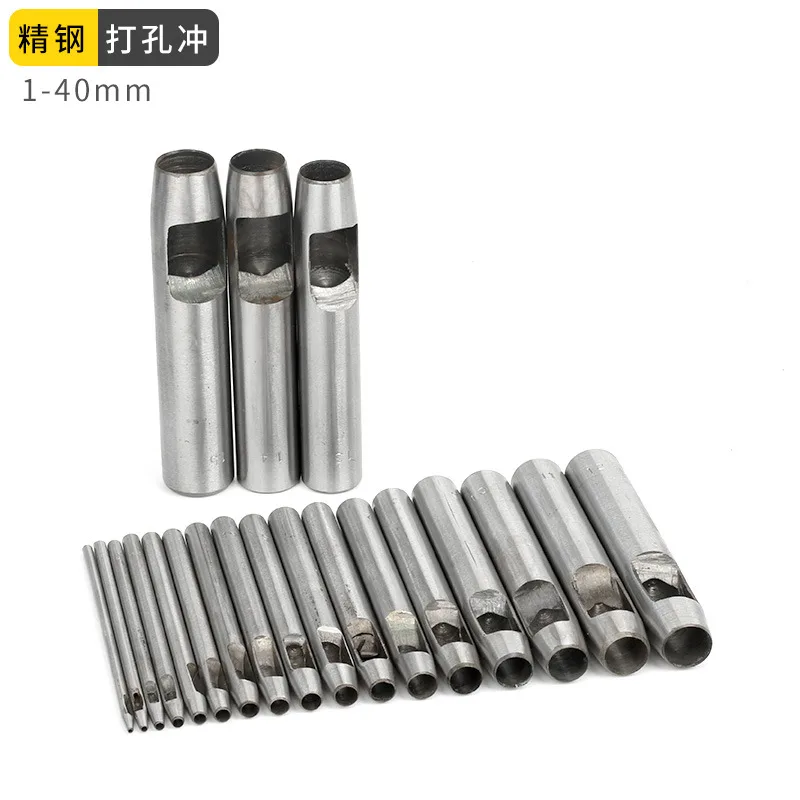
The full diameter range is listed here so a single punch can be chosen with the sizes around it in view. Prices are per punch.
| Option | Hole diameter | Type | Best for | Price |
|---|---|---|---|---|
| Fine punch | 1 mm | Small hollow punch | Pilot holes and fine work | $23.97 |
| Fine punch | 2.5 mm | Small hollow punch | Card and thin leather | $25.47 |
| Fine punch | 3.5 mm | Small hollow punch | Small soft-sheet holes | $10.19 |
| Small punch | 4.0 mm | Small hollow punch | Rivets and light leatherwork | $10.79 |
| General punch | 5 mm | Workshop punch | Everyday sheet work | $23.97 |
| General punch | 7 mm | Workshop punch | Gaskets and general sheet | $26.97 |
| General punch | 9 mm | Workshop punch | Rubber, felt and canvas | $26.97 |
| Workshop punch | 12 mm | Workshop punch | Gaskets and seals | $26.97 |
| Workshop punch | 15 mm | Workshop punch | Washers and large gaskets | $26.97 |
| Workshop punch | 17 mm | Workshop punch | Seal and gasket work | $26.97 |
| Large punch | 20 mm | Heavy punch | Upholstery and heavy sheet | $26.97 |
| Large punch | 25 mm | Heavy punch | Large washers | $26.97 |
| Large punch | 28 mm | Heavy punch | Flooring and heavy sheet | $26.97 |
| Largest punch | 40 mm | Heavy punch | Large gaskets and seals | $26.97 |
| Assorted punch | Small | Workshop punch | General-purpose addition | $26.97 |
| Spare punch | 2.5 mm | Small hollow punch | Replacing a worn fine punch | $25.47 |
Read the table by diameter band rather than by price. Small punches are ground to a finer edge and are easier to damage, which is why the very small sizes are not automatically the cheapest, while the mid-range workshop sizes cluster at one price.
Driving a single punch well
- Use a mallet, not a steel hammer. A steel hammer mushrooms the struck end within a few dozen holes and the punch then splits at the rim.
- Back the work every time. A lead block, hardwood end grain or a dense rubber pad is what gives the edge something to cut into.
- Hold the punch with a grip, not your fingers, on big sizes. A 40 mm punch driven by a mallet will take a finger with it if it slips.
- Cut in one firm blow. Repeated light taps bruise the material and work-harden the edge for no benefit.
- Clear the plug after each hole. A single punch is worked hard; a jammed bore turns a cutting tool into a blunt one immediately.
- Mark the position first. With only one punch there is no set to line up, so a centre punch or a template keeps the layout accurate.
Making one punch last
- Stone the bevel lightly and often. A few strokes keeps the edge keen without removing enough material to change the diameter.
- Never cut onto metal or stone. This is the single fastest way to destroy a hollow punch.
- Keep the bore oiled. Light oil on the edge and inside the body stops rust and eases plug removal.
- Store it separately. A punch rolling around in a toolbag loses its edge against everything else in there.
- Check the diameter occasionally. If holes start coming out small, the edge has been ground back and the punch needs replacing rather than more sharpening.
Frequently Asked Questions
Is a single hollow punch better than a set?
If only one diameter is ever needed, a single punch is the cheaper and simpler buy. If several sizes come up, a set costs less than the individual punches.
What size punch do I need for a gasket?
Match the bolt or stud diameter, then check the gasket sheet thickness against the punch bore so the disc clears properly.
Why does my punch tear the material instead of cutting?
Usually a dull or rolled edge, or no soft backing under the work. Check both before buying a replacement.
Can I use a hollow punch in a press?
Yes, and on large diameters a press gives a squarer, cleaner cut than a mallet because the load stays axial.
What is the difference between a hollow punch and a wad punch?
They are the same tool. Wad punch is the older name, used mainly for gasket and leather work.
Buying the right one
Decide the exact diameter the job needs, then check the edge, the wall and the bore before it goes into the toolbox. The hole punch in this range covers a single workshop size for general sheet work.