Blog
Hole Punch Sizes: 1 mm to 40 mm Hollow Punches Explained

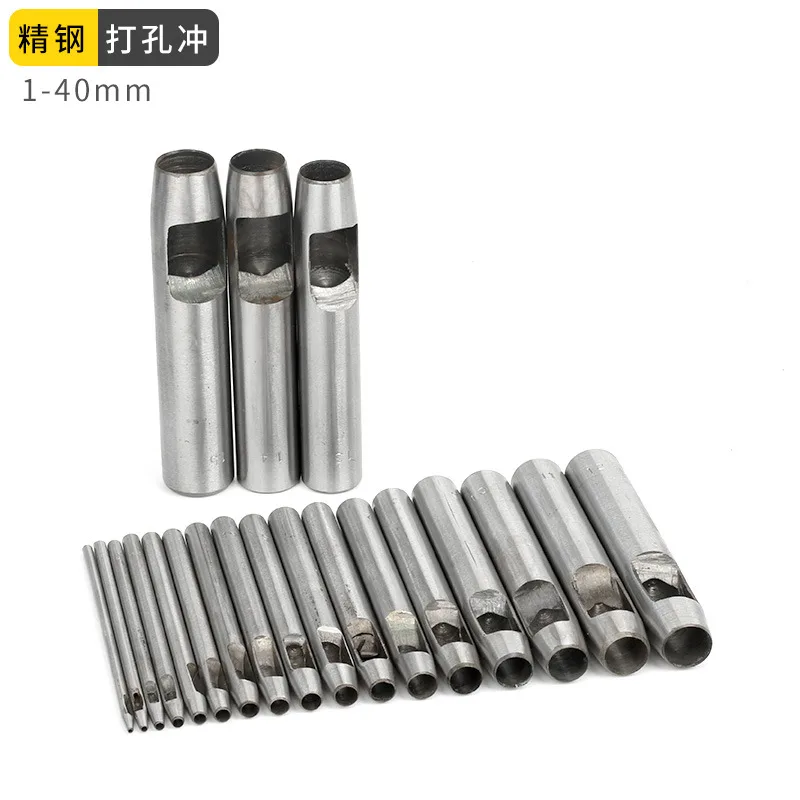
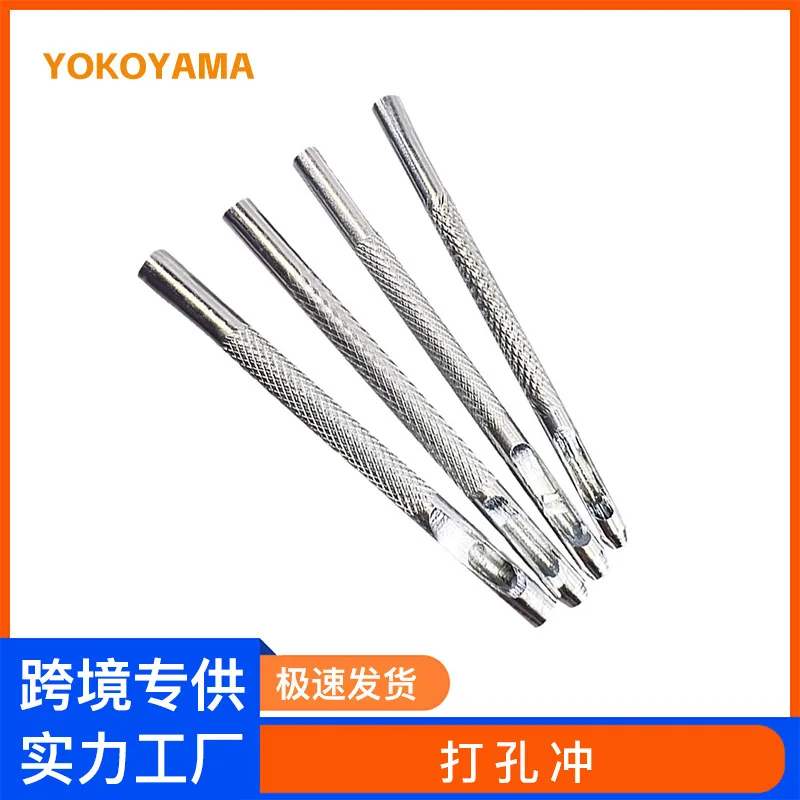
A hollow punch cuts a clean circle through leather, gasket sheet, rubber, plastic, canvas and thin metal by shearing the material against a backing rather than drilling it away. That is why the hole it leaves has a crisp edge with no swarf and no burr, and why the tool is the first choice wherever a round hole has to be neat. The range here runs from a 1 mm pin punch up to a 40 mm wad punch, and choosing between them is a question of the diameter you need, the thickness of the material and whether the punch will be struck with a mallet or driven by hand.
What decides which punch you need
- Hole diameter. The punch cuts exactly the size stamped on it, so the diameter is the starting point. Sizes below about 5 mm are for pilot holes and fine work; sizes above 20 mm are for gaskets, washers and leatherwork.
- Material thickness. A punch will cut material up to roughly the depth of its bore before the cut plugs the body. Thicker material needs a bigger punch body and more force.
- Cutting edge form. Hollow punches have a bevelled or a straight cutting edge. A bevelled edge cuts more easily; a straight edge holds its diameter better on hard sheet.
- Body wall thickness. A thick wall resists distortion when the punch is struck, which is what keeps the diameter constant and the edge from rolling over.
- Drive method. Small punches are pressed by hand or in a press; large ones are struck with a mallet or a dead blow hammer. Matching the punch to the drive keeps the shank from mushrooming.
- Set against single punch. A set covers a range of diameters so a job does not stop when the right size is missing. A single punch is the right buy when only one size is ever needed.
Diameter against the job
| Diameter band | Typical material | Drive | Notes |
|---|---|---|---|
| 1 mm to 4 mm | Paper, card, thin leather, shim | Hand press or light tap | Fragile edge; back the work with a soft pad |
| 5 mm to 9 mm | Leather, rubber sheet, gasket paper | Mallet | The general workshop band; most used sizes |
| 12 mm to 17 mm | Gasket sheet, felt, canvas | Mallet | Needs a solid backing board to shear cleanly |
| 20 mm to 28 mm | Gasket, flooring, upholstery | Heavy mallet | Force rises quickly with diameter |
| 40 mm | Large gaskets and seals | Heavy mallet or press | Best driven in a press for a square cut |
Force rises with the square of diameter, which is why a 40 mm punch feels dramatically harder to drive than a 20 mm one. That is the reason large punches come with a wider body and a heavier struck end.
The hole punches in this guide
Every option in this range
Sixteen punches spanning 1 mm to 40 mm. Prices are per punch, and the larger diameters cost more because there is more material in the body and more grinding in the edge.
| Option | Hole diameter | Type | Best for | Price |
|---|---|---|---|---|
| Pin punch | 1 mm | Small hollow punch | Pilot holes in paper and shim | $23.97 |
| Fine punch | 2.5 mm | Small hollow punch | Fine leather and card work | $25.47 |
| Fine punch | 3.5 mm | Small hollow punch | Small holes in soft sheet | $10.19 |
| Small punch | 4.0 mm | Small hollow punch | Rivets and light leatherwork | $10.79 |
| General punch | 5 mm | Workshop punch | Leather, rubber and gasket sheet | $23.97 |
| General punch | 7 mm | Workshop punch | Gaskets and general sheet work | $26.97 |
| General punch | 9 mm | Workshop punch | Rubber, felt and canvas | $26.97 |
| Workshop punch | 12 mm | Workshop punch | Gaskets, seals and flooring | $26.97 |
| Workshop punch | 15 mm | Workshop punch | Washers and large gaskets | $26.97 |
| Workshop punch | 17 mm | Workshop punch | Gasket and seal work | $26.97 |
| Large punch | 20 mm | Heavy punch | Upholstery and heavy gasket sheet | $26.97 |
| Large punch | 25 mm | Heavy punch | Large washers and seals | $26.97 |
| Large punch | 28 mm | Heavy punch | Heavy sheet and flooring | $26.97 |
| Largest punch | 40 mm | Heavy punch | Large gaskets and seals | $26.97 |
| Assorted punch | Small | Workshop punch | A general-purpose addition to a kit | $26.97 |
| Spare punch | 2.5 mm | Small hollow punch | Replacing a worn fine punch | $25.47 |
Because the prices cluster, the useful move is to buy the diameter you actually use repeatedly and treat the rest of the range as something a set covers. Paying for a single large punch is rarely the best value if more than one diameter is ever needed.
Cutting a clean hole
- Back the work with a soft pad. A block of lead, a piece of hardwood end grain or a dense rubber pad lets the cutting edge sink slightly below the work, which is what shears the disc free instead of tearing it.
- Never cut onto steel or stone. The edge is hardened but thin. Cutting against a hard surface rolls the edge over within a few holes and the punch then tears rather than cuts.
- Strike square and central. A glancing blow distorts the body and leaves an oval hole. Hold the punch vertical and tap with a mallet rather than swinging at it.
- Clear the bore often. Once the plug jams, the punch stops cutting and starts bruising the material. Push the plug out from the shank end with a drift.
- Mark the centre first. A punch has no point to guide it, so a centre mark or a template keeps the hole where it belongs.
- Work from both sides on thick material. Cutting halfway through from each face gives a cleaner result than forcing the punch all the way through in one blow.
Keeping the edge alive
- Touch up the bevel, not the bore. A few strokes with a fine stone on the outside bevel restores the edge. Filing the inside changes the diameter permanently.
- Oil the punch before use. A drop of light oil on the cutting edge reduces friction and makes the plug easier to clear.
- Store punches upright. Loose in a drawer, the edges chip against each other and against other tools.
- Retire a punch that no longer cuts a round hole. A distorted body cannot be straightened back to a true circle.
- Keep a spare of the size you use most. The one diameter that is used every day is the one that wears out first.
Frequently Asked Questions
What is a hollow punch used for?
Cutting clean round holes in leather, gasket sheet, rubber, felt, canvas, plastic and thin soft metal where a drilled hole would leave a burr.
Can I use a hole punch on metal?
On thin soft metal such as aluminium or copper shim, yes, with a soft backing. On steel sheet, no. The edge will roll over and the punch will be ruined.
What do I cut onto?
A soft backing such as lead, hardwood end grain or dense rubber, so the edge can pass slightly below the work and shear the disc clear.
How do I stop the punch jamming?
Clear the plug after every few holes, keep the bore lightly oiled, and do not drive a punch deeper than its bore in one pass.
Can I sharpen a hollow punch?
Yes, lightly, on the outside bevel with a fine stone. Take care not to touch the bore, because the inside diameter sets the size of the hole.
Buying the right one
Match the punch to the exact diameter the job calls for, allow for the force that diameter needs, and back the work properly so the edge survives. The hole punches in this range cover 1 mm through 40 mm.