Blog
Parts Tool Boxes in Three Sizes: 2072, 2073 and 2077 Compared


Buying a plastic box online usually means choosing between model numbers rather than choosing by size. The numbers describe a family, not a measurement, so the useful question is what each member of that family actually holds and how much floor space it takes up.
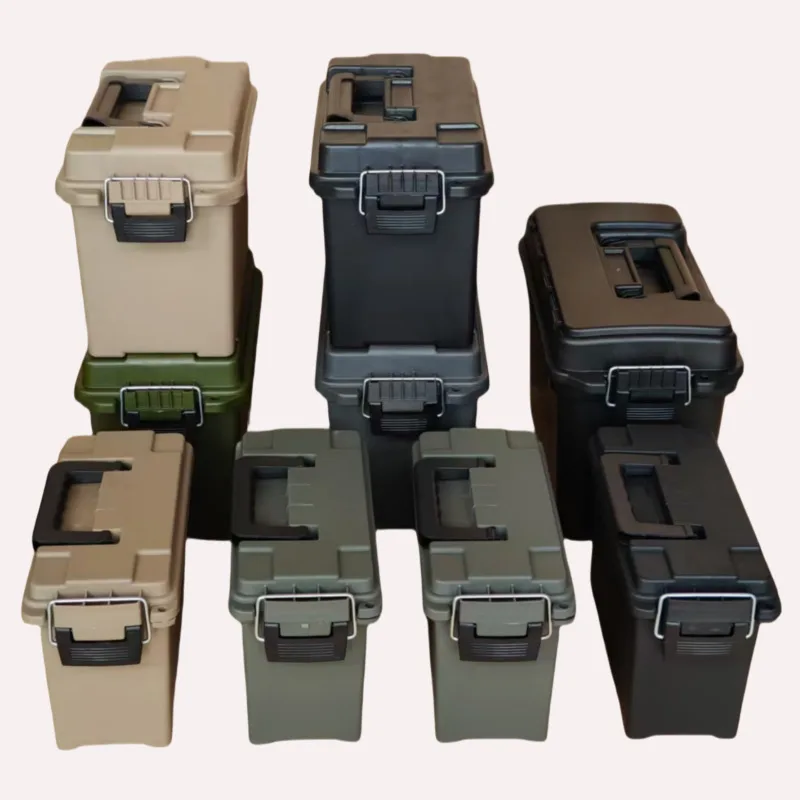
This range covers a moulded parts tool box in the 2072, 2073 and 2077 sizes, in five colours, from $9.24 to $17.24 depending on size and finish. This guide works through what changes as the box grows.
What changes as the box gets bigger
Size does not simply scale the contents. A larger box takes longer tools, but it also takes more space on the bench and gets heavier once filled, which changes how it is used.
| Size | Typical use | Trade off |
|---|---|---|
| 2072 | Small parts, bits, batteries | Light and easy to move |
| 2073 | Mixed fixings and hand tools | The middle option for most benches |
| 2077 | Larger kits and longer tools | Heavy once filled; stays put |
The pattern is the same one that applies to any container: the box that gets carried is the small one, and the box that gets loaded is the large one. Buying the middle size is a compromise that suits a single-box workshop, but it does not remove the need to think about weight.
Trays, handles and how the box opens
The way a box opens decides how often it is used. A hinged lid with a folding handle can be opened with one hand; a lid that needs both hands to align is a box that stays shut when someone is holding a drill in the other hand.
| Feature | Effect on daily use | Worth having? |
|---|---|---|
| Lift-out tray | Keeps small parts above the main load | Yes, on the larger sizes |
| Folding handle | Lies flat for storage | Yes |
| Hinged lid | Opens one handed | Yes |
| Moulded ribs | Stops the walls bowing under load | Yes on the 2077 |
| Flat base | Lets you scoop parts out | Useful for fixings |
A lift-out tray earns its place on the larger sizes, where small parts would otherwise sink below the tools and have to be dug out. On the smallest box the tray is more of a divider than a tray, and its value depends on whether the box holds tools or fasteners.
Parts tool boxes in this range
Every option in this range
A moulded plastic parts tool box with a hinged lid, a latching catch and a lift-out tray, in the 2072, 2073 and 2077 sizes and five colour options.
| Option | Detail | Price |
|---|---|---|
| 2072, green | Smallest size, tray | $9.48 |
| 2072, black | Smallest size, tray | $9.48 |
| 2072, tan | Smallest size, tray | $9.48 |
| 2073, tan | Middle size, tray | $13.20 |
| 2077, black | Largest size, tray and ribs | $17.24 |
The step from 2072 to 2073 costs about $3.70 and buys the size most benches settle on. The step from 2073 to 2077 costs about $4 and buys capacity for longer tools, at the price of a heavier box once it is filled.
Getting years out of a plastic box
- Do not stand on the box or use it as a step, as the lid carries no vertical load.
- Load heavy items at the bottom and keep the tray for light parts.
- Wipe out grit twice a year; grit between the lid and the rim wears the catch.
- Keep the box out of hot vehicles for long periods so the plastic does not bow.
- Check the hinge pin occasionally, since a dropped box can shear it.
- Store the box closed so the lid does not take a set in the open position.
Weight and footprint as the box grows
The dimensions of the three sizes are close enough that the difference is easily missed in a photograph, but the weights diverge sharply once the boxes are full. That is the number worth thinking about before ordering, because a box that is too heavy to lift is a box that stays on the floor.
| Size | What it suits | Filled weight to expect |
|---|---|---|
| 2072 | A single trade kit or a car boot | Light enough to carry one handed |
| 2073 | A bench that has to move between rooms | Carried across a site, not all day |
| 2077 | Shelf storage and long tools | Better slid than carried |
Steel parts are the reason. Screws, plugs, spanners and sockets are dense, and a box that is comfortable when empty becomes awkward at about the halfway point of its volume. The practical rule is to fill a travelling box no more than half full and to keep the dense items in a box that stays on a shelf.
Footprint matters for a different reason. On a bench, the box competes with the work. A 2073 placed at the back of the bench takes up the space where a vice or a cutting mat would go, so the box that suits a workshop bench is often smaller than the one that suits a shelf in the same workshop. Measuring the bench space first saves buying twice.
One further point on the 2077: its size makes it tempting to treat it as a permanent store, and boxes used that way tend to be filled with a mixture of tools and parts that belong to different jobs. Keeping one box to one job keeps it useful.
Frequently Asked Questions
What do the numbers 2072, 2073 and 2077 mean?
They are model numbers within one family of moulded boxes. The larger the number, the larger the box, but the exact difference matters less than the length of the tools it has to take.
Which size suits a van?
The 2072 and 2073 travel well. A 2077 filled with tools becomes heavy, so it usually stays in one place and moves as part of a load.
Does the tray come out?
Yes, the lift-out tray can be removed to make one deep space, which is useful when the box is used for tools rather than fasteners.
Can a box this size take a hammer?
The 2073 and 2077 take a small hammer laid flat. The 2072 is better kept for parts and small tools.
Are all the colours the same price?
Within a size, the colours are priced the same. The price difference in this range comes from the size you choose.
Picking the size that gets used
Measure the longest tool the box has to hold and add a little for the tray above it, then check the box will still lift comfortably when full. The parts tool box range here covers all three sizes in the same moulding.
If two sizes look plausible, the smaller one is usually the better buy for a travelling kit and the larger one for a bench or a shelf. Buying both is common, and it is the small box that wears out first.