Blog
Pry Bar Hammer Guide: Aluminium Mould and Embossing Tools

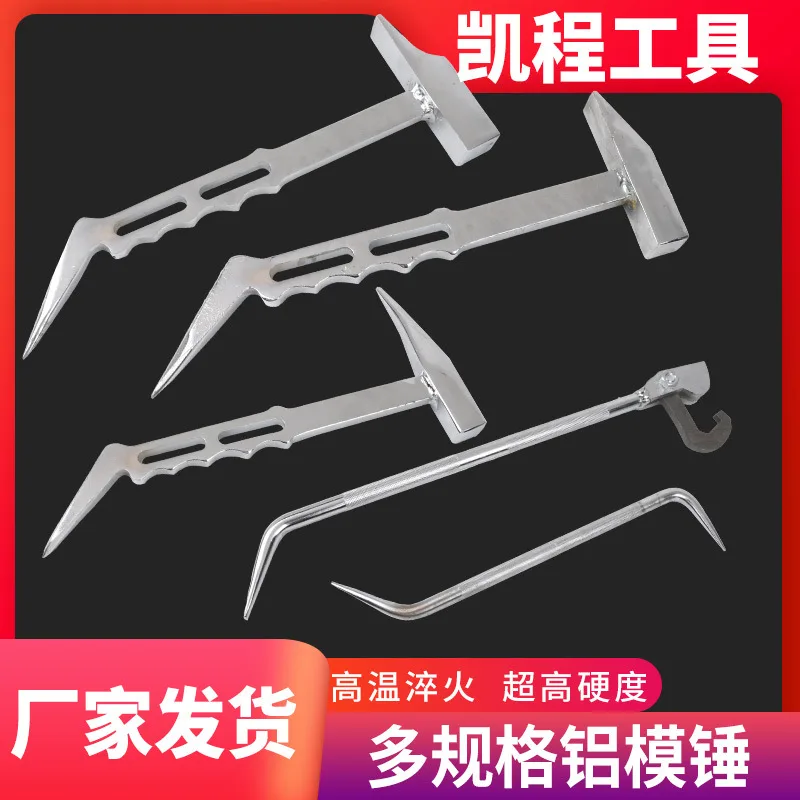
A pry bar hammer is a workshop tool rather than a site tool: an aluminium bar with a flat striking head at one end and a lever at the other, made for prising apart embossing moulds, print dies and clamping frames without marking the surface or throwing sparks. This guide covers what each of the five shapes in this range is for, why the heads are aluminium rather than steel, and how to use them so the faces stay flat.
Why these tools exist, and where they stop
- Aluminium heads. A soft head will not gouge a mould, a die or a machined face, and it will not spark, which matters around solvents, inks and finishing rooms.
- Flat striking face. The head is ground flat so a blow spreads across the mould rather than concentrating in one point that would dent the work.
- Integrated lever. The bar behind the head is the part that does the prising, so the tool never has to be used as a lever by its head.
- Light weight. These are one-hand tools: they are sized for tapping and lifting a mould, not for demolition.
- What they are not for. Aluminium heads are not for striking steel, chisels or hardened punches. The head deforms, and a deformed head strikes badly.
Five shapes, five jobs
The table below maps the tools in this range to the work they are made for. The two pry bars and the clamp are the assembly side of the trade; the three hammers are the striking side.
| Tool | Head | What it is for | Price |
|---|---|---|---|
| Embossing aluminium mould pry bar | Flat head, lever tail | Separating embossing moulds and plates, lifting a die out of its frame | $14.99 |
| Embossing mould clamp | Clamp body | Holding a mould or plate while it is worked on | $22.99 |
| Pointed aluminium mould hammer | Pointed peen | Reaching into a corner or a narrow slot to tap a plate free | $44.99 |
| Fitter’s aluminium mould hammer | Flat face, short handle | Fitting and tapping moulds home in a frame | $44.99 |
| Duckbill aluminium mould hammer | Duckbill peen | Working a mould edge or a lip where a flat face will not reach | $44.99 |
How to use an aluminium head without ruining it
The whole point of a soft head is that it takes the damage instead of the work. That only holds if the blows are square and light.
- Tap, do not hammer. These tools are used with wrist movement. A full swing burrs the head and marks the mould.
- Keep the face parallel to the work. An angled blow rolls the edge of the head over, and a rolled head is what leaves marks.
- Use the lever for lifting. Set the tail of the bar on a firm block and roll it, exactly like a claw hammer on a nail. Never lever on the head.
- Work around the edge. Free a mould progressively, a little at each point, rather than forcing one corner and bending the plate.
- Keep the work supported. A mould that is free to move absorbs the blow. Support it on timber or in the clamp, then tap.
The mould tools in this guide
Which one to buy first
If you work on embossing moulds and printing plates, the pry bar is the tool you will reach for most: it separates a mould, lifts a plate and starts a stubborn frame for under fifteen dollars. Add the clamp if you regularly need a third hand while fitting, and add one of the three hammers when you need to strike in a place a flat face cannot reach. The pointed head is for corners, the fitter’s head for driving a mould home, and the duckbill for working an edge or a lip.
Care, dressing and replacement
An aluminium head is maintained with a file, not a grinder, and the check takes a few seconds before each job.
- Dress the face flat. A few strokes of a smooth file, keeping the original angle, return the face to flat. Do not grind: heat and a coarse wheel take off more metal than the head can spare.
- Deal with a burr immediately. A raised lip on the edge of the head is what marks a mould. File it back before the next job.
- Check the handle joint. Any movement between head and shaft means the eye has opened. Re-seat it or replace the tool before it lets go mid-blow.
- Keep them away from steel hammers. A single blow from a steel hammer can crack an aluminium head. Store these tools separately from the striking tools.
- Do not use a damaged lever. If the tail of the bar has been bent, the load path changes and the handle takes loads it was not designed for. Straighten it cold, in small steps, or replace it.
- Wipe down after use. Inks, solvents and fine dust all attack the surface and change the way the head strikes.
Aluminium against the same jobs in steel
The reasonable question is why not use a steel pry bar or an engineer’s hammer and save the money. The answer is in what the tool is allowed to damage. A steel lever on a soft mould digs in, and a hardened hammer head on a die face leaves a print that comes straight through to the finished work. Aluminium gives up its own surface instead, and it does not spark in a room where solvents and paper dust are both present. The trade is that aluminium heads wear faster and do not like being hit by anything hard: if the work is steel on steel, these are the wrong tools.
Frequently Asked Questions
Can I use these on steel?
No. An aluminium head used on steel deforms at the face and can crack. If the job is striking steel, use a soft-face or copper-faced hammer, or the correct punch for the job.
How hard should I hit?
Hard enough to move the mould, no harder. These are tapping tools: the wrist supplies the force, the arm stays relaxed, and the face lands parallel. If you find yourself swinging, the part is seized and needs to be freed with penetrating oil and patience rather than force.
What is the difference between the pointed, fitter’s and duckbill heads?
The pointed head concentrates force in a small area for corners and slots, the fitter’s head spreads force across a flat face for driving a mould home, and the duckbill reaches over an edge or a lip. In practice a fitter wants the flat and the pointed heads first, and the duckbill for specific plate designs.
Why is the lever built into the bar?
Because prising with a hammer head is what breaks it. The bar behind the head is shaped to take a rolling load against a block, so the head only ever receives blows, never a bending load.
Will the head leave marks if it is worn?
Yes. A burred or dented face transfers its shape into the work, which is why the face is dressed with a file. Marks also come from striking at an angle: keep the face parallel to the surface and the finish stays clean.
Buying the right one
For a general mould room the order is the same every time: the flat-head pry bar first, the clamp second if fitting is part of the job, then the hammer shape that matches the plates you handle. All five tools here are aluminium-bodied, which is what makes them safe around dies and solvents, so the decision is about shape rather than material.