Blog
Wire Stripping Pliers Guide: Matching the Tool to the Cable

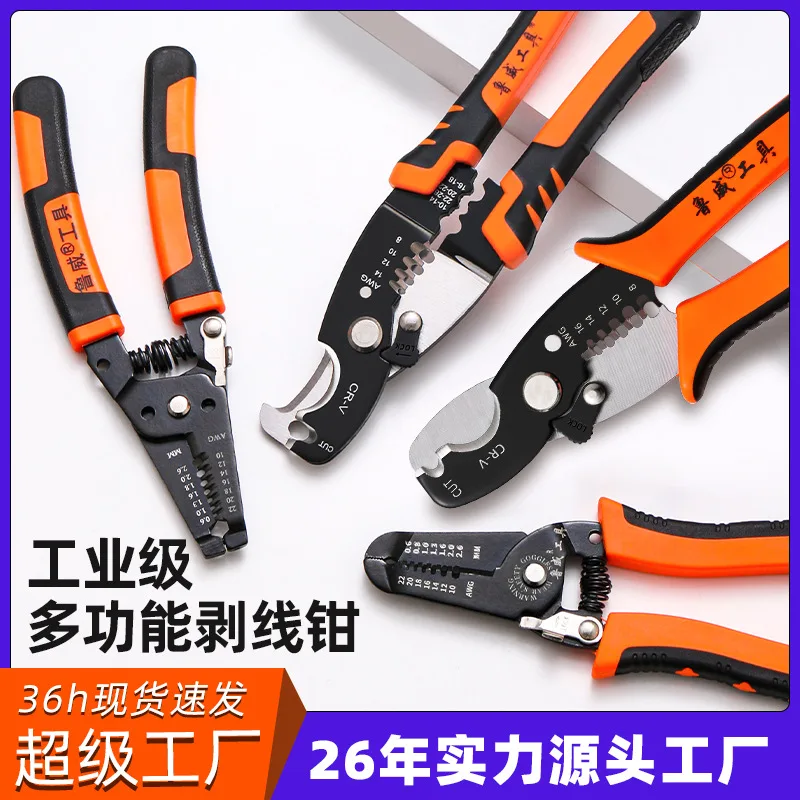
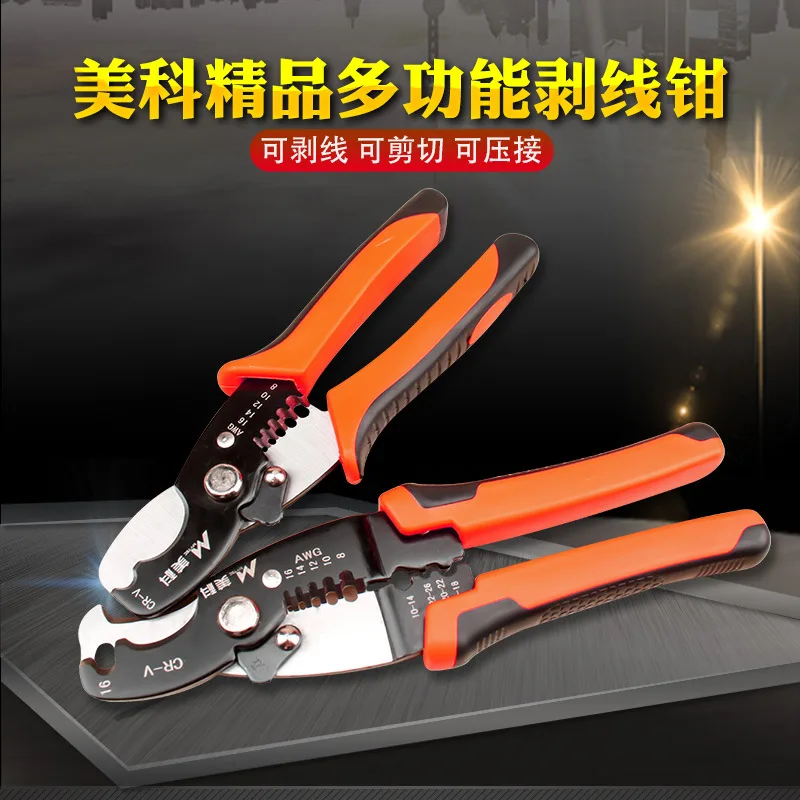
Wire stripping pliers are bought for one of two reasons: to strip a lot of the same cable quickly, or to strip a mixed bag of cable without nicking the copper. Those two jobs want different tools, and the difference is mostly in how the blades are set and how many functions are packed into the jaw. This guide separates the two, then works through the nine configurations in this range and the technique that stops a stripped core snapping off inside a terminal.
What decides a stripping tool
- Self-adjusting against fixed-blade. A self-adjusting jaw closes to the insulation and stops before it reaches the conductor, which suits mixed cable. A fixed-blade or multi-notch tool is faster on one known size.
- One function or many. A 3-in-1 strips, cuts and crimps; a 25-in-1 does the same plus bolt cropping, terminal work and screw shearing. Every added function is useful only if you actually reach for it.
- Jaw length. Longer jaws reach into a consumer unit, a back box or a machine panel where a short tool will not fit.
- Handle and return spring. Electrical work is repetitive, so a spring that returns the jaw and irons that do not dent your palm matter more than they look.
- Blade steel. The stripping notch is a cutting edge. Hardened, sharpened steel keeps its shape; soft steel deforms and starts pulling insulation instead of cutting it.
Match the tool to the cable in your hand
The table below is the practical mapping used in this range, from panel work to network pulls.
| Cable in your hand | What the tool has to do | Configuration to pick |
|---|---|---|
| 2 and 3 core flexible cord, appliance leads | Strip outer sheath and inner cores without nicking | Self-adjusting multi-function, 7 in or 8 in |
| Flat PVC twin and earth | Slit the sheath lengthwise, then strip the cores | 8 in or 9 in stripping and cutting plier |
| Network and data cable | Ring the jacket without touching the pairs, then crimp | Network stripping and crimping plier |
| Steel wire and harder conductors | Cut and strip without rolling the edge | Labour-saving steel wire stripping plier |
| Panel and terminal work | Strip, cut, bend and shear screws with one tool | 25-in-1 multi-function plier |
The strip that stops a callback
Almost every fault blamed on a terminal traces back to the strip. The copper is nicked, the strand breaks under a screw, and the joint looks fine until it warms up. Six habits prevent it.
- Strip to the gauge, not to the mark. Most tools print the length on the jaw. Use it: a strip that is too short cannot be doubled over, and one that is too long leaves copper outside the terminal.
- Rotate, do not squeeze. Close the jaw on the insulation and rotate the tool a quarter turn before pulling. Squeezing first is what cuts into the strands.
- Pull along the cable. Pulling at an angle tears the insulation and takes strands with it.
- Check every strip with your thumbnail. A nick shows as a bright ring. If you see one, cut the end off and strip again: it costs seconds, and the alternative is a joint that fails in a year.
- Do not strip with the cutters. The cutter section is for cutting. Using it as a stripping notch overheats and dulls the edge.
- Keep the jaw clean. Insulation dust and copper swarf pack into the notch and change the depth of cut. A brush at the end of the day keeps the tool honest.
The stripping pliers in this guide
Every model in this range
Nine configurations, from a compact household stripper up to a labour-saving 25-in-1 tool. Prices are per unit, and several are supplied in boxes of ten or cartons of 60 to 150 for trade use.
| Tool | Size | Functions | Where it suits | Price |
|---|---|---|---|---|
| Two-tone 7-in-1 stripping plier | 7 in | Strip, cut, crimp, bend | Household and light trade work | $9.99 |
| 8 in cable stripping plier | 8 in | Sheath slitting, stripping, cutting | Flat cable and appliance leads | $13.99 |
| 3-in-1 stripping and crimping plier | 7 in | Strip, cut, crimp | Terminal work on flexible cord | $15.99 |
| LW1903 pointed-nose wire plier | Bulk | Cut, strip, pointed nose | Panel and harness work | $20.99 |
| Multi-function electrician stripping plier, orange | 7 in | Strip, cut, crimp, bend | Site work, easy to find in a bag | $22.99 |
| 25-in-1 stripping plier, bulk | 8 in | Strip, cut, crimp, shear, crop | Panel and terminal work | $27.99 |
| Labour-saving stripping bevel plier, grey and black | 8 in | Strip, bevel, cut | Repetitive stripping in production | $29.99 |
| Labour-saving pointed-nose stripping plier | 9 in | Strip, cut, pointed nose | Reaching into boxes and panels | $29.99 |
| Labour-saving steel wire stripping plier | 9 in | Strip and cut harder wire | Steel wire and tough insulation | $29.99 |
Springs, grips and the things that break first
These tools fail in a small number of ways, and every one of them is visible before it strands a job.
- Weak return spring. The jaw stops opening by itself. Springs are the first part to go on a cheap tool; on a good one they last for years. Keep the pivot clean and the spring follows.
- Notch wear. When stripping starts pulling the insulation instead of cutting it, the notch has dulled or closed up. Most notches can be re-cut with a fine file, a stroke at a time, checking against a scrap of the same cable.
- Rounded cutter edge. Cutting with the very tip rounds the edge. Move along the cutter and use the middle of the blade for anything harder than copper.
- Loose pivot. A rocking jaw cuts off-square and nicks strands. Tighten the pivot screw to the point where the jaw moves freely but has no side play.
- Handle slip. Insulated grips lifting at the ends is a sign of solvent or heat damage. Replace the tool: grips on live-work tools are part of the insulation.
- Rust at the pivot. A drop of light oil at the pivot, and a wipe down after damp jobs, is the whole maintenance schedule.
Stripping, cutting and crimping in the right order
When one tool does three jobs it is tempting to work in whatever order the tool allows. The order that produces reliable joints is always the same: cut the cable to length with the cutter, strip the outer sheath with a light squeeze rather than a bite, then strip the cores, twist them if the terminal needs it, and crimp or terminate last. Crimping before stripping means working with a live end waving around, and stripping after crimping puts a bending load on a finished joint. On multi-core cable, strip the sheath back far enough to work comfortably, but no further: an oversize strip leaves more exposed conductor than the enclosure is designed to hold.
Frequently Asked Questions
Do I need a self-adjusting stripper?
If you strip mixed cable sizes, yes: it removes the risk of nicking a conductor because the jaw stops at the insulation. If you strip thousands of metres of one cable, a fixed-notch or bench stripper is faster and more consistent.
Can these pliers be used on live circuits?
The insulated handles on this range are for grip and comfort. Stripping, cutting and crimping are dead-circuit jobs unless the tool is specifically rated and marked for live working, so isolate first and prove dead.
What does 25-in-1 actually mean?
It counts the individual functions: stripping notches for different cable sizes, cutting, crimping positions, screw shearing and bolt cropping. The number matters less than whether the notches cover the cable sizes you use, so check those first.
How do I strip flat twin and earth?
Use the sheath-splitting function or the stripping notch in the middle of the jaw, run it along the cable to slit the outer sheath, then strip each core with the correct notch. Do not cut the earth bare: sleeve it, and leave enough length to reach the terminal comfortably.
When should I replace the tool rather than sharpen it?
When the pivot has play you cannot adjust out, when the jaws have lost their alignment, or when the grips are damaged. Honing a notch is a five minute job; a jaw that closes off-centre cannot be fixed at home.
Buying the right one
For a general electrician’s bag, the 7 in to 8 in multi-function tool is the sensible starting point: it strips flexible cord, slits flat cable and crimps small terminals, and it fits in a pocket. Step up to the 25-in-1 or a labour-saving model when stripping is a repetitive part of the day, and choose the steel wire version if the cable you handle has hard insulation or a wire core. The wire stripping pliers in this guide cover all nine configurations, so the choice comes down to the cable you strip most.