Blog
Screw and Battery Storage Boxes: Sizes and What to Keep Apart


Screws and batteries are the two things that go missing in a workshop. Both are small, both are needed at the worst moment, and both survive perfectly well in a plastic box provided the box keeps the items apart and the lid stays shut.
This range covers a moulded parts box in the 2072, 2073 and 2077 sizes with a hinged lid and a folding handle, from 11.71 dollars. This guide is about the contents rather than the box: how to keep screws sorted, how to store batteries safely, and which size suits the amount of hardware a workshop actually holds.
Keeping screws usable
Loose screws are the reason a parts box stops being useful. They settle, they mix, and finding four matching screws takes longer than the job they are for. A box does not solve that on its own; the way it is packed does.
| Storage method | Effort | Result after a year |
|---|---|---|
| All screws loose in the box | None | A mixed pile that has to be sorted by hand |
| Sorted into small bags | Low | Still separated; bags wear but work |
| Sorted into small tubs | Medium | Easy to read and refill |
| Split across two boxes by size | Medium | Fast to find, needs more room |
| Labelled compartments | High at first | The fastest arrangement to use |
The practical minimum is to separate by diameter, because that is the decision made first when picking a screw. Length and head type can be judged by eye from a pile, but diameter has to be measured, and a pile of mixed diameters means measuring every time.
What matters when storing batteries
Batteries have two storage requirements that screws do not: they must not short against each other, and they should not be stored somewhere that swings between hot and cold. Both are easy to manage inside a box.
| Battery type | Storage risk | What to do |
|---|---|---|
| AA and AAA loose together | Terminals touching, cells discharging | Keep them in the original packs or a tub |
| Button cells | Hard to identify once mixed | Keep in a labelled bag |
| 9 V blocks | Terminals are close together | Stand them apart, tape if loose |
| Tool batteries | Heat and deep discharge | Store indoors at a steady temperature |
| Old and new mixed | Weak cells drain strong ones | Keep part-used cells separate |
The most common mistake is keeping part-used and new batteries in the same space. A weak cell in a device with a fresh one will drag the pair down, and the way to avoid it is a second small container for anything that has been used. That container costs nothing and saves a surprising amount of waste.
Screw and battery storage boxes in this range
Every option in this range
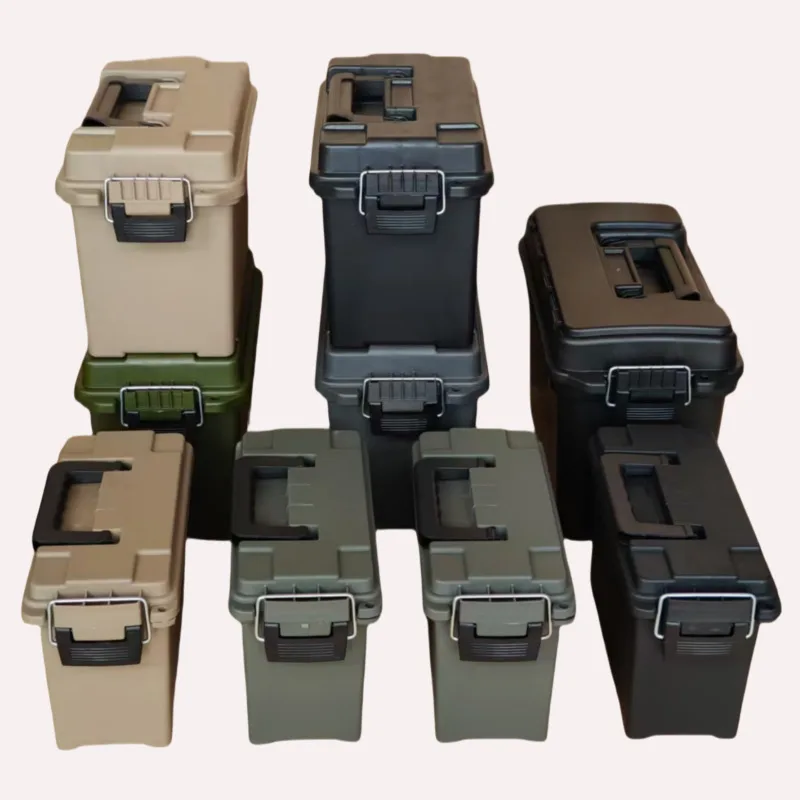
A moulded plastic parts box with a hinged lid and a folding handle, in three sizes and four colours. Prices are per box.
| Option | Detail | Price |
|---|---|---|
| 2073, tan | Mid size, folding handle | $11.71 |
| 2073, green | Mid size, folding handle | $11.71 |
| 2073, black | Mid size, folding handle | $11.71 |
| 2073, grey | Mid size, folding handle | $11.71 |
| 2077, black | Large size, folding handle | $17.93 |
For hardware the mid size is usually the better buy, because a box of screws and cells does not need much volume. The large size earns its place when several categories are stored together and each needs its own tub.
Rules that keep a parts box useful
- Sort by diameter first, since that is the decision made before any other.
- Keep used batteries in a separate container from new ones.
- Do not overload the box; a heavy box is one that gets dropped.
- Close the lid every time, because spilled screws are never fully recovered.
- Keep the box out of a cold van if it holds tool batteries.
- Refill from bulk packs when a bag runs low, rather than mixing them in.
How much hardware a workshop actually holds
The size of the box should follow the number of categories in use rather than the total weight of the fixings. Ten bags of identical screws take up less room than five bags of different types, because each type needs its own space to stay sorted.
| Workshop | Typical categories | Box that suits it |
|---|---|---|
| Household | Plugs, one or two screw sizes, cells | Small, plus a spare |
| General DIY | Wood screws, machine screws, plugs, cells | Mid size with tubs inside |
| Trade van | Fixings for the work of the day | Mid size, refilled from stock |
| Workshop stock | Full range kept in bulk | Large, or a rack of bins |
Most households sit in the second row, which is why the mid size is the box that gets recommended. It holds four or five tubs comfortably, which is enough for the fixings a house needs, without becoming heavy enough that it stops being moved.
Bulk stock is the case where a large box is the wrong answer. Fixings bought by the boxful are usually better in a rack of open bins, because refilling a small working box from a bin takes seconds while digging through a large box does not.
One more practical note: keep the box that holds consumables out of the sun. Heat does not damage screws, but it does soften the moulding over a summer and a lid that has bowed no longer seats squarely on the rim.
Frequently Asked Questions
Which size suits a home workshop?
The mid size. It holds a useful range of screws, plugs and cells without becoming heavy enough to be a nuisance.
Is it safe to store batteries in a plastic box?
Yes, as long as terminals cannot touch each other. Keeping cells in their original packs or in a tub solves the problem.
How do I stop screws rusting in a garage?
Keep the lid closed and the box off a damp floor. Plated screws tolerate a garage well; bare steel ones do not.
Can the box be carried?
Yes, the folding handle carries a full box of hardware comfortably. A box of screws is heavier than it looks, so avoid filling it to the rim.
Do the colours mean anything?
Only if they are made to. Their practical use is assigning a colour to a category, such as green for screws and grey for cells.
Choosing a box for hardware
Match the size to the number of categories rather than to the number of items. The screw and battery storage box in this range covers three sizes.
If in doubt, buy the mid size and add a second box when the first fills. Two boxes that each hold sorted hardware are more useful than one large box holding a mixture.