Blog
Stamped Spanners: Sheet Steel Types, Thickness and Sizes

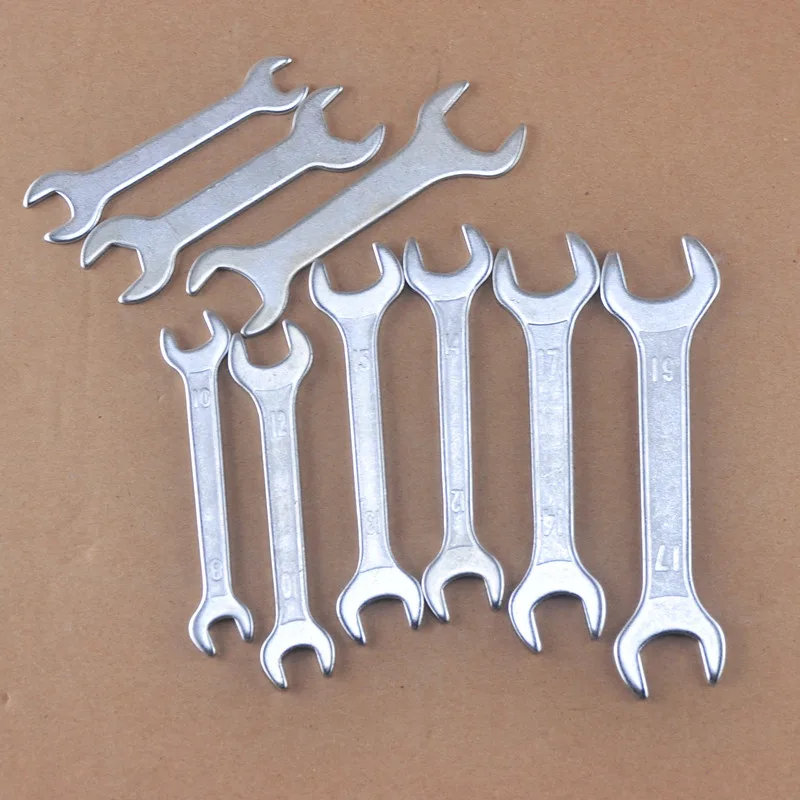
A stamped spanner is pressed from sheet steel rather than forged, which makes it thin, light and cheap. That sounds like a compromise, and for heavy work it is, but for the jobs it is designed for a thin spanner does something a forged one cannot.
This range covers stamped open-end and double-end spanners from 6 mm to 22 mm, in sheet thicknesses of 1.5 mm and 3 mm, with single sizes, double-ended types and multi-purpose versions, from 8.99 to 26.99 dollars. This guide explains what each type is for.
What stamping changes
Forging shapes steel into a thick, strong bar; stamping cuts and forms it from flat sheet. The result is lighter and thinner, with less material around the jaws, and the practical differences all follow from that.
| Property | Stamped spanner | Forged spanner |
|---|---|---|
| Thickness | 1.5 mm to 3 mm | Typically 6 mm and above |
| Weight | A fraction of a forged spanner | Substantial |
| Torque capacity | Moderate; jaws flex under load | High |
| Use in tight spaces | Excellent | Often too thick |
| Price | Low | Higher |
Jaw flex is the limitation to understand. A thin spanner will open up or round off a stubborn fastener if it is pushed hard, so it is used for adjustment, assembly and low-torque work rather than for breaking seized nuts loose.
Thickness and what the printed sizes mean
The thickness is the specification that decides what the spanner can be used for. The 1.5 mm types are for adjustment and light assembly, while the 3 mm printed types carry more load and are usually double-ended or multi-purpose.
| Type | Thickness | Typical use |
|---|---|---|
| Single size open end | 1.5 mm | Adjusting and holding a nut |
| Single size open end | 2.7 mm printed | More load, still thin |
| Double-ended printed | 3 mm | Two sizes in one tool |
| Closed end | 1.5 to 2 mm | Better grip on a worn nut |
| Multi-purpose open end | 1.5 mm | Bike and appliance work |
| Printed pattern disc | Sheet steel | Special applications |
Printed sizes on a stamped spanner are stamped or etched into the surface, which matters because the tool is thin enough that a marking cannot be relied on to stay legible if it is only painted. A stamped marking survives years of use in a tool roll.
Stamped spanners in this range
Every option in this range
Stamped sheet steel spanners in single sizes, double-ended and multi-purpose types, from 6 mm to 22 mm. Prices are per spanner.
| Option | Detail | Price |
|---|---|---|
| 7 to 10 mm | 1.5 mm thickness open end | $8.99 |
| 12 to 14 mm | 1.5 mm thickness open end | $9.99 to $10.99 |
| 8 to 14 mm | 2.7 mm printed open end | $13.99 to $16.99 |
| 17 to 22 mm | 2.7 mm printed open end | $17.99 to $22.99 |
| 10 to 17 mm | 3 mm printed double end | $18.99 to $26.99 |
| 6 to 10 mm | Closed end types | $10.99 to $16.99 |
The larger sizes cost more because they use more material and are usually made in the thicker sheet, which is what the jobs at that size need. A 22 mm fastener is rarely a light-duty one.
Using a thin spanner without damaging it
- Use the spanner that fits the nut exactly; a loose fit rounds the corners.
- Pull the spanner rather than pushing, so it cannot slip toward the hand.
- Do not add a length of pipe to increase leverage, which is how jaws open.
- Loosen seized fasteners with a forged spanner and finish with the thin one.
- Keep spanners in a roll so the thin jaws are not bent in a tool bag.
- Wipe them dry after use; sheet steel rusts through faster than a forged bar.
Where a thin spanner solves a problem
The value of a stamped spanner shows up in clearances. A forged spanner needs room around a nut for jaws several millimetres thick, and on many assemblies that room does not exist.
| Job | Why a thin spanner is needed | Size that usually fits |
|---|---|---|
| Bicycle hub and brake adjusters | Lock nuts sit against other parts | 8 to 15 mm |
| Lawn mower blade nuts | Recessed behind the deck | 13 to 17 mm |
| Appliance fixings | Thin panels leave no clearance | 8 to 12 mm |
| Piano and furniture hinges | Nut is close to the wood | 6 to 10 mm |
| Cable and conduit lock nuts | Thin lock ring against a panel | 10 to 20 mm |
Lock nuts are the classic case. Two nuts sit against each other, one to hold and one to lock, and the holding nut cannot be reached at all with a thick spanner. A 1.5 mm stamped spanner slides in without disturbing anything else.
The other advantage is weight. A full set of stamped spanners from 8 mm to 17 mm weighs less than a couple of forged spanners, which makes them practical to carry on a bicycle or in a small tool roll where every gram matters. For adjustment work away from a workshop, that is the deciding factor.
A final practical point: keep stamped spanners flat in a roll rather than loose in a bag. The jaws are the working part and a bent jaw will not sit square on a nut, which is exactly the situation where a thin spanner rounds a corner instead of turning it.
Frequently Asked Questions
Can a stamped spanner replace a forged one?
For adjustment, assembly and light maintenance, yes. For seized or high-torque fasteners, no; the jaws will deform before the fastener moves.
Why buy a thin spanner at all?
Because a forged spanner often will not fit. Lock nuts, adjusters and recessed fasteners frequently have less clearance than a standard spanner needs.
What does 2.7 mm printed mean?
It describes the sheet thickness of the spanner and, on some types, that the size is marked into the metal.
Are double-ended spanners useful?
Yes. Two sizes on one tool halves the number of spanners needed and the double-ended types in this range are made from the thicker sheet.
Will a closed-end stamped spanner grip better?
A closed end contacts more of the nut, which helps on a worn or slightly undersized fastener, though the sheet is still thin.
Where stamped spanners belong
They belong with the tools for adjustment: bicycles, garden machinery, appliances and anything with a lock nut. The stamped spanner range here covers sizes from 6 mm to 22 mm.
A small set covering 8 to 17 mm handles most of that work and takes up almost no room in a tool roll. Where heavier fasteners are involved, the same sizes are needed in forged steel.