Blog
Torque Wrench Sets: Drive Sizes, Ranges and What to Buy

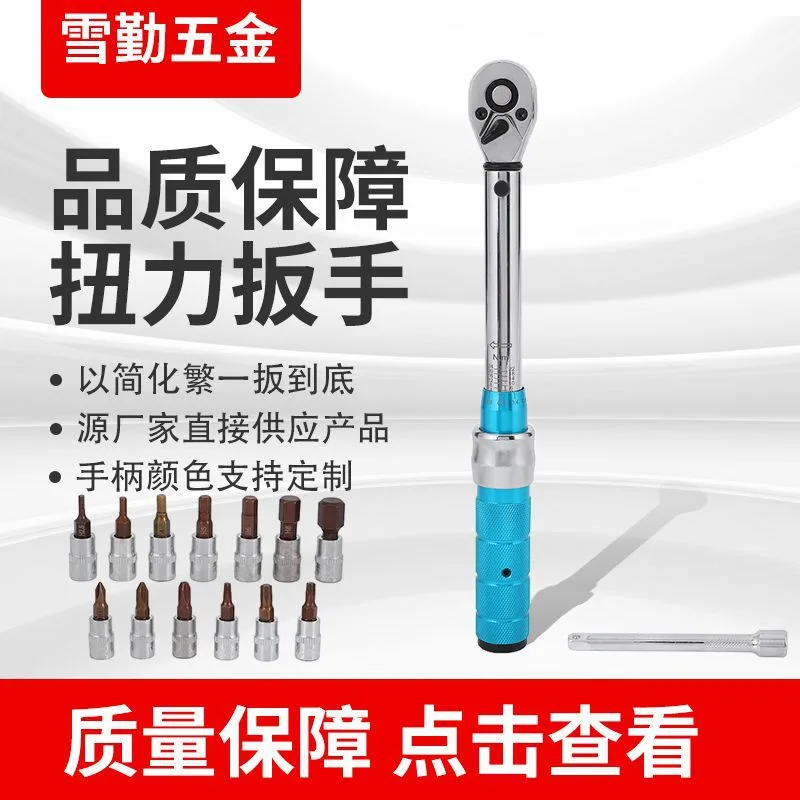
A torque wrench is the one tool in a workshop that is bought for accuracy rather than force. The range it covers and the drive it accepts matter more than the brand, because a wrench used near the ends of its scale is least accurate and a drive size that does not fit the sockets already owned makes the tool useless.
This range covers torque wrench sets with 1/4, 3/8 and 1/2 inch drives, interchangeable heads and multi-piece kits, with torque ranges from 5-25 N.m up to 20-210 N.m, priced from 34.99 to 104.99 dollars. This guide explains how to match a set to the work.
Choosing by drive size
Drive size decides which sockets the wrench will take, and it loosely follows the torque range. A small drive with a large range is awkward, and a large drive on small fasteners risks over-tightening them before the wrench clicks.
| Drive | Typical range | Where it is used |
|---|---|---|
| 1/4 in | 5-25 N.m | Bicycles, small engines, plastics |
| 3/8 in | 10-60 N.m | Motorcycles, general automotive |
| 1/2 in | 20-210 N.m | Wheel nuts, suspension, machinery |
| Interchangeable heads | Depends on the head fitted | Work needing several drive sizes |
The rule that keeps a wrench accurate is to work in the middle of its range. A 20-210 N.m wrench set to 25 N.m is at the bottom of its scale, and a 5-25 N.m wrench set to 200 N.m does not exist. Owning one wrench that covers a huge span sounds efficient and produces poor results at both ends.
Sets, single wrenches and interchangeable heads
How the tool is supplied changes how much of the range can be covered without buying several wrenches. A set with interchangeable heads is the usual answer for anyone working on more than one type of machine.
| Format | What it gives you | Best for |
|---|---|---|
| Single wrench | One range, one drive | One recurring job |
| Multi-piece set | A wrench plus heads and adaptors | General workshop use |
| Interchangeable head set | One handle, several heads | Work across drive sizes |
| Set with scale window | Easy reading of the setting | Repeatable torque values |
A scale window is a small feature with a large effect. Setting the wrench by feel is unreliable, and being able to read the value on the shaft is what makes a torque figure repeatable between one day and the next.
Torque wrench sets in this range
Every option in this range
Torque wrench sets with 1/4, 3/8 and 1/2 inch drives, interchangeable heads and multi-piece kits. Prices are per set.
| Option | Detail | Price |
|---|---|---|
| 3/8 and 1/4 in interchangeable head | Head set | $35.99 |
| 1/2 in interchangeable head | Head set | $38.99 |
| 1/4 in, 5-25 N.m, 11-piece set | 9 x 12 mm head | $55.99 |
| 3/8 in, 10-60 N.m single wrench | 9 x 12 mm head | $55.99 |
| 1/4 in, 2-24 N.m, 11-piece set | Red handle | $59.99 |
| 1/2 in, 20-210 N.m single wrench | 14 x 18 mm head | $64.99 |
| 1/2 in, 20-210 N.m set | 14 x 18 mm head, scale window | $104.99 |
The spread of prices reflects how much is in each box more than the quality of the wrench. A head set costs less because it is an accessory to a handle the buyer already owns, while the largest kits include heads, adaptors and a case.
Looking after a torque wrench
- Wind the setting back to its lowest value before storing, so the spring is not left loaded.
- Do not use a torque wrench as a breaker bar or to loosen seized fasteners.
- Store the wrench in its case, since a knock can affect the calibration.
- Apply force smoothly to the handle rather than jerking it to reach the click.
- Have the wrench checked if it is dropped or used daily on critical fasteners.
- Keep the mechanism dry; moisture in the head is what causes a wrench to stick.
Where torque figures actually matter
Torque settings are not required on every fastener. Knowing which ones need a figure and which can be tightened by feel saves time and avoids the two failures that come from guessing: a fastener that works loose and one that is stretched or stripped.
| Fastener | Torque needed? | Why |
|---|---|---|
| Wheel nuts | Yes | Even loading stops wheels working loose |
| Cylinder head bolts | Yes, in sequence | Uneven torque distorts the head |
| Spark plugs | Yes | Crushed washers and stripped threads otherwise |
| Bicycle stem and seat clamps | Yes | Carbon and alloy parts crack easily |
| Engine covers and panels | Usually not | Feeling is enough on small bolts |
| Hydraulic fittings | Yes | Leaks follow both under and over tightening |
The pattern is that torque values matter wherever a joint is loaded, sealed or made of a material that cracks. They matter far less on covers and brackets, which is why a single wrench in the right range is usually enough for a workshop.
Sequence matters as much as the figure on the head bolts. Tightening in a spiral from the centre outward spreads the load evenly, and doing it in two or three stages rather than one is what stops a gasket being crushed at one end and left loose at the other.
One further note: check the wrench against a known fastener occasionally, or send it for calibration if it is used on critical joints, because a wrench that has been dropped can click at the wrong figure without looking any different.
Frequently Asked Questions
Which torque range should I buy first?
The range that covers most of the fasteners being worked on, usually 10-60 N.m for motorcycles and general work, or 20-210 N.m for cars and machinery.
What do 9 x 12 mm and 14 x 18 mm heads mean?
They describe the interchangeable head fitting. The larger fitting goes with the higher torque ranges, since it has to transmit more force.
Do I need a calibrated wrench?
For engine and safety-critical fasteners, yes. For general work, a wrench in good condition set in the middle of its range is accurate enough.
Can a torque wrench be repaired?
The mechanism can be serviced and recalibrated, and it is worth doing rather than replacing the tool. A wrench that clicks early or late should be checked.
Should the wrench be stored set to zero?
Store it at the lowest setting on the scale, which takes the load off the internal spring and keeps the calibration stable.
Matching a set to the work
Start from the fasteners: measure the drive size needed and the torque figures involved. The torque wrench set range here covers the common drive sizes and ranges.
Where two ranges are needed, an interchangeable head set is cheaper than two wrenches and takes up less room in a toolbox. Where only one job is done repeatedly, a single wrench in the right range is the better purchase.