Blog
Star Screwdrivers: Matching the Tip Size to the Screw Head

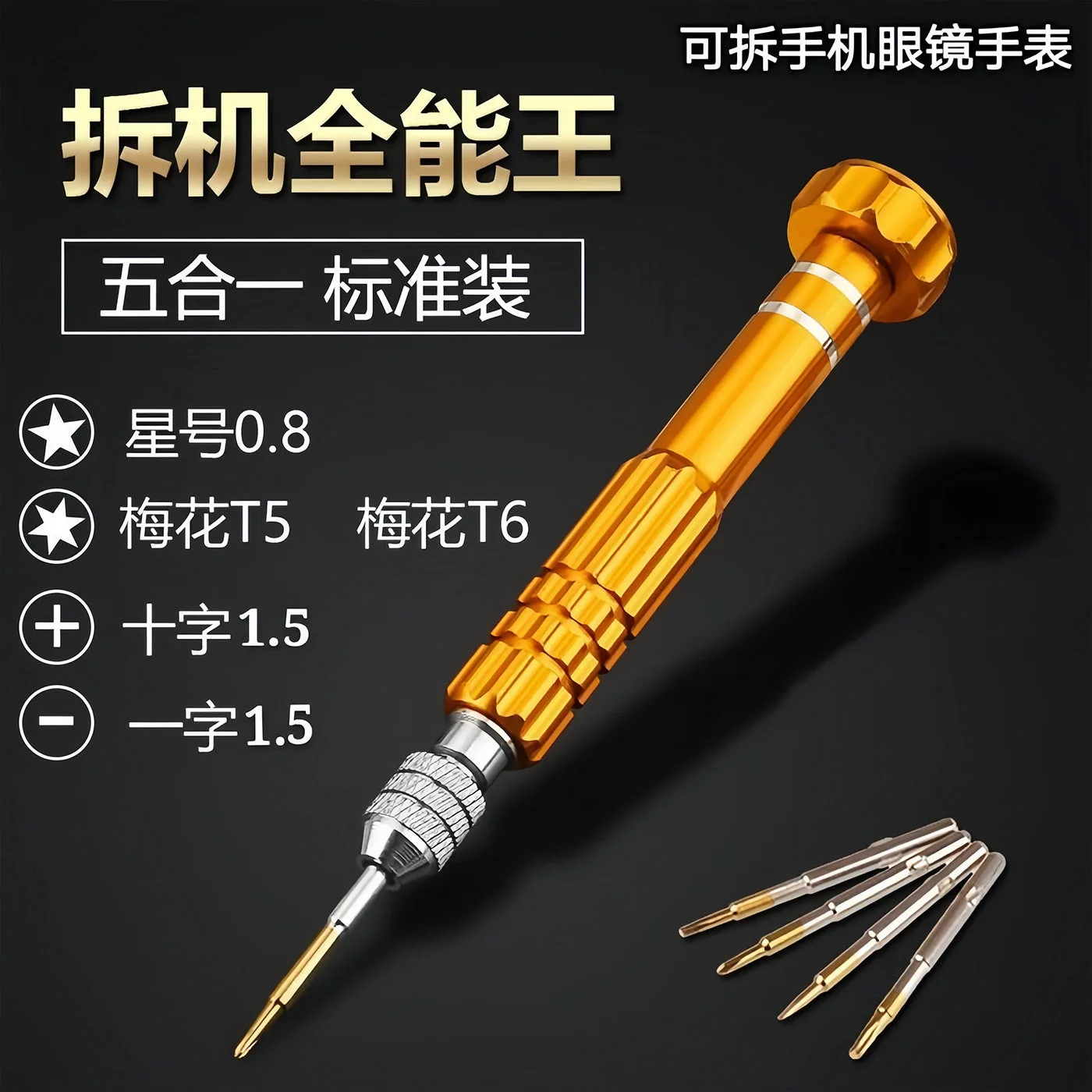
Star drivers exist because a cross-head screw will let a driver climb out of the recess as the torque rises, and the star recess will not. The six-pointed profile engages the screw across a much larger area, so a star driver can transmit more turning force before anything slips, and the screw head is less likely to be chewed up in the process. That single property is why the profile has spread from automotive work into appliances, electronics and anything assembled by machine.
Why the star profile holds
A cross-head driver contacts the screw on a few narrow faces and relies on the driver being pressed in hard enough to stay put. A star driver contacts the screw along the flanks of six lobes, and those faces are close to perpendicular to the direction of rotation. The result is less cam-out, less pressure needed, and far less chance of rounding the recess when a screw is tight.
| Property | Cross-head driver | Star driver |
|---|---|---|
| Contact faces | A few narrow ramps | Six broad flanks |
| Cam-out as torque rises | Common | Rare |
| Downward pressure needed | High | Low |
| Screw head wear | Rounds off easily | Wears slowly |
The trade-off is that the profile must match exactly. A driver that is one size small will feel like it fits and will still round the recess, because the lobes engage in the wrong place. Star sizes are numbered, and the number on the screw head or in the manual is the one to use.
Sizes and what the numbers mean
The figures in a star range run from the tiny T5 and T6 used in electronics through T10 and T15 in appliances and trim, to T25, T30 and T40 on automotive and machinery fastenings. The number measures the tip across the lobes, not the length of the tool. A T20 driver and a T20 bit are the same tip; only the handle and the reach differ.
| Size | Typical use | Notes |
|---|---|---|
| T5 to T8 | Electronics, laptops, small appliances | Tiny tips that bend if used for leverage |
| T10 to T15 | Appliances, trim panels, fittings | The most common sizes in household repair |
| T20 to T25 | Automotive interior, brackets, machine covers | Where a bit driver is usually preferred |
| T27 to T40 | Automotive and machinery fastenings | Needs a handle that can take real torque |
Some fastenings use a tamper-resistant version with a pin in the centre of the recess. Those need a driver with a matching hole in the tip, and a standard star driver will not engage at all. Where this comes up regularly, buying the tamper-resistant pattern is the only way to get the job done.
Handle, shaft and reach
A star driver used on a tight fastening has to take torque, and the weak point is the grip between hand and handle rather than the tip. A handle with a broad, textured body and a hex bolster near the shaft allows a spanner to be used on really stubborn screws, which is the difference between removing a fastening and drilling it out. Shaft length is the other decision: a long shaft reaches a recessed screw but flexes slightly and cannot take as much torque as a short stubby tool of the same tip size.
Where the work involves many sizes, a bit driver with a set of star bits is more efficient than a drawer of individual screwdrivers, because the handle is the expensive part and the bits are cheap to replace when a tip rounds off.
Steel quality shows up in the tip rather than the handle. A driver made from a decent chrome vanadium or S2 steel holds its lobes sharp through hundreds of screws, while a soft tip deforms on the first tight fastening and then damages every screw it meets afterwards. Since the tip is the part that does the work, it is the part worth checking before anything else about the tool.
The star screwdrivers in this range
Every option in this range
This model is a single-option listing covering the star sizes used most often in assembly and repair work. The price is per driver.
| Option | Type | Pattern | Best for | Price |
|---|---|---|---|---|
| Star screwdriver | Single driver | Star tip, workshop handle | Appliance, trim and general assembly screws | $8.99 |
Buying a single driver makes sense where one size dominates your work. Where the fastenings vary, a set of sizes costs less than buying the drivers one at a time and removes the risk of using the nearest size instead of the correct one.
Removing a star screw without damage
- Match the tip size to the marking on the screw. A near fit is what rounds a recess.
- Press down firmly and turn steadily. Jerking the handle is what chips the tip and marks the head.
- Make sure the driver is in line with the screw. An angled approach loads the lobes unevenly.
- On a tight screw, use a handle with a hex bolster and a spanner rather than more hand force.
- Replace a rounded tip. A worn star tip will damage every screw it touches.
- Keep the tip clean. Paint and thread-locking compound in the recess reduce engagement.
Frequently Asked Questions
Is a star screwdriver the same as a Torx driver?
Yes in normal trade use. Torx is the original profile name and star is the common description; both refer to the same six-lobed recess.
What happens if I use a slightly wrong size?
It will feel like it fits and it will still damage the screw. The lobes sit in the wrong place, so the load lands on the tips of the recess rather than on its flanks.
Can a star driver be used on a cross-head screw?
No, the profiles are not compatible. Forcing one into the other damages both the screw head and the driver.
What is a tamper-resistant star screw?
One with a small pin in the centre of the recess. It needs a driver with a matching hole in the tip; a standard star driver will not engage it.
Should I buy individual drivers or a bit set?
Individual drivers for one or two sizes used every day, and a bit set where several sizes come up. The bits are the parts that wear, and they are cheap to replace.
Choosing the right star driver
Find the sizes your equipment actually uses, then decide between individual drivers and a bit set based on how often the work comes up. Whichever you choose, match the tip exactly — a star driver only pays for itself when it fits properly. The star screwdriver model covers the everyday sizes for appliance, trim and general assembly work.