Blog
Crimping Pliers Sizes: 165 mm to 200 mm and What Each Closes

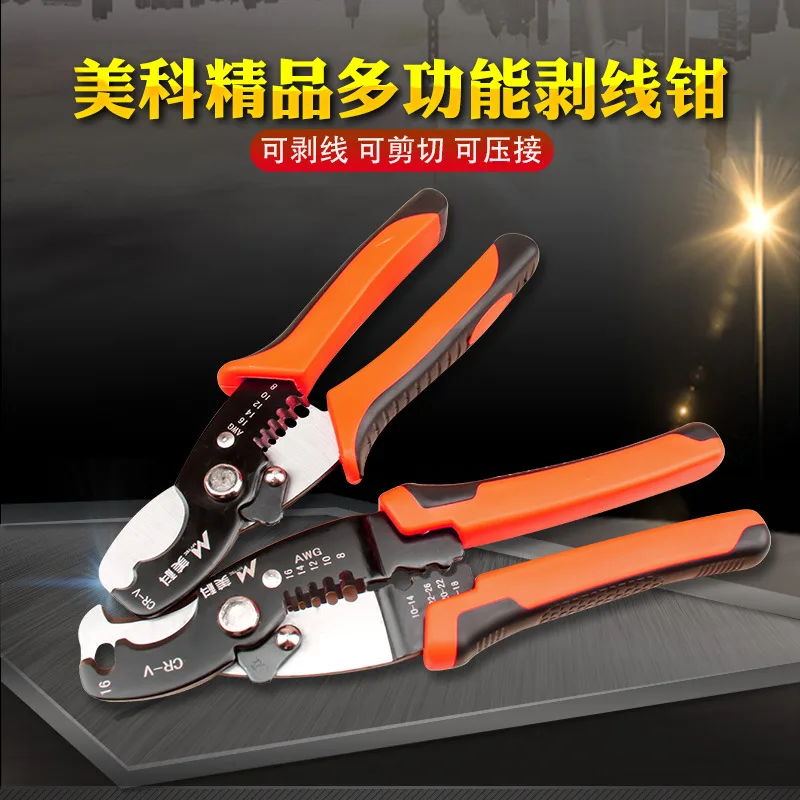
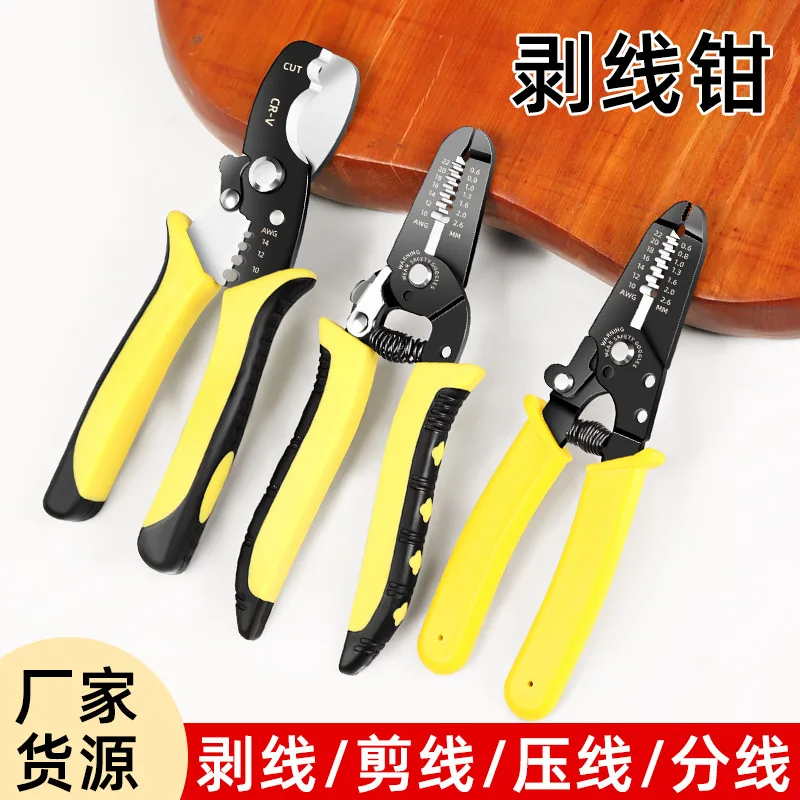
Crimping pliers are listed by overall length, usually between 165 mm and 200 mm, and that figure is a reasonable guide to what the tool can close. But length is only part of the story: the jaw opening decides the largest terminal that will fit between the profiles, and the pattern — straight or angled — decides whether the tool can reach the terminal where it actually sits. Buying by length alone is how people end up with a crimper that cannot close on the terminals they use most.
What the length figure tells you
A longer crimper gives more leverage, which matters because a completed crimp on an insulated terminal takes real force. Length also gives room for a ratchet or a compound linkage in the better tools, which is what makes a full closure repeatable. The short end of the range is for light terminals and confined work; the long end is for larger terminals and for hands that are doing this all day.
| Length | Force available | Access | Suits |
|---|---|---|---|
| 165 mm | Light | Easiest in tight spaces | Small terminals and occasional work |
| 175 mm | Moderate | Good all-round access | General insulated terminals |
| 180 mm | Moderate to good | Good | Mixed terminal sizes |
| 185 mm | Good | Needs a little room | Larger terminals and regular use |
| 200 mm | High | Least compact | Heavy terminals and trade work |
Where the terminal sizes are small and the spaces are tight, a short crimper finished properly beats a long one that cannot be positioned squarely on the barrel. Where the work is larger terminals in open wiring, the extra length is what allows a complete closure without straining.
Jaw opening and the terminal size range
The second specification that matters is the barrel range each jaw position is built for. Insulated terminals come in standard colour-coded sizes, and each colour corresponds to a conductor range that the crimp has to form correctly. A tool that closes on the sleeve instead of the barrel produces a joint that looks acceptable and fails a pull test, and that usually happens because the terminal sits at the edge of the jaw range.
| Terminal class | Typical use | What the jaw must do |
|---|---|---|
| Small insulated terminals | Control and signal wiring | Form the barrel without touching the sleeve |
| Standard insulated terminals | General automotive and equipment wiring | Form barrel and close the sleeve |
| Larger insulated terminals | Battery and heavy current cables | Form a long barrel evenly across its length |
| Bare and ignition terminals | Non-insulated connections | Two-stage bite on bare metal only |
Checking the printed range against the terminals in the drawer is a five-minute job that prevents most crimping faults. Where a range is not stated, test on one terminal and pull it before committing to a batch.
Straight or angled jaws
An angled — often called elbow — pattern turns the jaw line away from the handle axis. That matters when the terminal is inside a housing, against a bulkhead or on a connector body where a straight tool would put the handles through something. The cost is a slightly less direct transfer of hand force, which is not significant on insulated terminals but is worth remembering on the largest sizes.
For most wiring work a straight tool is the default. The angled pattern earns its place in vehicle and machinery work, where connectors are frequently recessed and access is the limiting factor rather than force.
The crimping pliers in this range
Every option in this range
Eight options from 165 mm through to 200 mm, including an angled pattern for recessed terminals. Prices are per tool.
| Option | Length | Pattern | Best for | Price |
|---|---|---|---|---|
| Compact crimper | 165 mm | Straight, small jaws | Small terminals in tight spaces | $8.99 |
| Standard crimper | 180 mm | Straight | General insulated terminal work | $13.08 |
| Standard crimper | 175 mm | Straight | Everyday wiring and repair | $15.20 |
| Standard crimper, second pattern | 175 mm | Straight | The same work with a different jaw form | $15.20 |
| Large crimper | 185 mm | Straight | Larger terminals and regular use | $22.07 |
| Large crimper | 200 mm | Straight | Heavy terminals and trade work | $23.70 |
| Long crimper | 8 in | Straight, reinforced | Repeated crimping of standard terminals | $25.34 |
| Angled crimper | 9 in | Elbow jaws | Recessed and bulkhead terminals | $26.97 |
The middle of the range covers most wiring work, and the compact tool covers the small terminals that a full-size crimper cannot close neatly. The angled pattern is the one to add when access, rather than terminal size, is what stops the job.
Getting consistent crimps
- Match the jaw position to the terminal colour and barrel size before closing.
- Insert the terminal so the barrel sits in the forming position, not the sleeve.
- Close the tool fully every time; a partial closure is what fails a pull test.
- Do not use a crimper to cut wire. The profiles deform and the joints stop being consistent.
- Check the first joint of a batch by pulling on it before running the rest.
- Keep the jaws free of swarf and clean the profiles occasionally with a dry brush.
Frequently Asked Questions
What size crimping pliers do I need?
Match the length to the terminals rather than to the job title. A 175 mm to 185 mm tool covers most insulated terminal work; go shorter for small terminals in tight spaces and longer for heavy terminals.
Are longer crimping pliers better?
They give more leverage and are easier to close fully on large terminals, but they are harder to position in a recess. The best tool is the one that closes completely where the terminal sits.
What is the angled crimper for?
Working on terminals inside housings, against bulkheads or on connector bodies where a straight tool puts the handles in the way. It is a common pattern in automotive work.
Can one crimper handle every terminal size?
No. Every jaw has a barrel range, and terminals outside it will be under-formed or crushed. Most workshops keep a compact tool and a standard tool rather than one compromise.
Why do my crimps pull apart?
Usually a partial closure, the wrong jaw position, or the terminal sitting at the edge of the jaw range. Check all three before replacing the tool.
Choosing the right size
Start with the terminals you use most, find the length that closes on them completely, then add the compact or angled pattern if access is the thing that slows the job down. The crimping pliers range runs from a 165 mm compact tool to a 200 mm trade crimper, with an angled pattern for recessed terminals, which covers both the size and the access side of the decision.