Blog
Steel Number Stamps: 0-8 Sets from 3 mm to 12.5 mm

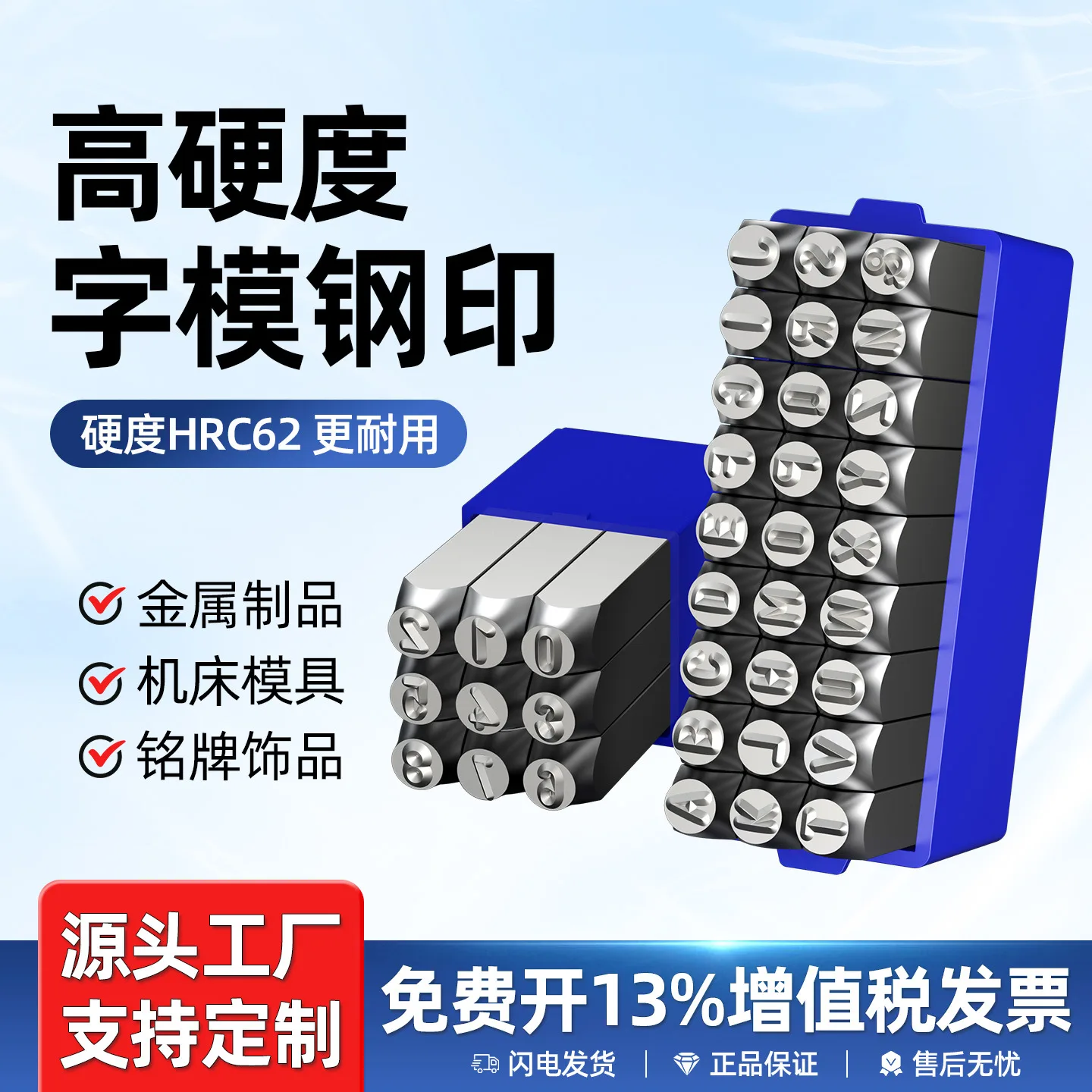
A number stamp set is how a part gets a serial number, a date code or a size marking that cannot be rubbed off. Sets are supplied from 0 to 8, which is nine characters and not ten, and that is worth understanding before ordering: the 6 doubles as a 9 when it is turned through 180 degrees, so nine characters do the work of ten. Choosing a set comes down to character height, the alloy the stamps are ground from, and how the marks will be used once the part leaves the bench.
What the choices actually mean
- Character height. Drives force, depth and reading distance. Three millimetres for small components, 12.5 mm for heavy fabrication.
- Alloy against standard steel. Alloy stamps hold their edge longer where the same characters are struck thousands of times. Standard stamps are the sensible buy for occasional marking.
- Nine characters rather than ten. A 6 turned end for end is a 9. Every 0-8 set works this way, and it saves carrying a tenth stamp.
- Shank shape. A square or hexagonal shank sits in a holder without rotating. A round shank needs more care to keep the character upright.
- Depth of the character. Deeper engravings mark deeper, which survives finishing but risks distorting thin parts.
- Set against singles. A full set is cheaper than buying characters one at a time, and the characters used in a serial number vary from part to part.
Character height against the job
| Character | Typical use | Reading distance | Watch out for |
|---|---|---|---|
| 3 mm | Small components, tooling, tags | Close inspection | Lost under heavy paint |
| 5 mm | Everyday workshop numbering | Arm’s length | Space needed between characters |
| 8 mm | Fabrications and larger parts | A few metres | Needs a firm blow and a backing |
| 10 mm | Heavy plate and structural work | Across a shop | Distorts thin sections |
| 12.5 mm | Large identification marks | Across a yard | Heavy hammer and solid support |
Depth follows the character size. A mark made with a 12.5 mm stamp is deep enough to survive grit blasting and a paint system. A 3 mm mark will survive paint but not a heavy grind, so the planning question is where the mark has to still be legible at the end of the process, not at the moment of stamping.
The steel stamps in this guide
Every option in this range
Sixteen sets of letter and number stamps in alloy and standard steel. Prices are per set.
| Option | Characters | Material | Supplied as | Price |
|---|---|---|---|---|
| Large number set | 12.5 mm, 0 to 8 | Alloy steel | Nine stamps | $26.97 |
| Large number set | 8 mm, 0 to 8 | Alloy steel | Nine stamps | $26.97 |
| Number set | 5 mm, 0 to 8 | Alloy steel | Nine stamps | $24.45 |
| Small number set | 3 mm, 0 to 8 | Alloy steel | Nine stamps | $21.94 |
| Number set | 10 mm, 0 to 8 | Standard steel | Nine stamps | $26.97 |
| Number set | 8 mm, 0 to 8 | Standard steel | Nine stamps | $17.98 |
| Number set | 5 mm, 0 to 8 | Standard steel | Nine stamps | $10.43 |
| Small number set | 3 mm, 0 to 8 | Standard steel | Nine stamps | $8.99 |
| Large letter set | 12.5 mm, A to Z | Alloy steel | Twenty-six stamps and ampersand | $26.97 |
| Large letter set | 8 mm, A to Z | Alloy steel | Twenty-six stamps and ampersand | $26.97 |
| Letter set | 5 mm, A to Z | Alloy steel | Twenty-six stamps and ampersand | $26.97 |
| Letter set | 4 mm, A to Z | Alloy steel | Twenty-six stamps and ampersand | $26.97 |
| Large letter set | 12.5 mm, A to Z | Standard steel | Twenty-six stamps and ampersand | $26.97 |
| Letter set | 8 mm, A to Z | Standard steel | Twenty-six stamps and ampersand | $26.97 |
| Letter set | 5 mm, A to Z | Standard steel | Twenty-six stamps and ampersand | $26.97 |
| Small letter set | 3 mm, A to Z | Standard steel | Twenty-six stamps and ampersand | $26.97 |
The number sets are the cheaper purchase, and the gap widens as the character gets smaller: a 3 mm standard number set costs a fraction of a 3 mm letter set because there are nine characters to grind rather than twenty-six. Where both letters and numbers are needed, buying the pair in the same material and the same character height keeps the marks consistent on the finished part.
Numbering a part so the mark lasts
- Plan the whole number before striking. Work out the character count and the spacing first. A serial stamped into the middle of a plate with nowhere for the last digit has to be cut out.
- Use a holder or a taped baseline. Both do the same job: they stop the character rotating and keep every digit at the same height.
- Rotate the 6 for a 9. Check the orientation carefully. A 6 struck upside down reads as a 9, and a serial number with two possible readings is useless.
- Stamp into a flat, supported surface. A curved or unsupported surface absorbs the blow and leaves a shallow digit that fades with handling.
- Keep the spacing even. Count the characters and divide the available length before the first strike rather than after it.
- Check the first part against the drawing. One stamped part verified at the bench is cheaper than a batch discovered wrong at dispatch.
Alloy steel against standard steel
Alloy stamps are hardened to take repeated blows without deforming at the character face. In a shop where the same digits are struck into hundreds of parts a week, the character faces are what wear, and an alloy set keeps a crisp edge far longer than a standard one. The difference shows up as a soft, rounded digit that prints a blob rather than a number.
Standard steel stamps are perfectly adequate for occasional marking: a few dozen marks a month, one-off identification, tool marking in a home workshop. They cost less and they do the same job until the volume rises. The decision is about how many strikes the set will take, not about the quality of the mark when both are new.
Whichever is chosen, the struck end of the stamp is the part that fails first. Over time the head mushrooms, the stamp stops sitting square in the holder, and the character starts to tilt. Grinding the head flat and chamfering the edge restores it, and doing that before the head splits is what keeps a set in service.
Care of a number set
- Keep the set in order. A tray with a slot per character prevents the search that ends with a digit being forced into the wrong place.
- Wipe the character faces. Grit transferred from the part to the face is driven into the next mark.
- Oil the shanks lightly. Rust on the body of the stamp is what makes it jam in a holder.
- Do not use a stamp as a punch. Driving a character into a hole or a drift deforms the face and it never marks cleanly again.
- Replace worn characters singly. The 1, the 0 and the 6 wear fastest, and a single character replacement costs less than a set.
Frequently Asked Questions
Why does a number stamp set stop at 8?
Because the 6 turned through half a turn is a 9. Nine characters cover the ten digits, which is why every 0-8 set is supplied that way.
Are alloy steel number stamps worth the extra cost?
Where the same characters are struck repeatedly, yes. Alloy faces hold their edge far longer. For occasional marking, standard steel is enough.
How deep should a stamped number be?
Around a quarter to a third of the character height on general work, deeper where the part will be ground or blasted afterwards.
Can I stamp numbers into stainless steel?
Yes, but strike firmly the first time. Stainless work-hardens under a light blow and then resists the second one.
What is the best character size for a serial number?
Five millimetres for general parts, larger where the number has to be read from a distance or survive a heavy coating.
Buying the right one
Match the character height to the part and the reading distance, and choose the material by how many marks the set will make. The steel number stamps in this range cover 3 mm to 12.5 mm in alloy and standard steel.