Blog
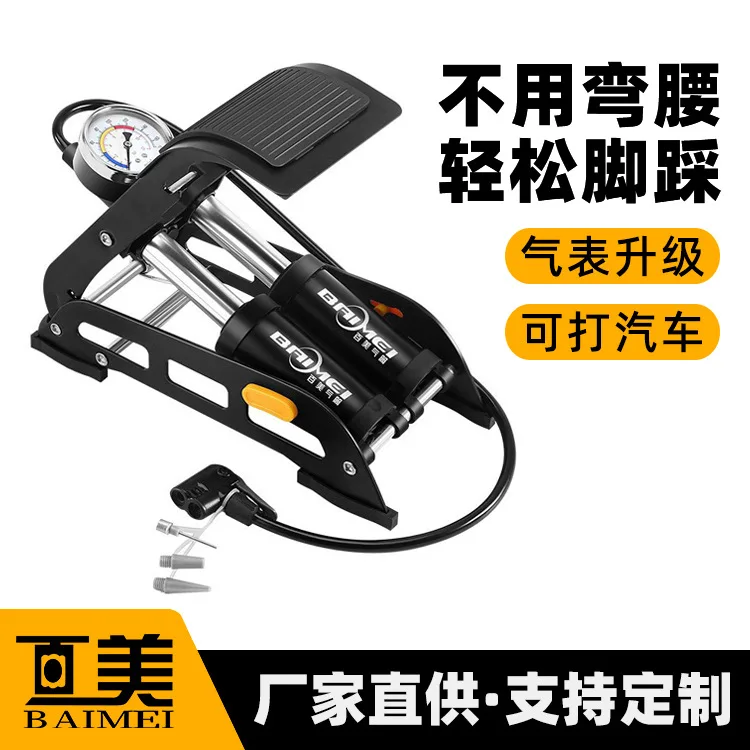
Twin Cylinder Foot Pumps: Twice the Air, Half the Effort


The difference between a single and a twin cylinder foot pump is not a small improvement in performance. Two pistons working side by side roughly double the air moved with each press of the foot, which halves the number of strokes for the same tyre and considerably reduces how hard the work feels.
That sounds like a straightforward upgrade, and for a car or a van it is. For a road bicycle it is wasted, because the limiting factor there is pressure rather than volume. This guide explains where the twin cylinder design earns its price.
What the second cylinder changes
Both cylinders feed the same hose through a shared outlet, so the pump delivers two barrel volumes for each stroke of the plate. The effect on the pressure figure is small; the effect on the time and effort needed to fill a large tyre is substantial, because the pump is doing twice as much work per movement.
| Measure | Single cylinder | Twin cylinder |
|---|---|---|
| Air per stroke | One barrel | About twice as much |
| Strokes to fill a car tyre | Long run of presses | Roughly half as many |
| Effort per stroke | Higher, because one piston does all the work | Spread across two pistons, so it feels easier |
| Bulk and weight | Smaller and lighter | Larger, with a wider foot plate |
| Best suited to | Bicycles, motorcycles, topping up | Car, van, trailer and larger tyres |
The trade is straightforward: the twin costs more and takes up more room in the boot, and in exchange it turns a chore into a short job. Where a tyre is only ever topped up by a few psi, that benefit is small; where tyres are inflated from flat, or several vehicles are looked after, it is the difference between a task that gets done and one that gets postponed.
Pressure is still the limit, not volume
A twin cylinder pump does not reach a higher pressure than a single cylinder of the same design. Pressure depends on how hard the plate can be pressed and how well the seals hold, not on how many barrels are feeding the hose. What changes is how quickly the pressure builds.
| Job | Where the limit lies | Twin cylinder helps? |
|---|---|---|
| Road bicycle at 100 psi | Pressure | Only slightly; the volume is not the problem |
| Car tyre from flat | Volume | Yes, substantially |
| Van or 4×4 tyre | Volume | Yes; the larger the tyre the bigger the gain |
| Top-up of a few psi | Neither | Barely; either pump finishes quickly |
| Air bed or large inflatable | Volume | Yes, and it is far quicker than by mouth |
This is why a bicycle shop uses a narrow, tall barrel and a garage uses a wide one. Both are solving the same problem in the way that suits their tyre, and a twin cylinder foot pump is the garage’s answer in a portable form.
Twin cylinder foot pumps in this range
Every option in this range
Twin cylinder foot pumps with a gauge, in black and yellow finishes and with the choice of an integrated or separate gauge. Prices are per pump.
| Configuration | Suits | Price |
|---|---|---|
| Standard, with gauge | Occasional use and topping up | $8.99 |
| Twin cylinder, integrated gauge, black | Regular use on a car or trailer | $21.31 |
| Twin cylinder, integrated gauge, yellow | The same build in a high-visibility finish | $21.31 |
| Twin cylinder, separate steel dial gauge | Frequent use where an accurate dial matters | $21.98 |
The step from the standard version to any twin cylinder is where the money goes, and the further step to the steel dial gauge version is small. Where a pump is used often, the separate dial is worth having because it is the part of the pump that suffers most from knocks and is the easiest to replace when it does.
Getting the best from a twin cylinder pump
- Stand with both feet on the plate and press evenly, rather than stamping with one foot.
- Work at a steady rhythm; the pump holds more pressure per stroke and rhythm beats force.
- Seat the connector fully before starting so none of the extra volume is wasted.
- Watch the gauge between strokes rather than during them, when the reading is unsettled.
- Let the barrels cool during a long job; two cylinders working hard will warm up.
- Store with the plate released, so the return springs are not left under load.
Weight, storage and the boot of a car
The extra barrel and foot plate make a twin cylinder pump noticeably heavier and bulkier than the single cylinder equivalent, and that matters more than it sounds if the pump is carried in a small car. It is worth checking where the pump will actually live: a pump that fits neatly under a seat gets used, and one that has to be wedged behind a spare wheel tends not to.
For a workshop or a van, the size is immaterial and the speed of the pump is the only thing that counts. For a small car used mainly for commuting, where the pump is a safety item rather than a working tool, a lighter single cylinder pump may be the better compromise, because topping up four tyres twice a year is not a heavy duty for either design.
The hose and connector matter as much as the cylinder count
Extra volume is wasted if the air cannot leave the pump quickly. A narrow or kinked hose restricts the flow, which is why a twin cylinder pump with a short, wide hose feels considerably faster than the same barrels feeding a long thin tube. When a twin cylinder pump seems to deliver less than expected, the hose and the connector are the first things to check, long before any thought of the barrel or the seals.
The connector is the second restriction. A worn rubber seal lets air escape at the exact point where the pressure is highest, so the pump appears to struggle while the gauge creeps up slowly. Replacing a seal costs almost nothing and restores the flow immediately. Keeping a spare in the bag with the pump removes the temptation to press harder on a connector that is already leaking.
Frequently Asked Questions
Is a twin cylinder pump twice as fast?
Roughly, on a large tyre. It moves about twice the air per stroke, so the time is close to halved.
Does a twin cylinder pump give a higher pressure?
No. Pressure depends on the seal and the effort applied. The second cylinder adds volume, which means the pressure is reached sooner.
Is a twin cylinder pump worth it for a bicycle?
Not really. Bicycle tyres need pressure rather than volume, and a narrow-barrel pump does that job better and more cheaply.
Which gauge should I choose?
A separate steel dial reads more precisely and is easier to replace if it gets knocked. An integrated gauge is neater and protected by the barrel.
How should a twin cylinder pump be stored?
Flat, with the foot plate released and the hose coiled loosely, so neither the springs nor the hose are left under load.
Choosing the right one
Buy the twin cylinder if the tyres are large or the pump is used often. The twin cylinder foot pump range covers black and yellow builds with integrated or separate gauges.