Blog
Utility Knife Blade Change Guide: Steps, Safety and Storage

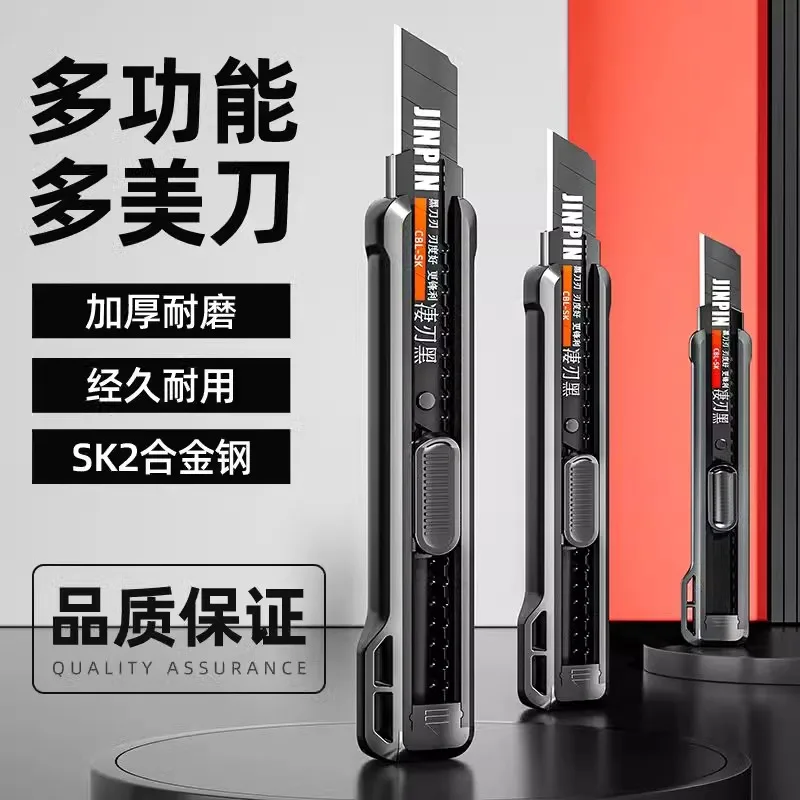
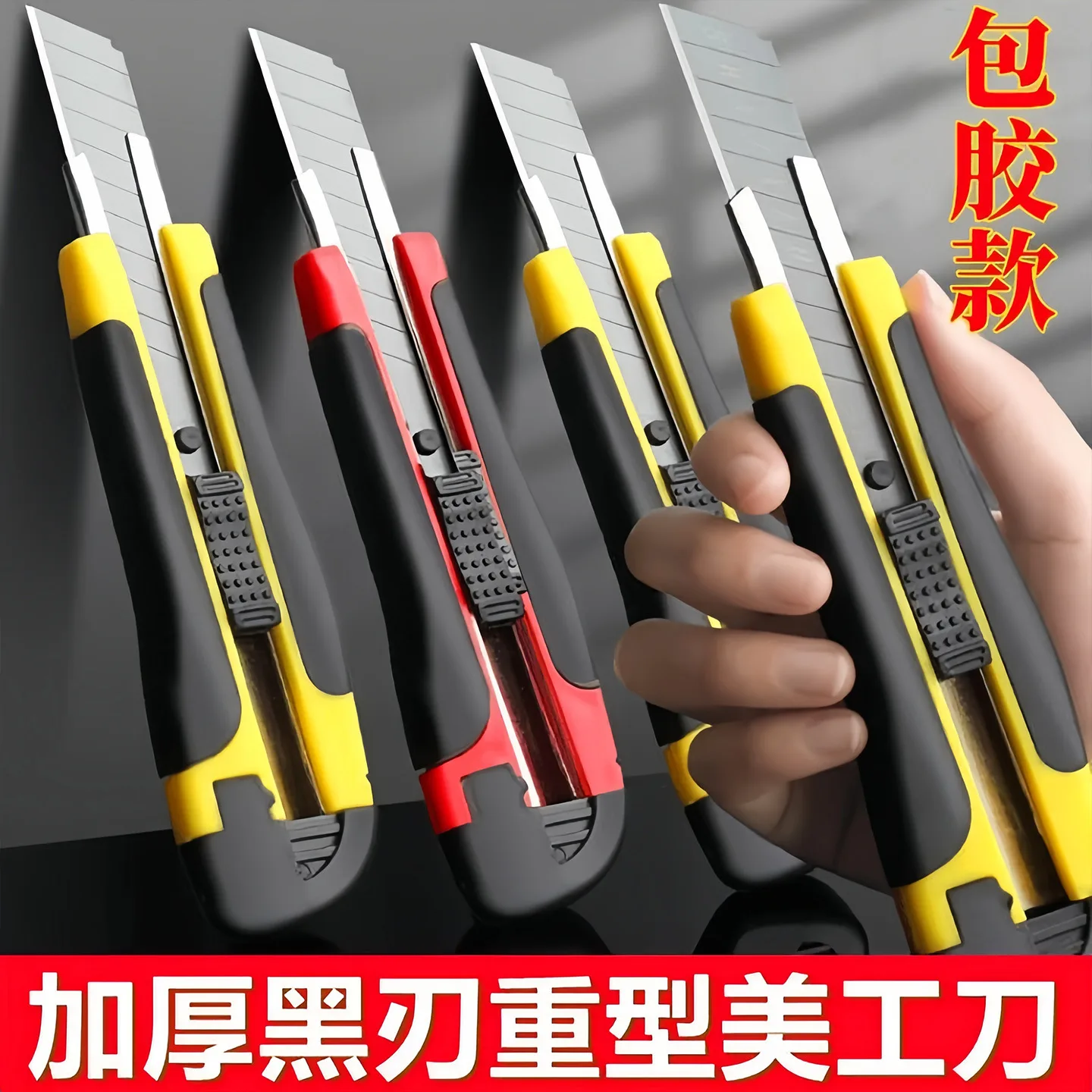
A utility knife is a holder for a disposable blade, and almost everything that goes wrong with one comes back to the holder rather than the blade. A body that does not clamp the blade square makes every cut wander. A retraction spring that has lost its tension leaves the blade proud of the body. A blade replaced without clearing the old one out of the channel jams the slider, and the knife gets thrown away with most of its life left. This guide covers how the holder should behave, how to change a blade properly, and what the three options in this range actually give you.
What the holder has to do
- Clamp the blade square. The blade must sit flat against the body with no side-to-side rock. Any movement at the clamp is multiplied at the tip.
- Retract fully. A blade that stops short of the body is a blade that cuts through a tool bag, and the retraction spring is the first part to wear.
- Hold the blade at a fixed depth. The slider should stay where it is set under load, not creep deeper during a cut.
- Accept standard blade geometry. Trapezoid and hooked blades of the common pattern should seat without trimming or packing.
- Open for cleaning. Card dust and adhesive tape build up inside the channel, and a body that cannot be opened is a body that stops sliding.
- Be comfortable to hold. A knife used for a hundred cuts a day is held the whole time, so handle shape matters more than most buyers expect.
Changing a blade in six steps
- Retract the blade fully. Never open the body with the blade exposed. If the slider is jammed, work the blade back with the tip of a screwdriver rather than your fingers.
- Release the body. Depending on the pattern, this is a folding hinge, a screw, or a press-and-slide catch. Keep the screw; it is a size nobody has spares of.
- Lift the old blade out with pliers. Never with fingers. Used blades are the sharpest thing in the toolbox and they always look blunter than they are.
- Clear the channel. Wipe out the blade track and the slider with a dry rag. Tape adhesive and card dust are what make a new blade feel stiff.
- Fit the new blade the right way round. The cutting edge faces the open side of the body, and the notch or hole in the blade engages the retaining pin.
- Close and check. Before you use it, retract and extend the blade twice and press the spine against a scrap of timber. Any movement there means the blade is not seated on the pin.
How much to buy at once
| Buying pattern | What it suits | Trade-off |
|---|---|---|
| One knife, blades bought separately | Occasional use, one user, one toolbox | Lowest entry cost, blade running cost falls on you |
| Knife supplied with a blade pack | Regular use where the knife stays sharp | Higher initial price, fewer interruptions |
| Several knives, one per station | Bench, van and site kit kept separate | Costs more up front, saves walking to find one |
The utility knives in this guide
Every option in this range
Three options at three price points. Prices are per unit, and what arrives in the pack steps up with the price.
| Option | Price | Best for |
|---|---|---|
| Entry option | $8.99 | A single knife for occasional cutting |
| Mid option | $13.78 | Regular use where the knife has to stay sharp |
| Set option | $22.77 | Keeping knives at more than one station, or trade use |
Retraction, storage and disposal
- Check the spring, not just the blade. If the blade will not retract fully, the fix is the body, not a new blade. Retraction is the safety feature.
- Store retracted. A utility knife left extended in a drawer is the most common cause of a hand injury in a home workshop.
- Snap segments off the blade, not the body. Use the break notch at the back of the knife, with the blade retracted, so the segment does not fly.
- Keep a blade bin. A tin with a slot in the lid holds used blades until there are enough to take for recycling. Loose blades in a bin bag cut the people who handle it.
- Wipe the blade after tape and card. Adhesive on the flat of the blade adds friction in the channel and makes the slider feel stiff.
- Do not lever with the tip. The blade is retained by a pin and a clamp, not by the tip. Prising with it bends the blade and stretches the holder.
Frequently Asked Questions
How often should a utility blade be changed?
When it needs pressure to cut, or when it starts tearing rather than slicing card. On a busy bench that can be more than one blade a day; for occasional use a blade will last months.
Why does my utility knife keep coming loose?
Usually because the blade is not seated on the retaining pin, or the clamp screw has been overtightened and stretched. Open the body, reseat the blade and tighten the screw to firm rather than hard.
Can I sharpen a utility blade?
You can, with a fine stone at the existing angle, but the blades are thin and the edge is short. For the price of a pack it is rarely worth the time unless the blades are the heavy 0.7 mm pattern.
Which is safer, a fixed blade or a retracting one?
A retracting knife, provided it retracts fully and the slider holds. The blade can be put away without a sheath, which is why nearly every trade knife is a slider.
Do I need more than one knife?
If you work in more than one place, yes. A knife that lives at the bench and one that lives in the van cost less than the time spent fetching a single knife, and the set option in this range is the cheaper way to do it.
Buying the right one
Buy for the number of places you cut, not for the number of blades in the pack. One knife and a pack of blades covers occasional use; the set option is the sensible buy where a knife is needed at more than one station. The utility knives in this range cover all three buying patterns.